
Best Email Practices for Inbound Marketing
Email Marketing Remains the Vital Inbound Marketing Strategy


There were days where email marketing fell directly into the category of outbound marketing. Do you know why? Because in the past, marketers used email lists to send messages to almost everyone, although recipients did not exhibit any interest in their product. But the scenario has changed completely now.
Today, marketing is solely about helping the people by providing them with valuable and relevant materials. Email marketing now follows inbound ideals where the whole shebang is about lead interest. It has turned out to be one of the most powerful inbound marketing strategies that produce great results when utilized to the fullest.
Role of Email in Inbound Marketing
Email enjoys huge acceptance with customers and businesses globally. As per Radicati report, the number of emails sent and received per day is about to reach 246.5 billion in 2019. This number is expected to grow by 5 percent yearly. So, if you are one of the few marketers who think that emails are old school, remember that this old approach plays a vital role when it comes to inbound marketing!
Inbound email marketing is all about being there for your customers in need. It’s about finding the right audience and offering relevant information.
This traditional method is utilized in all four stages of inbound marketing—Attract, Convert, Close, and Delight. It is used to draw prospects towards your products and services, get them into conversion stage, close the leads into customers, and lastly delight them with various tactics to turn them into loyal patrons.
So inbound marketing is not just about social media, content, or SEO. It also includes well-planned email strategies that draw users to your website and connect with them.
How Email Acts as a Part of Your Inbound Marketing Strategy?
1. Email can be used as a reminder.
Do you want to drive loyal customers to read your blog posts or newly updated offer or events page? Email is a great way to begin with. Although content marketing gets your ideas into the world, they do not help you in building relationships like how email does. That’s because a blog post or any of your company announcements don’t create a connection. Readers feel no bond with you.
Whereas an email, on the other hand, is quite more personal. It is the best path to form deep, lasting relationships with your audience. Marketers with impressive email lists do not have to worry about their blog posts going unnoticed.
2. Email is a great tool for engagement .
Engagement is any meaningful interaction with the prospect that strengthens the connection they have with your brand. Most marketers do not think of email when it comes to customer engagement, instead they associate it with social media that is known to offer multiple opportunities. But in my experience, I would suggest you try email to increase the engagement rate with the potential customers. That said, here are the reasons supporting my statement.
- Marketers can invest in this kind of engagement before and after a product launch.
- You can send numerous emails that tell the recipient how your product solves their problem.
- You can also ask them to send their queries or examples of their problems.
- You can constantly keep them updated about your brand and its new features.
When done effectively, you can create a massive list of prospects who are waiting to use your product, even before it’s unveiled to the market.
3. Email lets users take action quickly.
We know how CTAs of email function. It grabs a subscriber’s attention and guides them towards your goal conversion. These buttons are generally eye-catching, and hard to ignore. When brands incorporate right CTAs at the appropriate position, it compels the users to do more than just read. For instance, if you have a product launch coming up, you can send out a neatly crafted email to the prospects that induces them to take action by placing order.
You can also use the same strategy to encourage subscribers to sign up for any upcoming webinar or event. No matter what action you want your audience to take, a simple email can make it work.
Grow Your Business with Inbound Email Marketing Strategy
Now that you know how emails plays a crucial role in inbound marketing. How about implementing this channel successfully to get the results you want from your inbound strategy? Here are three ways to use an inbound email marketing strategy to grow your business:
1. Know your audience well .
First, do your market research. Make sure the target audience you’ve selected for your inbound email marketing strategies are the right ones for your brand. However, don’t just look at the one pattern you’ve chosen from the beginning. Branch out to study related niches as well. There are numerous tools to help you here.
One simple way to begin is by asking your prospects one or two helpful questions along with their name and email address. Here are a couple of essential questions regarding the audience you need to know before creating an inbound email campaign.
- What is their current role and background?
- What are their skills?
- What is their location?
- What are their expectations?
- How will they use your product or services?
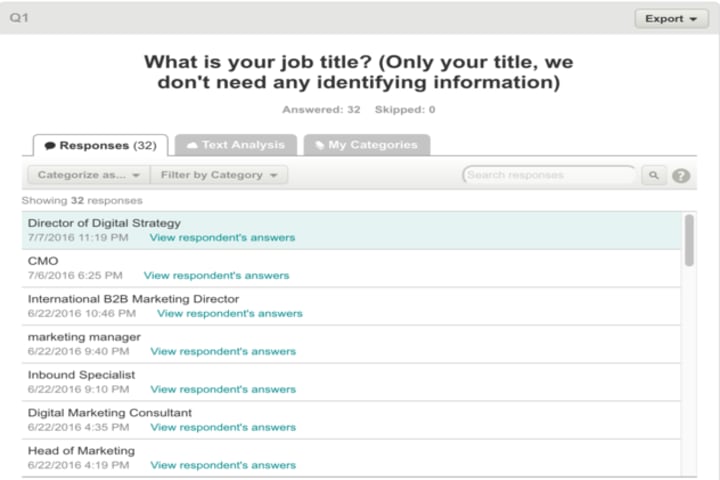
Take a look at the survey conducted by Grow & Convert website. They identified that their audience are mostly made up of marketers inside the companies. Only a few of the respondents were outside of their direct target audience. Based on this survey result, they began creating the content that is explicitly for marketers that work at companies.
2. Segment your contacts .
Once your audience is defined, the next step is to segment them into groups based on buyer personas. The buyer personas represent a user type that might use your website, brand, or product in a similar fashion. It reveals insights about your buyers’ decisions—concerns, criteria, or any specific attitude that drives them to choose you, or your competitors.
Some of the most commonly used demographics in marketing include:
- Age
- Gender
- Location
- Education
- Company
- Income Level
- Pain Points
- Expectations.
So, it’s essential to consider the different segments of your list based on these details. If not, your sales pitch might work only on 5 to 10 percent of the list, pushing away others.
Once you have segmented the list, utilize it to send relevant messages to the clients. For instance, you can create blog posts specific to each segment. Then, use the reminder message as described above to alert each segment about the posts that are of their interests.
3. Nurture the leads .
Email marketing is a long procedure. You must nurture the leads by bringing prospects back to your site again and again until they become your clients. So, start creating lead-nurturing funnel that involves the usage of emails to continuously engage your audience. We know that 73 percent of B2B leads aren’t sales-ready. So, while nurturing the leads, make sure your emails generate true value to them and drive conversions.
There are times where leads look only for information and not for something to purchase. Therefore, offer the kind of information in emails that convinces them to try your product. This is what inbound marketing does.
Delight Your Customers Now!
Yes, make your customers happy by offering real value through inbound email marketing strategies. Customers always feel nice when you exceed their expectations. Besides, the outcomes are absolutely noteworthy! There’s no doubt about it. So, once you have a lead’s email address that adheres to inbound marketing best practices, lure them into your sales funnel, provide quality solutions, keep them there, and ultimately turn them into loyal clienteles.
“Marketing is not the art of finding clever ways to dispose of what you make. Marketing is the art of creating genuine customer value. It is the art of helping your customer become better off. The marketer’s watchwords are quality, service, and value.” ~ Philip Kotler.
About the Creator
Keep reading
More stories from Emily Johnson and writers in Journal and other communities.
Why You Need to Consider Your Business Online
Doing business online is one of the best options for entrepreneurs and businessmen because of the reach and growth it offers. E-commerce is now a popular way for people to shop, and the trend is expected to become more established and grow in the years to come. The advancement in technology and sophistication in tracking packages has made e-commerce a viable and trusted way of doing business. The ease of shopping from home is a comfort for most consumers. Aside from this, e-commerce is worldwide, exposing people to various niches and products from all over the world. Through an online presence, especially through strategies like Account-Based Marketing, people and businesses discover each other more efficiently, resulting in satisfied customers and more revenues and ROIs for business.
By Emily Johnson6 years ago in Journal
How to Build AI Agents in 2026: Stop Coding Like It's 2024
Remember when we all thought pasting a prompt into ChatGPT was "prompt engineering"? Cute. It's 2026 now, and if your "AI" can't plan a vacation, book the flights, and argue with the airline about a refund, it's just a chatbot. Learning how to build AI agents isn't just a resume booster anymore; it's the only way to survive the "white-collar shockwave" experts warned us about.
By Sherry Walker4 days ago in Journal




Comments
There are no comments for this story
Be the first to respond and start the conversation.