
Baba Allauddin Khan: The Maestro Who Shaped a Century of Music
The extraordinary journey of a village boy who shaped India’s modern classical tradition

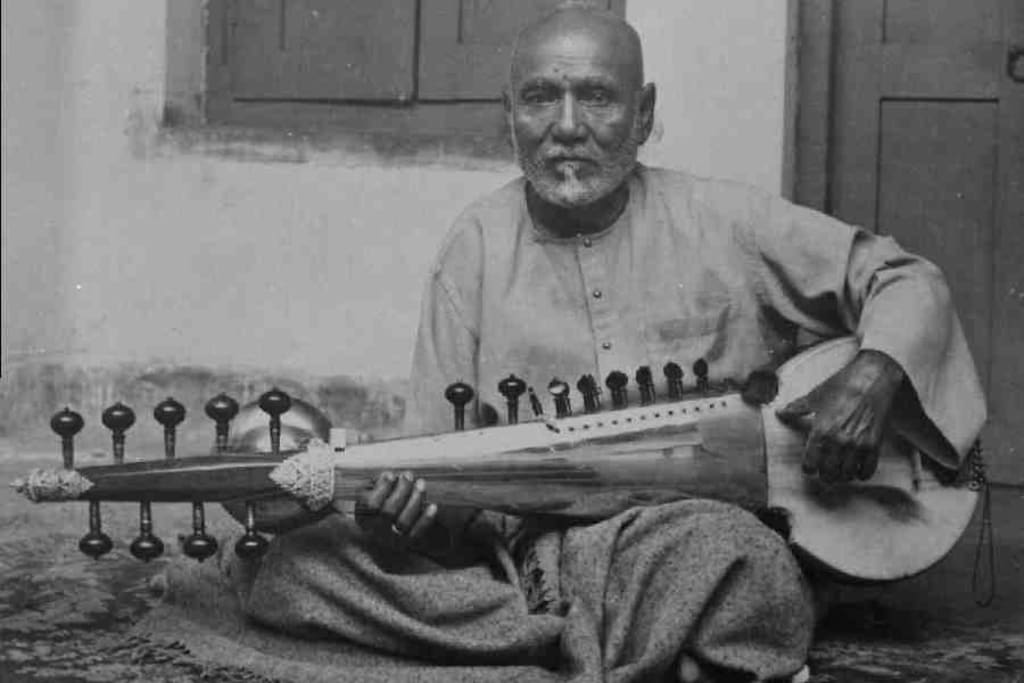
Baba Allauddin Khan stands as one of the most influential figures in twentieth-century Indian classical music. Revered as the architect of the Maihar Gharana, his legacy extends far beyond his own performances and compositions. The depth of his training, the discipline he instilled, and the innovations he introduced continue to shape Hindustani instrumental music. His influence is most visible in the remarkable musicians he trained and in the musical pathways he opened for generations of artists around the world.
Early Life and the Quest for Knowledge
Allauddin Khan was born on 8 October 1862 in present-day Bangladesh. From a young age, he demonstrated an intense attraction to music. His determination to study under accomplished masters led him to travel to Calcutta, where he endured significant hardship while searching for suitable teachers. His early training came from demanding gurus who insisted on discipline, precision, and complete dedication. These formative experiences built the foundations of his musical versatility and his later reputation for rigorous teaching.
Unsatisfied with what he had learned so far, Allauddin Khan continued his quest for deeper knowledge by traveling to Rampur. There he sought training from a legendary beenkar whose reputation for strictness and technical mastery was well known. According to historical accounts, the young Allauddin had to plead repeatedly to be accepted. In one well-known story, he placed himself before the Nawab’s carriage to seek help in securing an introduction to the reluctant master. This determination eventually convinced the teacher to accept him, marking a decisive moment in Allauddin Khan’s musical evolution.
A Life Rooted in Maihar
After years of seeking knowledge across regions, Allauddin Khan settled in the princely state of Maihar in central India. This became the heart of his musical life. In Maihar, he served the royal court, taught students, composed new works, and performed widely. Over the decades, the town grew into an important center of Hindustani classical music due to his presence.
The list of musicians trained in Maihar is extraordinary. Among the most famous were Ali Akbar Khan, Ravi Shankar, Nikhil Banerjee, Pannalal Ghosh, and the Maharaja of Maihar. These artists later rose to international prominence and played pivotal roles in introducing Indian classical music to global audiences in the twentieth century.
Allauddin Khan was known for his strong spiritual orientation. He offered namaz regularly and also visited the local Hindu temple. This blend of spiritual influences reflected his belief in harmony between communities. His students affectionately referred to him as “Baba,” a term that expressed both reverence and warmth.

A Multifaceted Teacher and Innovator
Biographical studies by authors such as Anjana Roy and Sahana Gupta portray Allauddin Khan as a musician of extraordinary breadth. He mastered numerous instruments, developed innovative raga combinations, and even attempted to form an Indian classical orchestra. His creative approach, combined with strict discipline, helped shape the musical identities of his students and established the distinctive sound of the Maihar Gharana.
Although highly respected, his teaching methods were famously rigorous. Accounts from students and observers note that he regarded discipline as essential to artistic excellence. Even his most gifted disciples underwent intense and demanding training. Despite his strict nature, his dedication to producing exceptional musicians never wavered.
A Broad and Inclusive Vision
Writings about Allauddin Khan emphasize his progressive outlook. He disliked the use of surnames, viewing them as markers of caste or religious identity. His approach to life reflected a belief in equality and unity. In one of her rare written reflections, his daughter Annapurna Devi described him as “perhaps the most secular individual” she ever encountered. She listed many of his illustrious students but characteristically excluded her own name despite her extraordinary mastery of the surbahar.

The Maihar Gharana and Its Enduring Influence
The Maihar Gharana became one of the most influential schools of Hindustani instrumental music. Its emphasis on clarity, emotional depth, structural discipline, and improvisational maturity can be traced through the work of its major exponents. Beyond its most celebrated figures, the gharana also nurtured artists such as Sharan Rani, Bahadur Khan, and Rajeev Taranath. Each made important contributions to the evolution of the sarod and carried forward the principles inherited directly from Baba or through his son Ali Akbar Khan.
Allauddin Khan’s life and teachings created a musical legacy that remains deeply influential. Through his disciples, compositions, innovations, and values, his impact continues to echo across traditions and generations.
About the Creator
Aarohi Mehta
Aarohi is an independent journalist and art enthusiast who covers culture, creativity, and modern digital trends. She brings a fresh, expressive voice to her stories, blending clear reporting with a strong artistic perspective.
Keep reading
More stories from Aarohi Mehta and writers in Journal and other communities.
Author’s Advice
If you would’ve asked me 20 years ago did I know I’d become a writer and an author, I would’ve said “nope, ain’t happening”. As fate would have it I did become an author and I can honestly say I’m loving it so far. It really does feel good to be a writer. I’ve learned a lot on this journey and I feel like with even me being as new to this world as I am, there’s some wisdom I need to share with every other aspiring author.
By Joe Patterson5 days ago in Journal
Who Won the Oscars?
The 98th Academy Awards took place on March 15, 2026, at the Dolby Theatre in Hollywood, celebrating the best films released in 2025. Hosted by Conan O'Brien, the ceremony honored achievements across acting, directing, writing, and technical filmmaking categories.
By Navigating the Worldabout 10 hours ago in Journal
The Forsyth House Fire
Since 1851, Forsyth House has stood on the corner of Union Street and Gordon Street in the heart of Glasgow. Its iconic, or was... because on Sunday 8th of March, 2026, a fire broke out in a small, seemingly un-named shop in the building and tore all that history down. As I write, the rubble is still unsettled and the street is still blocked off. Central Station is quiet on the upper level, and around 30 small businesses have quite literally gone up in smoke.
By S. A. Crawford3 days ago in The Swamp



Comments