
Australia Seafood Market: Navigating Demand, Sustainability & Aquaculture Innovation
From USD 3.02 billion in 2024 to an expected USD 5.61 billion by 2033 (CAGR ~6.50%), the Australian seafood market is expanding rapidly — driven by health trends, sustainability, export growth, and rising aquaculture output.

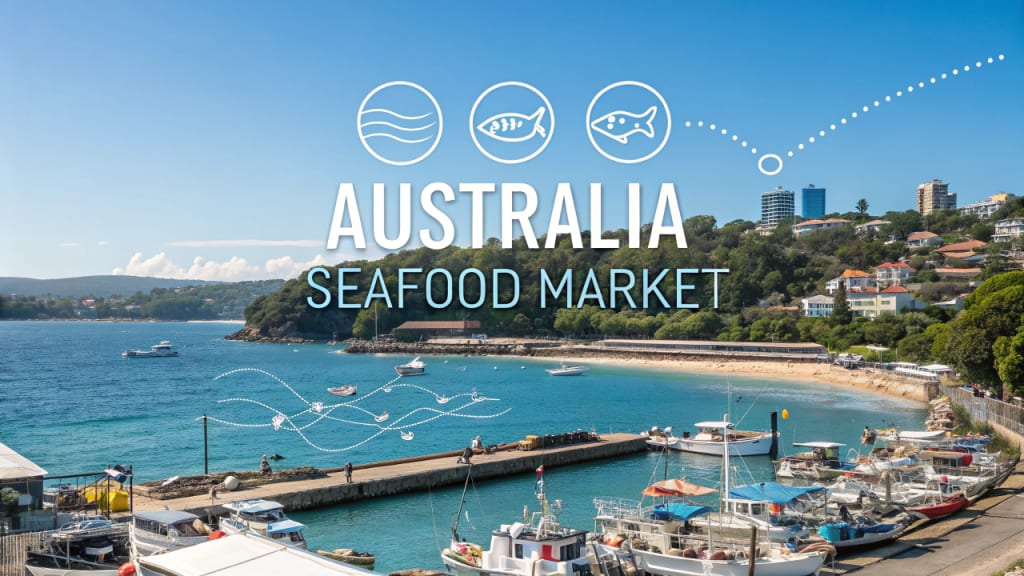
Market Overview
- In 2024, the Australian seafood market was valued at USD 3.02 billion.
- Projections indicate growth to USD 5.61 billion by 2033, at a compound annual growth rate (CAGR) of about 6.50% over 2025-2033.
- Key segments include type (fish, shrimp, others); form (fresh/chilled, frozen, processed, canned, etc.); distribution channels (supermarkets and hypermarkets, online, convenience/off-trade, on-trade like restaurants); and geography (regions like New South Wales & ACT; Victoria & Tasmania; Queensland; Northern Territory & Southern Australia; Western Australia).
Key Trends & Market Drivers
1. Health & Nutrition Awareness
Consumers are increasingly seeking protein-rich, low-fat, nutrient-dense food. Seafood is widely seen as a healthy option—rich in omega-3 fatty acids, vitamins, minerals. This shift in diet, especially among younger and health-conscious demographics, is pushing up demand for both fresh and processed seafood.
2. Sustainability & Certification Matters
Overfishing, habitat destruction, and environmental degradation are concerns. As a result, certifications like MSC (Marine Stewardship Council) and others are becoming more prominent. Seafood products with traceable, sustainable sourcing are valued higher by consumers and often preferred in export markets. There is regulatory pressure (domestic and international) to ensure sustainable practices.
3. Aquaculture Gains Ground
Wild catch alone cannot keep up with rising demand. Aquaculture (farmed fish, shellfish, etc.) is expanding with better breeding methods, improved feed, better water quality monitoring, and more efficient farm systems. This helps stabilize supply, reduce risk, and provide better consistency in product quality.
4. Export Orientation & Value-Addition
Australia is exporting more premium seafood (rock lobster, abalone, tuna, etc.), especially to Asia (Japan, China, Singapore) where quality and safety standards are strong. To meet these export demands, better cold-chain logistics, processing, packaging, and regulatory harmonization are being prioritized. Also, value-added products (smoked, ready-to‐cook, marinated) are in growth.
5. Consumer Preference for Fresh & Convenient Forms
Fresh / chilled seafood remains popular, especially in coastal regions, for both dining and home consumption. However, frozen or processed (canned, ready to cook) is growing due to convenience, longer shelf life, and supply chain improvements. Retailers are responding with more wide ranges of frozen seafood offerings.
6. Regulation, Traceability & Labeling
There is growing momentum around mandatory labeling in restaurants and food service (origin, species, method of catch/farm). Consumers want greater transparency. Government policy is starting to require more disclosure.
Get a PDF, Request for a Free Sample Report: https://www.imarcgroup.com/australia-seafood-market/requestsample
Opportunities in the Australian Seafood Market
Scaling Sustainable Aquaculture
Investments in aquaculture technologies—recirculating aquaculture systems (RAS), improved breeding, disease prevention, genetic selection—offer strong potential. Farms with higher sustainability credentials can command better margins and enter export channels more easily.
Value-Added & Convenience Products
Ready-to-cook seafood, marinated, smoked, pre-packaged or portioned formats. Products that reduce preparation time, offer convenience, or appeal via premium packaging will likely grow.
Premium / Niche & Local Branding
Regions with strong seafood culture (e.g. Tasmania, Queensland, Western Australia) can market local specialty products (wild species, regional shellfish, boutique harvests) at premium prices. Branding around wild-caught, sustainable, regional origin can differentiate.
Strengthening Cold-Chain & Processing Infrastructure
To support both domestic demand and exports, investments in cold storage, faster transport, better processing facilities are crucial. The ability to deliver freshness and quality is often a differentiator.
E-Commerce & Direct-to-Consumer Channels
Online seafood sales, subscription boxes, home delivery of fresh & frozen seafood are growing. The ability to ensure freshness, packaging, delivery logistics, and safety—while being cost-effective—offers good opportunity.
Regulatory Alignment & Certifications
Complying with international import regulations (traceability, sustainability, safety), and domestic consumer expectations will help producers access export markets and build trust. Certifications (MSC, ASC etc.) are increasingly seen as baseline rather than premium extras.
Recent News & Developments in the Australian Seafood Market
Growth in Market Value & Forecasts (2025-2026 data published mid-2025) : The overall seafood market (aquaculture + wild catch + processing) is projected to grow from USD 3.02 billion (2024) to about USD 5.61 billion by 2033. That’s a healthy ~6.50% CAGR.
Fisheries & Aquaculture Production Stability : The fisheries & aquaculture sector is projected to reach ~451.0 thousand tons by 2033 (from ~328.0 thousand tons in 2024), reflecting ~3.31% CAGR. This growth is enabled by adoption of tech, sustainable farm practices, improved productivity.
Shrimp Segment Growth : Shrimp remains a key sub-segment: Australia’s shrimp market value was ~USD 1.4 billion in 2024 and is expected to reach ~USD 2.0 billion by 2033, with a CAGR ~3.92%. Tailored aquaculture methods and export opportunities are part of the growth story.
Labelling Rules & Traceability : From 2025, rules requiring restaurants, cafes, and clubs to label seafood origin (Australian, imported, or mixed) under the AIM model are being introduced. This harmonizes with retail labeling and increases transparency across the board.
Technological Investments & Disease Management: Investments in disease detection/testing (e.g. for shrimp pathogens), real-time monitoring, automated feeding & water quality control for aquaculture facilities. These reduce losses and improve yield.
Browse Full Report with TOC & List of Figures: https://www.imarcgroup.com/australia-seafood-market
For Consumers: Seafood is a critical component of healthy diets. Better sustainability, transparency, and safety mean consumers can trust what they buy. Freshness, ethical sourcing, origin will increasingly influence purchase decisions.
For Producers & Farmers: To succeed, innovation in aquaculture, traceability, sustainable practices, and ability to meet export standards are key. Also, investments in processing and cold-chain infrastructure help unlock value beyond raw catch.
For Retailers & Chefs/Restaurants: Offering differentiated, premium, sustainable seafood gives competitive edge. Aligning with consumer values (eco-labels, origin), ensuring freshness, and offering convenience products support growth.
For Exporters & Trade: Asia remains a major market. Meeting import country requirements (safety, certification, cold chain) and maintaining reputation are essential for growing export revenues.
For the Environment & Regulation: Sustainable harvesting / farming is necessary to protect marine ecosystems. Certifications, quotas, habitat protections, disease control are part of preserving biodiversity and ensuring long-term viability of the industry.
About the Creator
Kevin Cooper
Hi, I'm Kavin Cooper — a tech enthusiast who loves exploring the latest innovations, gadgets, and trends. Passionate about technology and always curious to learn and share insights with the world!
Keep reading
More stories from Kevin Cooper and writers in Journal and other communities.
Australia Renewable Energy Market: Rising Demand, Drivers & Trends
Market Overview In 2024, Australia’s renewable energy market was valued at roughly USD 165.8 billion. Over the period 2025-2033, it is expected to grow at a compound annual growth rate (CAGR) of about 16.6%, reaching approximately USD 687.9 billion by 2033. Key energy types included: solar power, wind (onshore & offshore), hydro, bioenergy, and others. End-users spread across industrial, residential, and commercial sectors. Government policies, falling costs of technology (especially solar panels, wind turbines, batteries), and advancing storage & grid integration are major supporting factors.
By Kevin Cooper3 months ago in Journal
Understanding the Saints: Models of Holiness for Today
Saints occupy a central place in Catholic spirituality. They are men and women who lived lives of extraordinary faith, virtue, and dedication to God. Catholics honor saints not as divine beings but as role models and intercessors who demonstrate how ordinary people can respond fully to God’s grace. Understanding why saints matter and how their example can inspire modern believers helps Catholics grow in holiness and live a faith-centered life.
By Sound and Spirit5 days ago in Journal



Comments
There are no comments for this story
Be the first to respond and start the conversation.