
Australia Agricultural Equipment Market: Innovation, Efficiency, and Growth on the Farm
The Australia agricultural equipment market size reached USD 5.1 Billion in 2024. Looking forward, the market is projected to reach USD 7.7 Billion by 2033, exhibiting a growth rate (CAGR) of 4.20% during 2025-2033.

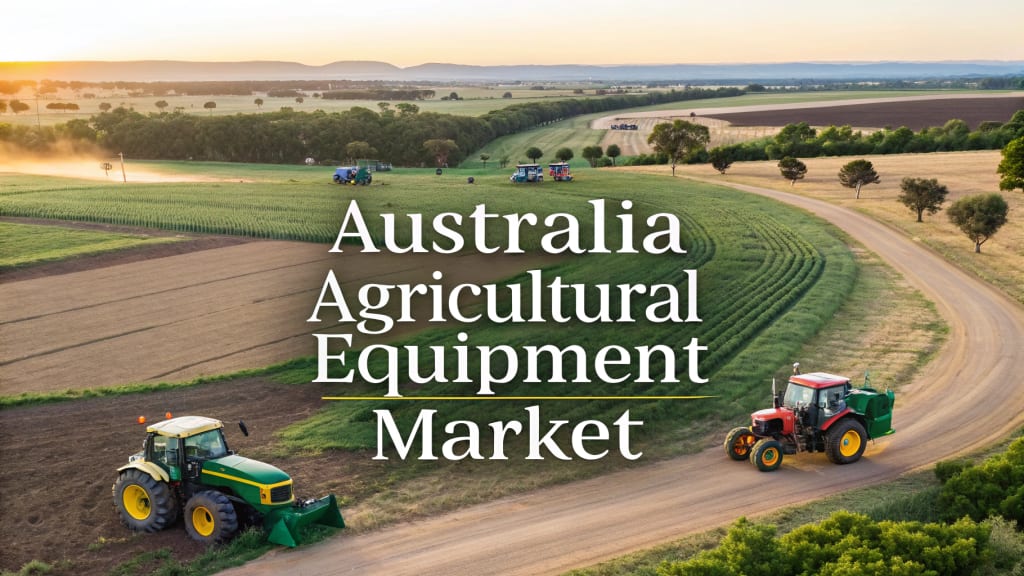
The Australia agricultural equipment market was valued at approximately USD 5.1 billion in 2024, and it’s forecast to reach around USD 7.7 billion by 2033, reflecting a projected CAGR of 4.20% over the period from 2025 to 2033. This steady growth is underpinned by factors such as fuel cost pressures, adoption of advanced farming technologies like robotics and AI, increasing demand for sustainable practices, and supportive policy frameworks designed to spur agricultural modernization.
What’s Fueling the Market
Rising Costs Push Innovation
Escalating fuel and operational costs have pushed many farmers to look for more efficient, lower-emission equipment. Electric and hybrid machinery are drawing attention, especially for lighter-duty tasks. At the same time, strong interest in automation and robotics helps reduce labour needs and operating inefficiencies.
Smart Farming & Precision Technologies
There has been growing uptake of GPS-guided equipment, IoT sensors, automated machinery, and data analytics. These tools allow for more precise planting, fertilizing, spraying, and harvesting—helping farmers maximize yields, optimize inputs, and reduce environmental impact. Such precision agriculture technologies are particularly valuable in Australia’s variable climate.
Government Policy & Ag-Tech Support
Federal and state governments are offering subsidies, grants, tax incentives and regulatory support to encourage farmers to adopt advanced equipment. Programs focusing on sustainability, drought resilience, and climate adaptation are helping remove financial barriers to investment. These policies are enabling more small and medium farms to access modern machinery.
Sustainability as a Core Value
Farmers are increasingly seeking equipment that reduces carbon emission, uses resources efficiently (water, energy, fuel), and improves soil health. Machinery designed for precision irrigation, reduced tillage, and low-emission engines is more in demand. Manufacturers are responding with more eco-friendly options and machines tailored to sustainability standards.
Read Australia Agricultural Equipment Market Report
Real-World Trends & Illustrations
• Customization is gaining importance. Manufacturers are offering configurable machinery—matching size, functionality, and features to specific farm needs. This helps farmers avoid over-paying for unused capability.
• Rental or leasing models are growing. Because buying high-end equipment outright can be expensive, many farms are opting to lease or rent machines during busy seasons. This trend helps spread costs and makes advanced machinery more accessible.
• Remote and regional uptake is improving with better infrastructure and after-sales services. Connectivity improvements, logistics upgrades, and local dealerships helping with maintenance are aiding adoption outside metropolitan regions.
Segmentation & Market Structure
The market divides into several major equipment types and applications:
Equipment Types:
Tractors, trailers, harvesters, planting machinery, irrigation and crop-processing equipment, spraying devices, hay and forage equipment, among others.
Applications:
Land development and seedbed preparation; sowing and planting; weed cultivation; plant protection; harvesting and threshing; post-harvest processing. Each application demands different equipment features and drives investments differently.
Regional Considerations:
States like New South Wales, Queensland, Victoria, Western Australia, and regions such as Northern Territory & South Australia and Tasmania each have distinct climates, farm sizes, and infrastructure. These differences affect what equipment is in demand, what features are prioritized, and how machinery is maintained.
Challenges Ahead
High Upfront Investment
Modern agricultural equipment comes with substantial purchase costs. Even with incentives, the capital requirements of advanced, sustainable, or electric machinery can be prohibitive for smaller farms or those with volatile incomes.
Skilled Labor & Maintenance Gaps
Operating, servicing, and repairing advanced agricultural machinery requires specialized skills. In many remote or regional areas these skills are less available, which can hamper uptime, efficiency, and return on investment.
Commodity Price Volatility
Farm profitability depends heavily on crop or livestock prices, which can swing due to international demand, trade policies, weather, and input costs. When commodity prices dip, investments in equipment are often delayed or downscaled.
Infrastructure & Logistics Constraints
Transporting large machinery, delivering spare parts, and offering timely maintenance are more challenging in remote areas. Infrastructure gaps—like poor roads or weak connectivity—can add delays and costs.
Opportunities & What’s Next
Electrification & Low-Emission Engines
Manufacturers are increasingly investing in electric tractors and harvesters or retrofitting existing machines. As charging infrastructure improves and energy becomes cleaner, demand for low-emission equipment is expected to climb.
Digital Platforms & Automation
Remote monitoring, predictive maintenance, yield tracking, drone integration, and autonomous functions will become more standard, helping farmers reduce downtime and boost productivity.
Environmental Regulation & Consumer Choice
As global and local regulations tighten on emissions, water usage, and land impact, demand will favor machinery that meets sustainability metrics. Buyers will increasingly prefer brands with transparent eco-footprints.
Leasing and Rental Growth
Rental and shared equipment models will expand as farmers look for flexibility and lower risk. These models make it possible to access advanced functionality without bearing full ownership cost.
Tailored Products for Regional Needs
Farms in arid zones, smaller holdings, or rugged terrain require machines that cater to specific climate, soil, and logistical realities. Products designed for these conditions will see growing demand.
Download Free Sample Report Click here
Why This Market Matters Now
Australia’s agricultural equipment market isn’t just about machines—it’s about enabling food security, resilience, and sustainable growth. With climate pressures, labour scarcity, trade dependencies, and shifting consumer demands, machinery that improves efficiency and sustainability becomes a vital investment.
As the market moves toward USD 7.7 billion by 2033, stakeholders across manufacturing, policy, and farming must align: innovations, financial support, supply chain resilience, and appropriate regulation will define who succeeds.
About IMARC Group
IMARC Group is a leading market research and intelligence firm providing detailed insights and forecasts. Their Australia Agricultural Equipment Market report provides segmentation by equipment type, application, and region, and tracks trends, drivers, challenges, and growth pathways toward 2033.
About the Creator
Rashi Sharma
I am a market researcher.
Keep reading
More stories from Rashi Sharma and writers in Journal and other communities.
Australia Cold Chain Logistics Market: Keeping Goods Fresh, Safe, and Sustainable
The Australia cold chain logistics market was valued at around USD 5 billion in 2024, and is projected to grow to approximately USD 7.1 billion by 2033, registering a steady CAGR of 4.0%. This expansion reflects rising demand for refrigerated transport, enhanced storage infrastructure, and evolving supply chains driven by e-commerce and healthcare sectors.
By Rashi Sharma4 months ago in Journal
The goals I did not achieve
Every writing goal I made for the year is a wash. It has been this way for a while, but I think it's important to be open about my failures and the reality of how life can get in the way. This is especially true considering the several times I have posted on Vocal about my writing goals, how I was changing my approach, and where I was hoping to be for the upcoming year. I will probably do that again in a couple months, but for now, it is time to acknowledge where I am today.
By Kay Husnick17 days ago in Journal
Standing While Falling
Quotation from Friedrich Nietzsche "He who wrestles long with monsters should beware lest he himself become a monster. And if you gaze long into an abyss, the abyss also gazes into you. Man is not destroyed by suffering, but by the meaning he makes of it."
By LUCCIAN LAYTH5 days ago in Critique


Comments
There are no comments for this story
Be the first to respond and start the conversation.