
Archaeologists Believed Every Statue on This Island Had Been Found, Until One Emerged from a Lakebed
A surprising discovery reshapes what we know about one of the world’s most mysterious archaeological landscapes
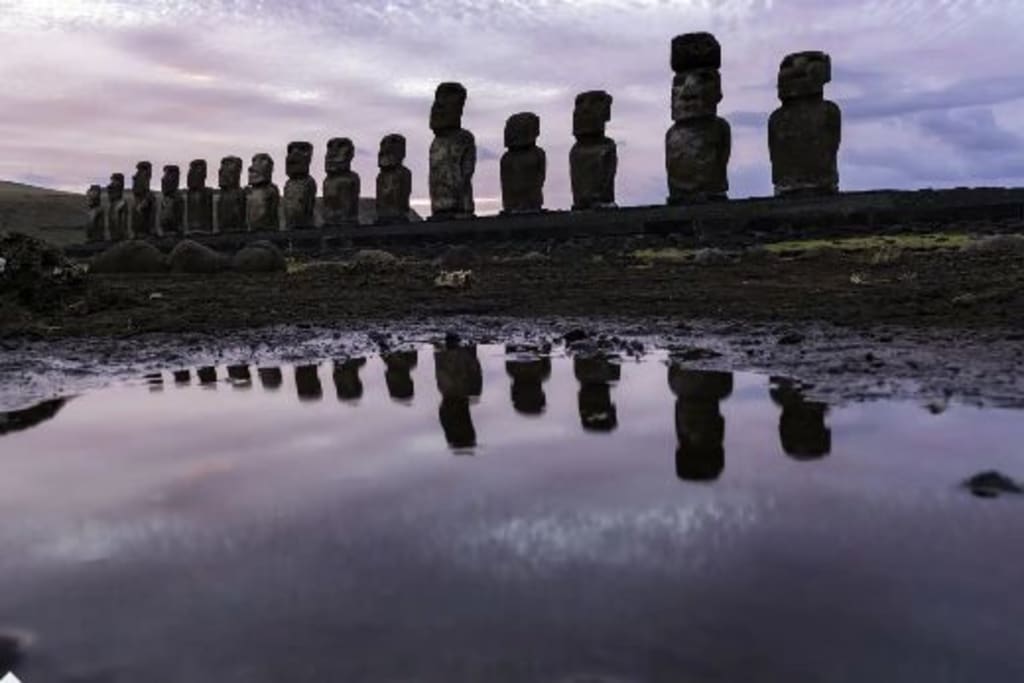
For decades, archaeologists believed the monumental statues scattered across Rapa Nui — often called Easter Island — had all been identified and cataloged. The iconic stone figures, known for their solemn faces and towering presence, seemed thoroughly studied after years of research, mapping, and excavation. Yet history has a way of challenging certainty. In a moment that stunned researchers, a previously unknown statue emerged from a dried lakebed, reminding the world that even well-explored sites can still hold secrets.
The discovery did not happen during a major excavation funded by international institutions. Instead, it was made possible by changing environmental conditions. As water levels dropped in a crater lake within the island’s quarry region, researchers noticed an unusual shape beneath the exposed mud. What first appeared to be a rock soon revealed unmistakable human features carved in stone — a statue hidden in plain sight.
A Landscape of Mystery
Rapa Nui has long fascinated historians, anthropologists, and travelers alike. The island is home to hundreds of massive stone statues created by the Indigenous Rapa Nui people between the 13th and 16th centuries. These figures represent ancestors and spiritual guardians, standing as symbols of cultural identity, engineering skill, and social organization.
Over generations, archaeologists mapped the statues across the island’s coastline and interior. Advanced tools such as aerial surveys, satellite imaging, and ground-penetrating radar strengthened the belief that the archaeological record was largely complete. While researchers expected smaller artifacts to surface, few anticipated the discovery of an entirely undocumented statue.
The newly revealed figure challenges that assumption. It suggests that some statues may remain buried, submerged, or hidden by natural changes in the landscape.
The Role of the Quarry
The statue was found in a crater lake within Rano Raraku, the volcanic quarry where most of the island’s statues were carved. This site is often described as the birthplace of the island’s monumental art. Here, artisans shaped statues directly from volcanic tuff before transporting them across rugged terrain.
Rano Raraku already contains dozens of partially buried statues, many still attached to the rock from which they were carved. The quarry provides insight into the production process — from rough shaping to final carving — making it one of the most important archaeological sites in Polynesia.
The emergence of a statue from the lakebed adds a new dimension to this understanding. It suggests that carving activity extended into areas previously thought inactive or that environmental changes later altered the landscape, submerging sculptures that once stood on dry ground.
Climate Change and Archaeology
One of the most striking aspects of the discovery is how environmental shifts made it possible. Drought conditions lowered the lake’s water level, exposing layers of sediment that had concealed the statue for years. While this created an opportunity for research, it also highlights a complex reality: climate change is simultaneously revealing and threatening archaeological heritage.
Lower water levels, melting ice, and shifting coastlines have led to similar discoveries around the world. Ancient settlements, shipwrecks, and artifacts have surfaced as natural barriers disappear. However, exposure can accelerate deterioration, making preservation more urgent.
On Rapa Nui, conservation challenges are already significant. Wind, rain, tourism, and erosion affect the statues’ surfaces. A newly exposed sculpture requires careful documentation and protection to ensure it survives for future generations.
Rethinking What We Know
The unexpected statue raises important questions. How many sculptures remain undiscovered? Were some intentionally placed near water? Did environmental conditions change more dramatically than previously believed?
Archaeologists now face the possibility that the island’s archaeological map is incomplete. Even well-studied sites may contain hidden features beneath soil, vegetation, or sediment. The discovery reinforces a key principle of archaeology: absence of evidence is not evidence of absence.
Researchers are likely to expand surveys around the quarry’s lake and surrounding terrain. New technologies, including drone mapping and 3D scanning, could help identify additional anomalies without invasive excavation.
Cultural Significance Beyond Science
While the discovery excites scientists, its meaning extends far beyond academic circles. For the Rapa Nui community, statues are not merely historical objects — they are expressions of ancestry, spirituality, and identity. Each newly identified figure contributes to cultural knowledge and storytelling.
Local collaboration is therefore essential. Decisions about excavation, preservation, and display involve community voices as well as researchers. Modern archaeology increasingly recognizes that heritage belongs first to the people connected to it.
The lakebed statue offers an opportunity to strengthen that partnership. It invites renewed conversations about how to protect sacred landscapes while continuing research.
A Reminder of Archaeology’s Uncertainty
Archaeology often appears methodical and precise, built on maps, timelines, and cataloged artifacts. Yet discoveries like this reveal how fluid historical understanding can be. Landscapes change, assumptions shift, and new evidence reshapes narratives.
The idea that every statue had been found reflected years of careful work — not negligence. But science evolves through surprises. Each unexpected discovery expands the range of questions researchers ask, leading to deeper insights into human history.
In this case, the statue emerging from mud serves as both a literal and symbolic moment: history resurfacing when conditions allow.
Looking Ahead
The next steps will involve documentation, conservation planning, and further investigation. Researchers will study the statue’s style, size, and orientation to understand when it was carved and why it remained hidden. Sediment analysis may reveal whether the lake formed after the statue’s creation or if it was intentionally placed nearby.
Future surveys could uncover additional buried figures, reshaping estimates of how many statues exist on the island. Even if no more are found, this single discovery has already shifted perspectives.
Conclusion
The emergence of a statue from a lakebed on Rapa Nui is a powerful reminder that the past is never fully uncovered. Even in places studied for generations, history can remain just beneath the surface, waiting for the right moment to reappear.
This discovery highlights the intersection of archaeology, environment, and culture. It underscores the importance of preservation, collaboration, and curiosity. Most of all, it demonstrates that exploration is not limited to remote, untouched landscapes. Sometimes the greatest surprises occur in places we thought we already understood.
As researchers continue their work, one truth becomes clear: the story of Rapa Nui — like the statues themselves — is still standing, still watching, and still revealing new chapters.
Best Category: History / Science & Archaeology / Culture
If you want, I can also provide SEO title, tags, or another related blog article.
About the Creator
How I Plan to Use Vocal to Earn Money as a Beginner Writer
AI-generated content disclaimer: This story was created with the assistance of an AI writing tool. When you are just starting out online, earning money from your writing can feel almost impossible. You see big creators making hundreds of dollars, while you sit there wondering if anyone will even read a single paragraph you publish. I am in that exact situation right now, so I decided to build a clear plan for myself and share it here on Vocal.
By Zeyrox Xen04 days ago in Journal
Winterthorne
Winterthorne stood alone at the edge of the park. The beautiful snow that had surrounded him was all trampled now, from the feet of all of the children who had built him. He missed the sparkly clean snow blanket, but he was happy that so many children had come out to make him.
By Laura DePace3 days ago in Fiction


Comments
There are no comments for this story
Be the first to respond and start the conversation.