
April 29th, 1992.
The story and impact of the LA Riots of 1992
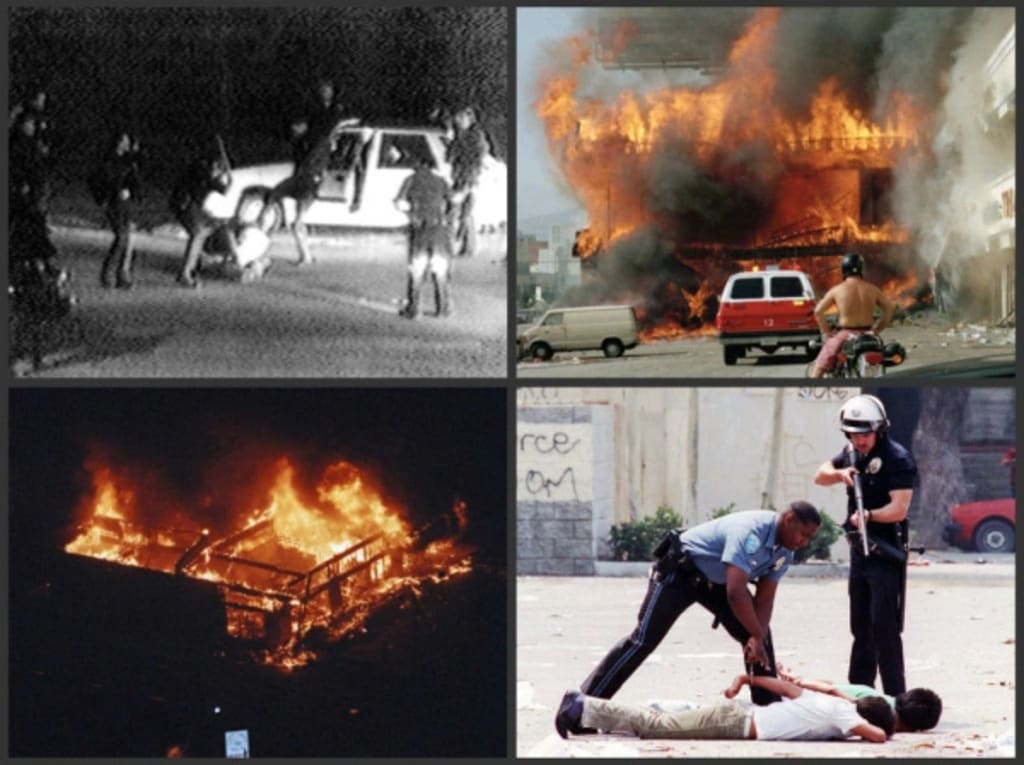
Today is one of the most important days in American history. April 29th, 2023 marks the 31 year anniversary of the Los Angeles Riots of 1992, which erupted as the aftermath of the not guilty verdict in the trial of the beating of Rodney King.
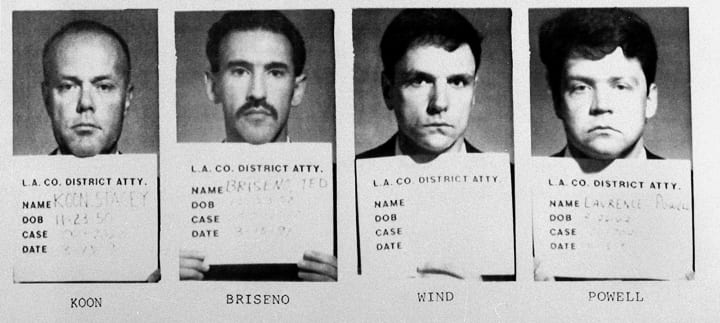
On March 3rd, 1991 motorist Rodney King led highway patrol on a high speed chase while driving under the influence leaving the Hansen Dam Recreational area in Los Angeles, California. After finally being stopped by highway patrolman Tim Singer and his partner Melanie, King and his two passengers were ordered out of King’s car. Eventually Los Angeles police officers Stacey Koon, Laurence Powell, Timothy Wind, Theodore Briseño and Rolando Solano arrived at the scene. Once the five LAPD officers took over at the scene mayhem broke out while attempting to arrest King.
What started as an aggressive attempt to subdue a resistant King became a brutal attack of excessive force caught on video. After struggling to stop the intoxicated and what officers claimed was an arrest resisting king turned into a rain of numerous Billy club blows and kicks to King’s body that left him a bloody soaked mess that was all captured on video. King also claimed that as the officers beat him they were chanting “we’re gonna kill you n*gger, we’re gonna kill you n*gger, you better run.”
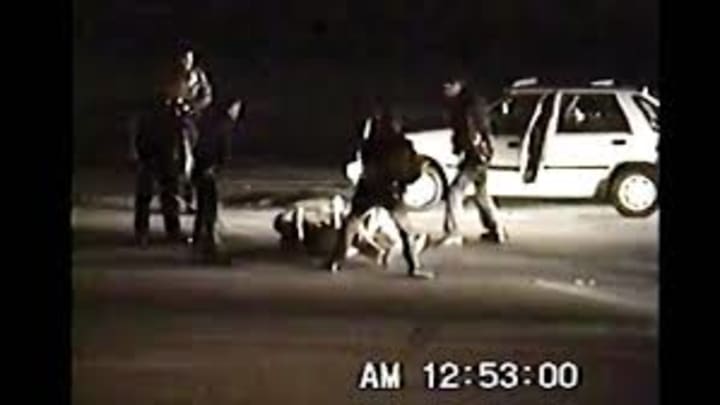
In the video, Koon, Powell, Briseño and Wind are seen kicking and striking King numerous times, even though he is visibly not fighting back or resisting. George Holliday, a plumbing salesman and videographer captured the beating on his camera in his apartment across the street from where the arrest was taking place. After the beating and arrest of Rodney King the video made its way to the news media who broadcasted it to a baffled nation.
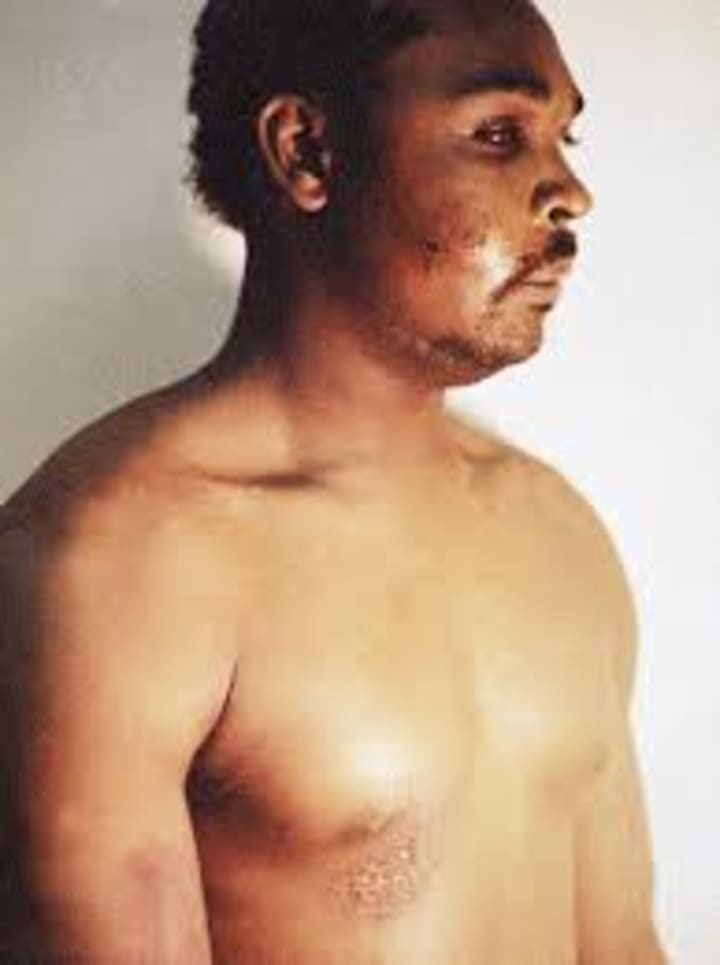
Once the video and brutality towards king became National news Laurence Powell, Stacey Koon, Timothy Wind and Theodore Briseño were indicted, charged and eventually put on trial for King’s beating. The trial ended in the exoneration of all four officers and this was the beginning of the LA Riots.
What started off as angry community meetings and heated protests quickly grew to be intense clashes with law enforcement just hours after the not guilty verdicts. The riots had began and consumed South Central, Los Angeles and beyond. Starting in the area of Florence Avenue, people were snatched out of their cars and beatened by the angry Black residents of the south land, most of which were White citizens. The most memorable image of the beatings of motorist who passed through the area was the beating of Reginald Denny.
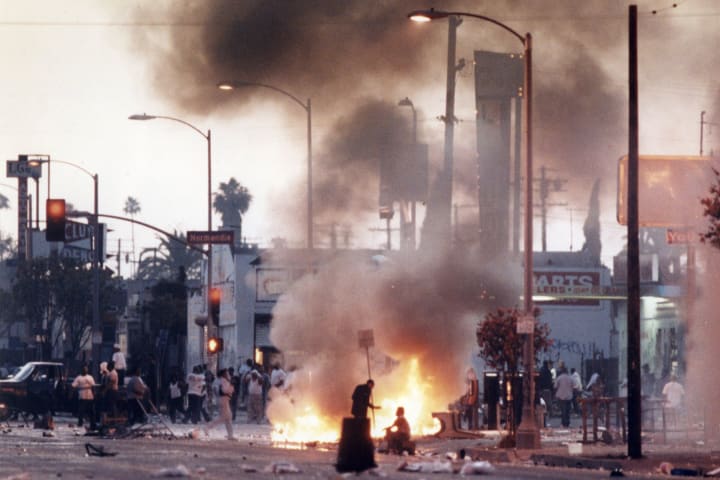
Mass looting would follow the beatings, most of which were targeted towards Korean businesses in the inner city who had long standing tensions with the African American communities they settled in. Many of the Korean store owners would arm themselves with firearms to shoot back at rioters and looters for protection. By nightfall it was all out warfare. Much of this lashing out was fueled by the killing of a young African American teenager named Latasha Harlins who killed after a confrontation with a Korean store owner in Los Angeles.
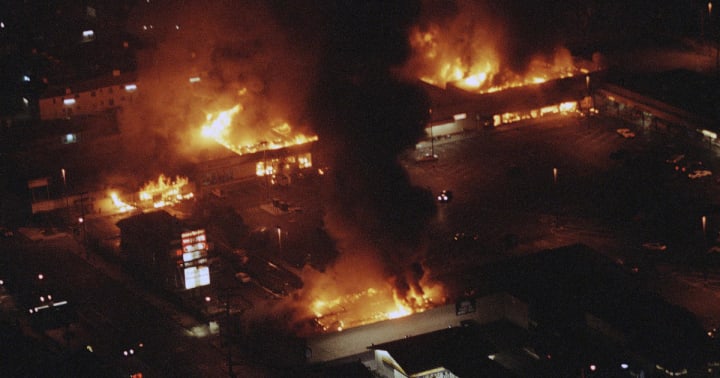
Going into April 30th and May 1st the lootings, fires, beatings and even killings continued until president George H.W. Bush ordered the national guard to descend on Los Angeles and stabilize the area.
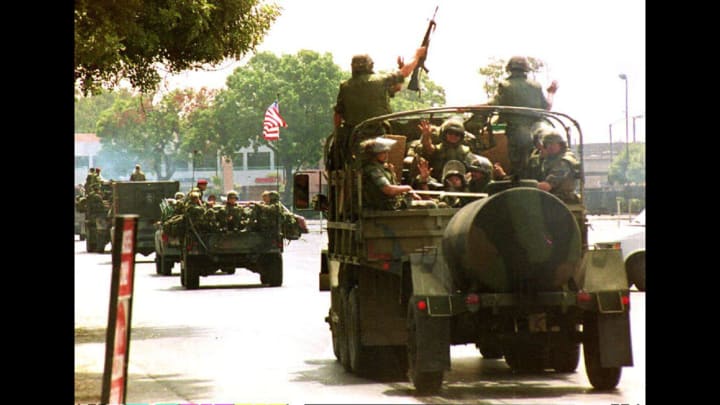
Even in the presence of the National Guard the riots still continued over the course of three more days, but began to lessen. Eventually many celebrities spoke out against the riots calling for peace and Rodney King himself made a public statement calling for the riots to end.

By the end of the riots 63 people were killed. Thousands more were wounded and over a billion dollars in damage was caused. The impact of the riots led to officers Stacey Koon and Laurence Powell being re-tried in federal court and being sentenced to two and a half years in prison for violating Rodney King’s civil rights. Los Angeles police chief Daryl Gates resigned from his position and was succeeded by Willie Williams. Many citizens, political figures and even law enforcement blamed Gates’ policing methods for the tension between police and the community. Many of the Black and Korean citizens held rallies and community meetings calling for peace, unity and reconciliation in the aftermath of the riots. Internal Affairs opened a massive investigation into the LAPD that uncovered a great deal of corruption and misconduct forcing the department to clean up its act.
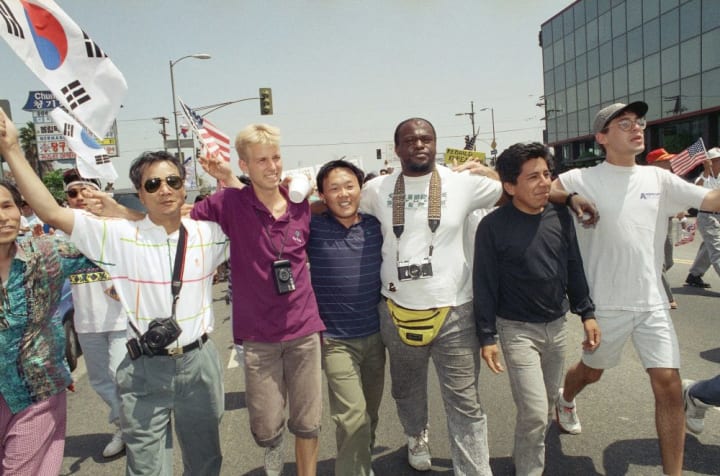
Why exactly did the riots happen? The answer is simple: a history of racial injustice. Many people thought the riots were because of the Rodney King beating, no they were not. The Rodney King beating was just the final straw that broke the camel’s back in web of injustice towards the Black community. For so long the plight of the Black community at the hands of rogue law enforcement went ignored and we finally thought there would be some measure of justice given to us now that we had it all on tape. When that justice was not given people of all races lashed out in what became the LA riots.
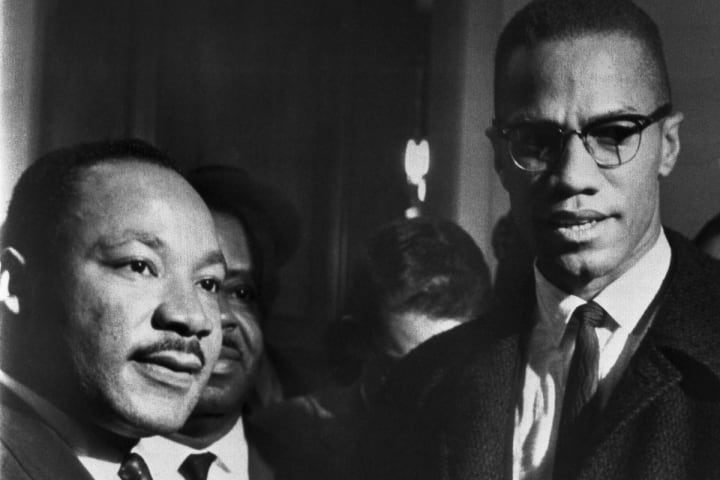
Interestingly enough, many prominent figures predicted such uprisings as the one in Los Angeles decades beforehand. Riots due to racial injustice have always been a thing. Even in Los Angeles the Watts Riots of the 60’s preceded the LA Riots 30 years earlier and number of Black civil rights activist such as Dr. Martin Luther King and Malcolm X were very vocal in warning against the conditions of the racial tension that would lead to the riots of their time.
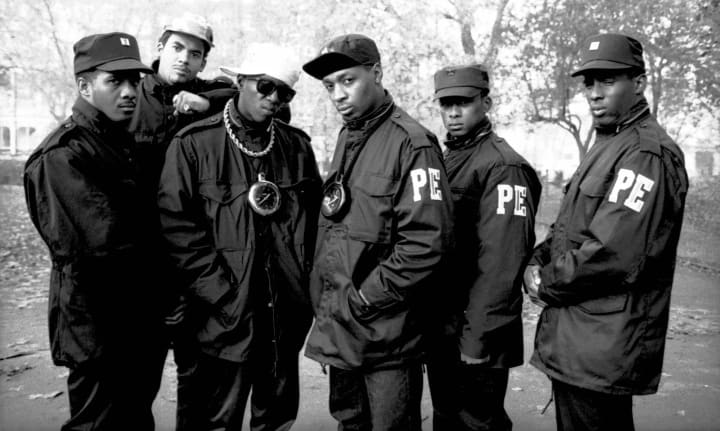
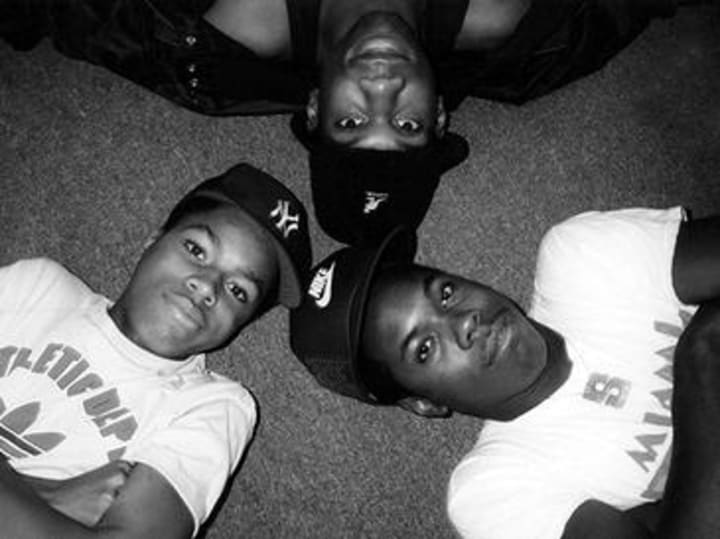
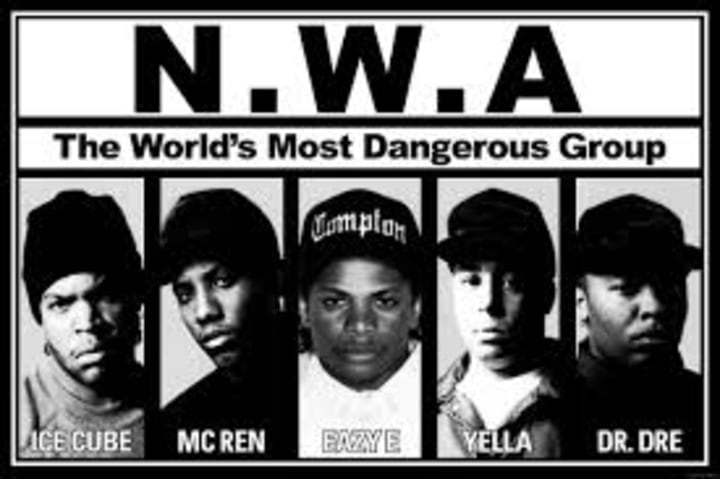
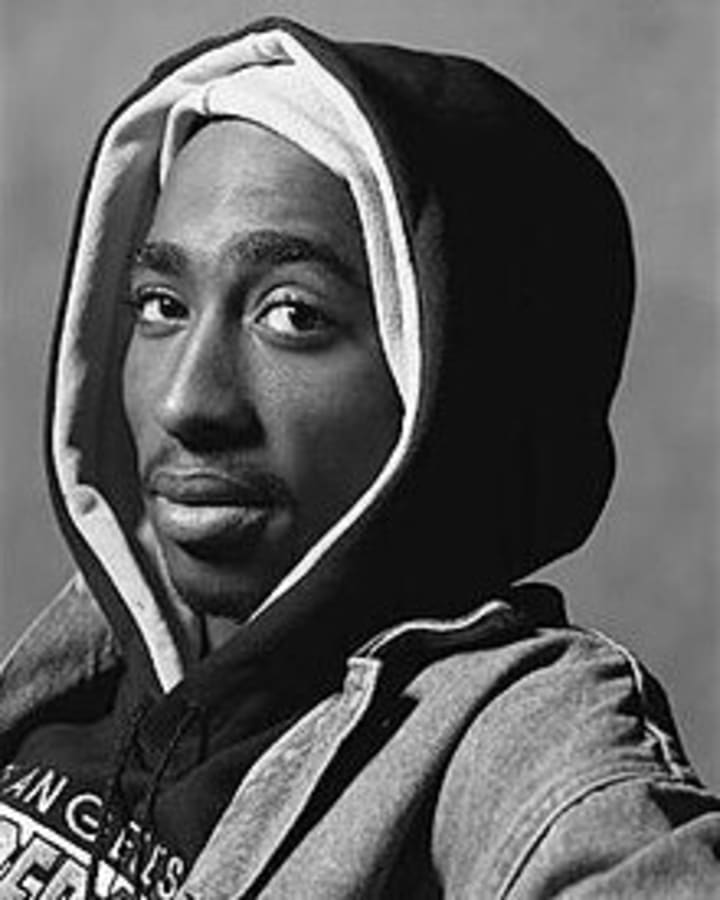
Many Hip Hop artist who rose to prominence in the 80’s and the 90’s like Public Enemy, Boogie Down Productions, NWA and Tupac Shakur were also very vocal about the racial tensions between the community and the police that would lead to the LA Riots.
Fast forward 30 years later and the legacy of the LA Riots lives larger than ever. There have been countless riots that have taken place due to racial injustice over the course of the past 3 decades since Rodney King, with far more heinous injustices being captured on camera and even far younger and more innocent victims being casualties. The LA Riots were carved in a bloody trail and thanks to an unjust future the path of that trail is still being carved. This day May 1st 2023 marks the end of the central days the riots took place. Rodney King has passed on, but the history of April 29th 1992 is a torch that has been passed to a whole new generation. The only way that torch will be put out is not by a change laws and policies, but by a change in humanity.
About the Creator
Joe Patterson
Hi I'm Joe Patterson. I am a writer at heart who is a big geek for film, music, and literature, which have all inspired me to be a writer. I rap, write stories both short and long, and I'm also aspiring to be an author and a filmmaker.
Keep reading
More stories from Joe Patterson and writers in Journal and other communities.
7 Signals the wireless connectivity market Is Entering a New Era
The invisible threads holding the modern world together aren’t made of steel or fiber—they travel through the air. From the moment your alarm syncs with the cloud to the instant a self-driving car updates its navigation data, wireless signals quietly power the rhythm of modern life. What once began as simple radio communication has evolved into an ecosystem connecting billions of devices, satellites, sensors, and cities.
By Andrew Hamilton2 days ago in Journal
Silken Chains
Silhouettes of the female form were given flesh and bone. Silken skin glistened under the spotlight. Dry ice rose around our Icons as they danced atop their podiums in the Square. Heralded for their beauty, their movements were slight, powerful, and sensual.
By Paul Stewart4 days ago in Fiction



Comments (1)
Fabulous work Joe! You're a gifted writer!