
Apple’s Bold Comeback: Touch ID May Return on a Foldable iPhone
Why Apple is betting on nostalgia and innovation to redefine the smartphone experience
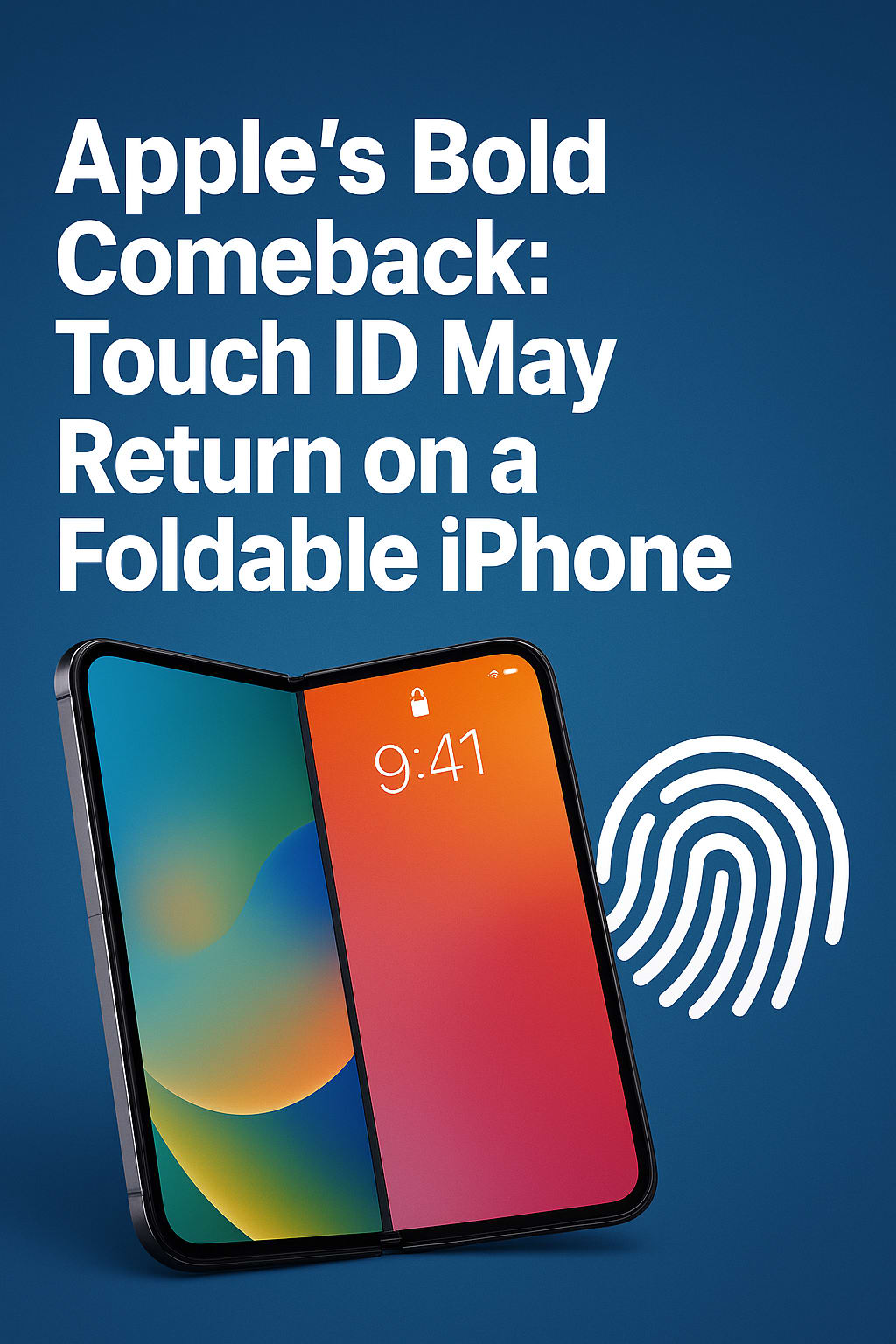
Apple has always taken chances in the fast changing smartphone business. The company has made bold decisions, like removing the headphone jack and adding Face ID, that have frequently altered the sector. Popular feature Touch ID is now rumored to be getting an unique upgrade from Apple. Apple's next foldable iPhone could also have the much loved fingerprint sensor, which is seeing a comeback.
Assuming these rumors are true, this could point to a big change in iPhone design from the introduction of Face ID in 2017. Consider the repercussions for Apple, the mobile phone industry as a whole, and customers.
Touch ID Returns: Not Only a Flashback to the Past
For years, iPhone users adored Touch ID. Originally debuted in 2013 with the iPhone 5s, the fingerprint scanner set the bar for biometric security because it was fast, reliable, and simple to use. But when Apple introduced Face ID with the iPhone X, Touch ID was relegated to inexpensive models like the iPhone SE.
Many people still wished for it even if this changed. Although Face ID is a fantastic tool, it might cause problems in some cases. Masks, dim lighting, or odd angles could hamper its efficacy, for instance. On the other hand, touch ID was simple to operate, rapid, and effective almost every time.
by bringing back Apple is not solely relying on nostalgia for Touch ID. They are reacting to consumer demand, which Apple never overtly acknowledges but instead shows in their design decisions.
Why a Foldable iPhone Need Touch ID
Rumors of a foldable iPhone have been going around for years; prototype negotiations started as early as 2017. Conversely, Apple has stayed quiet and has been carefully watching the industry as competitors like Samsung, Huawei, and Motorola have already unveiled their folding products.
Therefore, including Touch ID on a foldable device would serve what function? The most important considerations are usefulness and enhancement of the user experience.
1. Finding the foldable phone's biometric sensors is one of the main difficulties in terms of screen space and design flexibility. Inserting Face ID into a folding display could present challenges. Touch ID is a more easy choice regardless of where it is positioned—beneath the screen or on the power button.
2. Dual unlocking possibilities: Imagine having the freedom to open your iPhone with either Face ID or Touch ID depending on the situation. For ultimate ease, a foldable iPhone might feature both approaches.
3. Reliability and Durability: Given foldable phones have mechanical components, Apple will most probably emphasize dependability highly. For cases where Face ID might not be suitable, Touch ID offers an excellent fallback option.
Finally, since a foldable iPhone would virtually surely require a range of unlocking methods, Touch ID would be a great companion with Face ID.
Strategy of Apple: Blending modern with ancient
Apple has always combined current technologies with well-known elements. They rarely introduce a new idea without linking it to something already known.
1. AirPods introduced after the Headphone Jack was taken out
2. Embracing gesture controls and getting rid of the Home button
3. Maybe both now, Face ID and Touch ID?
By matching a recognizable feature like Touch ID with the creative design of a foldable iPhone, Apple can appeal to both dedicated traditionalists and contemporary tech enthusiasts.
Smart strategy here. Many Apple fans have chosen not to buy foldable phones from other companies just because they were waiting for Apple's release. One more motive to consider updating is Touch ID's reappearance.
Foldables: the upcoming iPhone Revolution viewed at scale
This is what it stands for for you.
iPhone fans are thrilled about this breakthrough for several reasons:
1. More diversity: Whether you prefer the feeling of Touch ID, are outside in strong sunshine, or are using a mask, you'll have a variety of ways to access your phone.
2. Future-proof Foldable smartphones represent the next phase in their evolution. Buying one from Apple promises seamless integration within its ecosystem and ongoing assistance.
3. Resale Value: Though foldable are costly, they might be a good investment as Apple items usually retain their value better than those made by Android.
Along with difficulties, there are: the high price, longevity issues, and the need for foldable form factor software and accessories to adapt.
A Future Visible to You
Reintroducing Touch ID on a folding iPhone goes above just a design choice. It shows how technology prospers by fusing exciting new ideas with a sense of familiar comfort. Although Apple understands nostalgia's appeal to others, actual success comes from innovation.
For many years, Touch ID was more than only a choice; it represented a kind of trust between your iPhone and you. Including this feature into a cutting-edge fold form could have helped Apple discover the ideal bridge between the past and the future.
Expect Apple's future adventure to center on Touch ID when the foldable iPhone is finally unveiled, which it most certainly will be.
About the Creator
Keep reading
More stories from Shahjahan Kabir Khan and writers in Journal and other communities.
Forget iPads—Surface Pro 12 Is the Real Future of Tablets
For more than ten years, Apple's iPad has defined tablets. Its elegant design, intuitive user interface, and coupling into Apple's strong ecosystem have shaped contemporary tablet expectations. Its domination could be nearing an end, though, in 2025. Microsoft's Surface Pro 12 launch marks a major innovation that not only challenges Apple's dominance but also redefines tablet computer possibilities.
By Shahjahan Kabir Khan7 months ago in Journal
Author’s Advice
If you would’ve asked me 20 years ago did I know I’d become a writer and an author, I would’ve said “nope, ain’t happening”. As fate would have it I did become an author and I can honestly say I’m loving it so far. It really does feel good to be a writer. I’ve learned a lot on this journey and I feel like with even me being as new to this world as I am, there’s some wisdom I need to share with every other aspiring author.
By Joe Patterson4 days ago in Journal
The Forsyth House Fire
Since 1851, Forsyth House has stood on the corner of Union Street and Gordon Street in the heart of Glasgow. Its iconic, or was... because on Sunday 8th of March, 2026, a fire broke out in a small, seemingly un-named shop in the building and tore all that history down. As I write, the rubble is still unsettled and the street is still blocked off. Central Station is quiet on the upper level, and around 30 small businesses have quite literally gone up in smoke.
By S. A. Crawford3 days ago in The Swamp




Comments
There are no comments for this story
Be the first to respond and start the conversation.