
Anti-Collision and Overload Protection Systems in Large Mobile Gantry Cranes
Enhancing Safety and Reliability Through Advanced Safety Systems

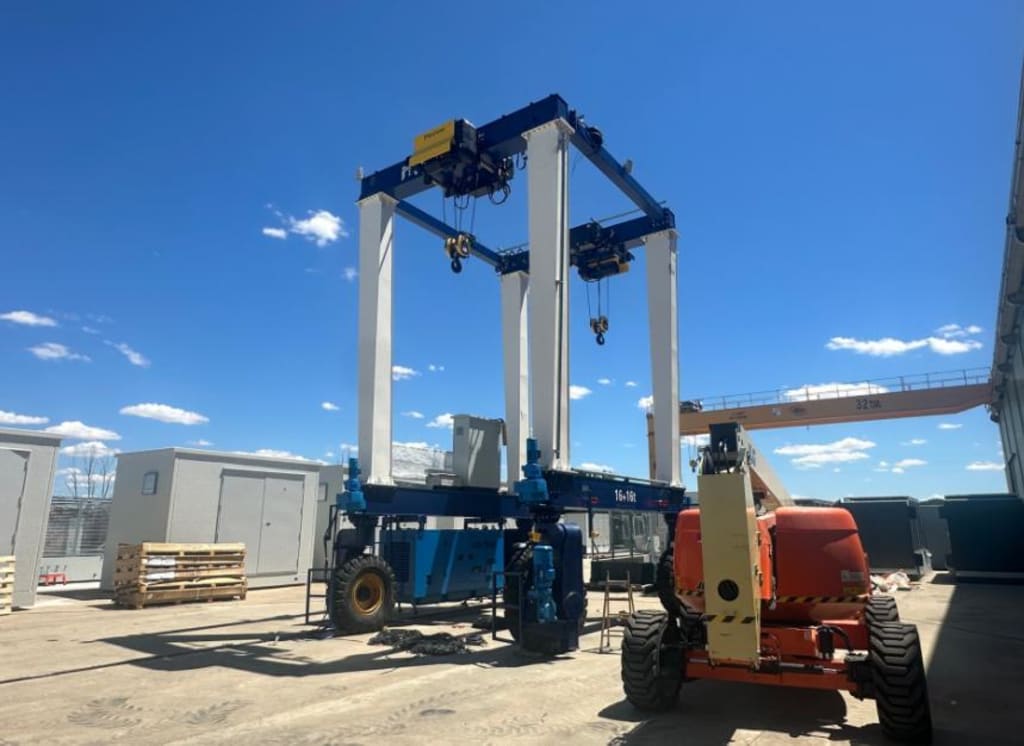
Large mobile gantry cranes are vital lifting systems used in shipyards, container terminals, precast concrete yards, and heavy manufacturing plants. As these cranes handle extremely heavy loads and operate in environments where precision and safety are critical, advanced protection systems are indispensable. Two of the most important safety features are the anti-collision system and the overload protection system. These systems not only prevent accidents but also ensure operational reliability, extend equipment lifespan, and protect personnel and property.
This article explores how these protection systems function, their components, advantages, and how modern technologies are improving crane safety and performance.
Understanding the Need for Safety Systems in Large Mobile Gantry Cranes
Large mobile gantry cranes often operate in complex environments with multiple cranes working simultaneously or in close proximity. They move heavy components such as concrete beams, steel structures, or marine vessels within confined spaces. In such cases, the risks of collisions, load overloads, and structural damage are significantly higher compared to smaller cranes.
Traditional operator experience alone is no longer sufficient to ensure safety and precision in these demanding operations. Therefore, incorporating automated monitoring, sensor-based detection, and real-time control systems has become essential for modern mobile gantry cranes.
What Is an Anti-Collision System?
An anti-collision system is a smart safety feature that prevents accidents between two cranes operating on the same track or within the same working area. It uses sensors, transmitters, and programmable logic controllers (PLCs) to monitor the relative distance between cranes and automatically control their movement to avoid collisions.

Key Components of Anti-Collision Systems
Proximity Sensors or Laser Sensors
These devices detect the distance between two moving cranes or between a crane and a fixed obstacle. Laser-based systems offer high precision and long detection ranges.
Infrared or Ultrasonic Transmitters and Receivers
Installed on both cranes, these units communicate distance data and trigger alerts or automatic slowdowns when cranes approach each other.
Programmable Logic Controller (PLC)
The PLC processes signals from sensors and executes safety commands, such as reducing speed or stopping the crane completely when the distance falls below a safe threshold.
Human-Machine Interface (HMI)
The HMI panel displays warnings, distance readings, and operation status, allowing operators to monitor safety conditions in real time.
How the System Works
When two gantry cranes approach each other, the sensors continuously measure the distance between them. If the distance becomes smaller than the pre-set warning range, a visual and audible alarm is activated. If the rubber gantry cranes continue to move closer, the system automatically reduces the travel speed or stops the crane until the other crane moves away.
The system also detects static obstacles such as walls, columns, or containers, ensuring protection even during automatic or semi-automatic crane operations.
Benefits of Anti-Collision Systems
Reduced Risk of Damage: Prevents costly damage to cranes, loads, and surrounding infrastructure.
Improved Operational Efficiency: Allows multiple cranes to work safely in the same area.
Enhanced Operator Confidence: Assists operators by reducing stress in tight working environments.
Lower Maintenance Costs: Avoids repair expenses from accidental impacts.
Overload Protection System in Gantry Cranes
An overload protection system prevents the crane from lifting loads that exceed its rated capacity. Overloading can cause structural deformation, wire rope breakage, motor failure, or even catastrophic collapse. Modern cranes are equipped with digital load monitoring systems to ensure that lifting operations always remain within safe limits.
Main Components of Overload Protection Systems
Load Cells or Load Sensors
These sensors are installed on the hook, rope, or hoist drum to measure the actual load being lifted. They convert mechanical force into an electrical signal that can be analyzed by the control system.
Load Moment Indicator (LMI)
The LMI compares the actual load weight and lifting radius against the crane’s rated load chart. If the system detects an overload condition, it issues warnings and can automatically stop further hoisting.
Display Unit and Alarm System
The display shows the current load percentage relative to the rated capacity. When the limit is reached, a warning light or audible alarm alerts the operator.
Automatic Cut-Off Mechanism
In extreme cases, the system disables the hoisting operation to prevent structural or mechanical damage.
Working Principle
When the operator begins to lift a load, the system continuously monitors the hoisting tension and compares it to the pre-set rated capacity. If the load exceeds 100% of the rated value, the system immediately activates alarms and stops further lifting. Some advanced systems also record data on load history and frequency of overload attempts for maintenance analysis.
Advantages of Overload Protection
Prevent Structural Failure: Protects the crane’s mechanical and structural components from excessive stress.
Extend Equipment Life: Reduces wear and fatigue caused by overloading.
Enhance Safety: Prevents accidents caused by broken ropes, motors, or beams.
Improve Operational Transparency: Provides operators and supervisors with real-time load information for better control.
Integration of Anti-Collision and Overload Protection Systems
In modern large mobile gantry cranes, these two systems often operate together through an integrated crane safety management system. Using PLC-based controllers and advanced communication protocols, the system can coordinate all safety functions — including anti-sway control, load monitoring, and travel limit protection — within one unified platform.
Such integration improves operational reliability and enables predictive maintenance. For instance, when overload conditions are detected frequently in certain operations, the system can record these events and alert maintenance teams to inspect structural components.
Technological Innovations Enhancing Safety Systems
The continuous advancement of technology has significantly improved the accuracy and intelligence of anti-collision and overload protection systems. Some key innovations include:
IoT and Cloud-Based Monitoring:
Real-time data from sensors can be uploaded to cloud platforms, allowing remote monitoring, predictive analytics, and performance optimization.
AI-Assisted Collision Prediction:
Artificial intelligence algorithms can analyze crane movement patterns and predict potential collision paths, enabling proactive safety measures.
Wireless Communication Networks:
Instead of traditional wired systems, modern cranes use wireless data transmission to improve flexibility and reduce installation complexity.
Integration with Anti-Sway Systems:
Combining overload protection with anti-sway control ensures safer load handling, especially for long-span or high-lift gantry cranes.
Smart Diagnostic Tools:
Self-diagnosis functions can automatically check sensor performance, calibration, and fault conditions, minimizing downtime.
Best Practices for Maintaining Protection Systems
Even the most advanced safety systems require regular inspection and maintenance. Operators and technicians should follow these best practices:
Routine Sensor Calibration: Regularly verify and calibrate sensors to maintain accuracy.
System Testing: Conduct periodic function tests to ensure alarms, cut-off mechanisms, and communication signals work properly.
Software Updates: Keep the PLC and monitoring software updated to benefit from enhanced algorithms and bug fixes.
Environmental Checks: Protect sensors from dust, moisture, and vibration that may affect performance.
Operator Training: Ensure operators understand system alerts and know how to respond safely to warning signals.
Conclusion
Anti-collision and overload protection systems are critical elements in the safe and efficient operation of large mobile gantry cranes. These systems not only prevent accidents but also protect valuable equipment, reduce downtime, and enhance overall productivity.
As technology continues to evolve, modern gantry cranes are becoming more intelligent, integrating IoT, AI, and automated diagnostics to deliver superior safety performance. For crane owners and operators, investing in these advanced protection systems is not just a compliance measure — it’s a strategic step toward long-term operational success and workplace safety.
About the Creator
Aicrane01
Welcome to the Aicrane Blog, your practical guide to lifting solutions. Discover articles covering overhead cranes, gantry cranes, winches, steel structures, boat lifts, and more.
Website: https://steelmillcranes.com/
Pakistan's Geopolitical Chess Master
Pakistan: The Chess King Who Keeps the Whole World Guessing ♟️ On the world's most complex geopolitical chessboard, Pakistan is currently making moves so unconventional that even grandmasters are scratching their heads. General Asim Munir sits like a king on the throne, yet his strategies are keeping ministers, ambassadors, generals, and diplomats alike in a state of delightful confusion. In a game where every nation plays for survival, Pakistan isn't just surviving—it's orchestrating.
By Literary fusion4 days ago in Journal




Comments
There are no comments for this story
Be the first to respond and start the conversation.