
Amul’s success came from a combination of its founder’s
What do you know about pasteurisation,” an interviewer asked the young man who had applied for a Government of India fellowship for a Masters in Engineering abroad. “Something to do with milk?”
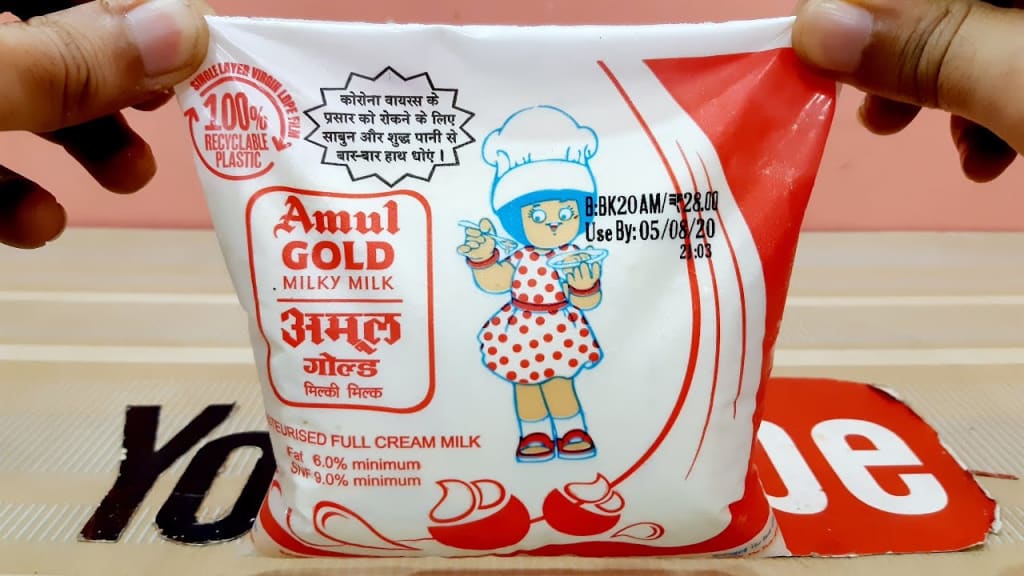
The year was 1946. In his biography From Anand: The story of Verghese Kurien, M.V. Kamath recounts the story of how the youngster was selected to do a Masters in dairy engineering by a government committee that was impervious to his pleas that he be allowed to specialise in metallurgy instead.
As it turned out, Michigan State University did not have dairy engineering, and Verghese Kurien was able to do metallurgy and Physics. But when he came back to India in 1948, it was to a small and unknown village in Gujarat called Anand that he was sent, to work out his two-year bond at the Government creamery on a salary of Rs.600 per month. Hating his job, he waited impatiently for his fetters to loosen. That did not happen. What it did was that V. Kurien, by the conjunction of politics, nationalism and professional challenge, decided to stay on. He would transform rural India.
Verghese Kurien, who became a legend in his lifetime for building a cooperative movement that transformed the lives of poor farmers while making India self-reliant in milk production, died on Sunday in Nadiad at the age of 90. He was in hospital, suffering from a series of problems associated with old age.
Born on November 26, 1921 in Kozhikode, Kerala, Verghese Kurien studied at Madras University for a Bachelor of Science in 1940, a Bachelor of Mechanical Engineering (Honours) from Madras University (1943), and was a graduate of the Tata Iron and Steel Company Technical Institute, Jamshedpur (1946). He took a Master of Science in Mechanical Engineering (Distinction) from Michigan State University (1948) and then went for specialised training in dairying at the National Dairy Research Institute, Bangalore. He had 17 honorary doctorates from universities in India and abroad. At the time of his death he was Chancellor, University of Allahabad (since April 17, 2006), Member, Board of Trustees, Lal Bahadur Shastri National Memorial Trust, New Delhi (since 1986), and Member, Advisory Committee, South Asian Network on Fermented Foods — SAN FOODS (since 2004).
He was Founder Chairman of the National Dairy Development Board (1965-1998), the Gujarat Cooperative Milk Marketing Federation Ltd, Anand (1983-2006), the National Cooperative Dairy Federation of India Limited (1986-1993), (1995-2000), and (2003-2006), and the Board of Governors, Institute of Rural Management, Anand (1979-2006), amongst several other posts he held in his working life.
He was the recipient of several distinguished Indian and international awards. To give a short selection of them: nationally, the Padmashri (1965); Padmabhushan (1966); Krishi Ratna (1986); and the Padma Vibhushan (1999). Outside India, it was the Ramon Magsaysay Award for Community Leadership (1963); the “Wateler Peace Prize” Award of the Carnegie Foundation for the year 1986; the World Food Prize award for the year 1989; the “International Person of the year” by the World Dairy Expo, Wisconsin, U.S. (1993), the “Ordre du Merite Agricole” by the Government of France (in March 1997); and the Regional Award 2000 from the Asian Productivity Organization, Japan.
Till his death, he was a bitter critic of the policies of liberalisation in India, which he believed opened India to unfair competition from multinational companies. He laid out his objections to liberalisation as early as 1995 in a detailed and wide-ranging interview he gave this correspondent for Frontline.
“With liberalisation and globalisation, it seems to me, India's national boundaries have ceased to exist,” he told Frontline. “I am sorry, I do not think it is a good thing, because if you have opened up this market under such terms, what it implies is that other countries can put their products into our markets. Are you aware that all those advanced countries subsidise their exports? Subsidies are as high as 65 per cent. Now if you have globalised, and the others are subsidising their exports, to what position have you exposed the Indian dairy industry? You have declared dairy products under OGL (Open General Licence). You have in fact created a situation where our dairy industry can be killed. This is unfair competition.”
About the Creator
Author’s Advice
If you would’ve asked me 20 years ago did I know I’d become a writer and an author, I would’ve said “nope, ain’t happening”. As fate would have it I did become an author and I can honestly say I’m loving it so far. It really does feel good to be a writer. I’ve learned a lot on this journey and I feel like with even me being as new to this world as I am, there’s some wisdom I need to share with every other aspiring author.
By Joe Patterson4 days ago in Journal


Comments
There are no comments for this story
Be the first to respond and start the conversation.