
America’s Sex Education Crisis: Why Only 37% of States Teach Medically Accurate Information
Outdated policies, political battles, and misinformation are leaving millions of students unprepared for real-life relationships.

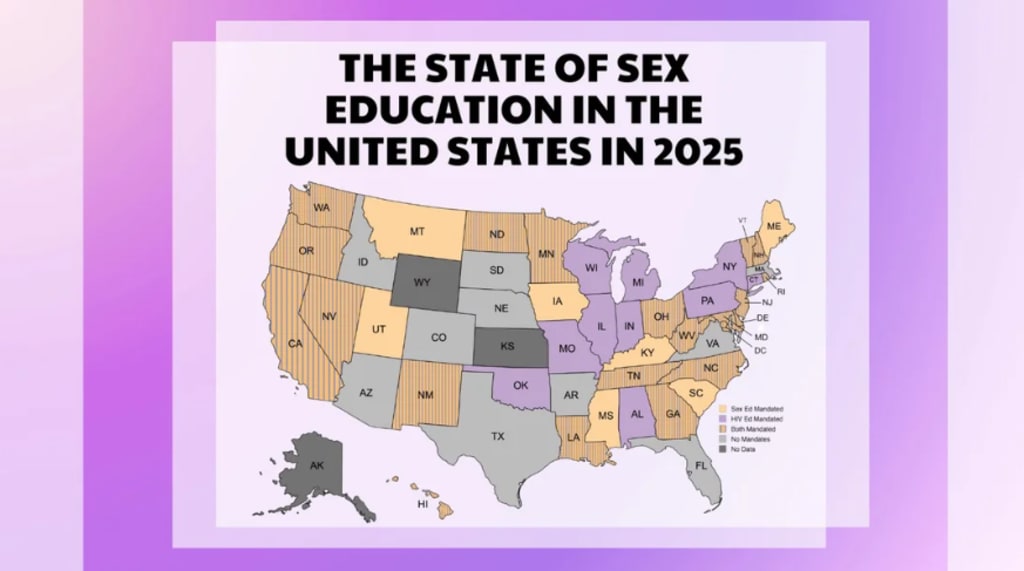
In 2025, it’s shocking but true: only 19 U.S. states require schools to teach medically accurate sex education. That means in most classrooms across the country, what students learn about their bodies, relationships, and consent depends on their ZIP code — not on science.
For a nation that leads in technology and innovation, the state of sex education reveals something deeply outdated: America still struggles to talk honestly about sex.
A Broken, Uneven System
Unlike math or history, sex education has no federal standard. Each state — and often each school district — decides what to teach and how to teach it.
That’s why a student in California might learn about contraception, consent, and healthy communication, while one in Alabama is told abstinence is the only “safe” choice.
A 2025 report from SIECUS (Sex Ed for Social Change) found that less than half of U.S. schools include lessons on consent, sexual orientation, or gender identity. Some districts even ban teachers from discussing these topics altogether.
This inconsistency has consequences. The U.S. continues to have higher rates of teen pregnancy and sexually transmitted infections (STIs) than most developed nations. Young people report feeling confused, anxious, or ashamed about sex — not because they’re doing something wrong, but because adults refuse to teach them the truth.
Where Politics Overshadows Health
At the heart of this issue is a clash between science and ideology. In 2025, more than a dozen states proposed new bills to restrict how schools discuss sexuality and gender. Some require parental permission for students to attend sex-ed classes; others outright prohibit teachers from mentioning LGBTQ+ identities or contraception.
Supporters call these moves “protecting family values.” Critics call them dangerous.
“Comprehensive sex ed isn’t about encouraging sex,” says Dr. Monica Lattimore, a public health educator in Chicago. “It’s about giving young people the tools to make safe, informed choices. Ignoring reality doesn’t protect them — it puts them at risk.”
The debate has turned classrooms into battlegrounds, where political agendas often overshadow the voices of educators, parents, and health experts.
The Misinformation Generation
When schools don’t teach sex education effectively, young people turn elsewhere — mainly, the internet.
A University of Michigan study found that 70% of teens get their information about sex and relationships from social media or online videos. Platforms like TikTok and YouTube have become makeshift teachers — but the information isn’t always accurate or healthy.
This creates a dangerous feedback loop. Teens form beliefs about consent, relationships, and body image based on what they see online, not from trusted adults or credible sources. Pornography, too, fills the void — shaping unrealistic expectations about intimacy and communication.
“Silence breeds misinformation,” says Lattimore. “And misinformation shapes behavior.”
What Real Sex Education Looks Like
Comprehensive sex education is about respect, safety, and knowledge, not about promoting sexual activity. It teaches:
- How to understand and respect consent.
- How to protect against pregnancy and STIs.
- How to recognize abuse and unhealthy relationships.
- How to respect gender and sexual diversity.
Studies consistently show that students who receive comprehensive sex education are less likely to experience unplanned pregnancies or contract STIs. They also report healthier attitudes toward relationships and communication.
Still, opponents continue to push for abstinence-only programs — even though decades of data show they don’t work.
The Path Forward
Advocates say change must start with policy. A federal standard for medically accurate, inclusive sex education could help close the gap between states. But real progress also depends on breaking cultural taboos — giving parents, teachers, and students permission to talk about sex openly and without shame.
“Sex is part of being human,” Lattimore reminds. “Teaching kids to understand their bodies isn’t immoral. It’s responsible.”
As the nation debates what belongs in the classroom, the stakes couldn’t be higher. With misinformation spreading faster than ever, silence is no longer neutral — it’s harmful.
Conclusion
Sex education isn’t just about anatomy; it’s about empowerment. When only 37% of states teach the truth, the rest are leaving millions of young people vulnerable to myths, mistakes, and manipulation.
If the goal is to raise a generation that respects themselves and others, it starts with honest, accurate, and inclusive education. The facts aren’t the problem — the fear of them is.
#SexEducation #YouthHealth #EducationReform #ConsentMatters #PublicHealth #LGBTQ #NextGen #MedicallyAccurateEd
About the Creator
Shakil Sorkar
Welcome to my Vocal Media journal💖
If my content inspires, educates, or helps you in any way —
💖 Please consider leaving a tip to support my writing.
Every tip motivates me to keep researching, writing, sharing, valuable insights with you.
Keep reading
More stories from Shakil Sorkar and writers in Journal and other communities.
Supreme Court Secures Nationwide Same-Sex Marriage Rights: A Landmark Victory for LGBTQ+ Couples
In a decisive move, the U.S. Supreme Court has upheld the constitutional right to same-sex marriage, rejecting a petition that sought to overturn the landmark 2015 decision in Obergefell v. Hodges. This ruling ensures that LGBTQ+ couples across the nation can continue to marry legally — a significant affirmation of civil rights in the United States.
By Shakil Sorkar2 months ago in Journal
The goals I did not achieve
Every writing goal I made for the year is a wash. It has been this way for a while, but I think it's important to be open about my failures and the reality of how life can get in the way. This is especially true considering the several times I have posted on Vocal about my writing goals, how I was changing my approach, and where I was hoping to be for the upcoming year. I will probably do that again in a couple months, but for now, it is time to acknowledge where I am today.
By Kay Husnick24 days ago in Journal
What I Noticed When Light Stopped Feeling Sharp
I never would have described the light around me as a problem. It was bright enough. Clean. Modern. Exactly what you expect in a well designed indoor space. If someone had asked me whether the lighting felt uncomfortable, I probably would have said no.
By illumipure3 days ago in Journal



Comments
There are no comments for this story
Be the first to respond and start the conversation.