
Air pollution: Why it's the new risk factor for lung cancer in nonsmokers
Research highlights the relationship between PM2.5 particles and the increase in these tumors, with East Asia being the most affected region

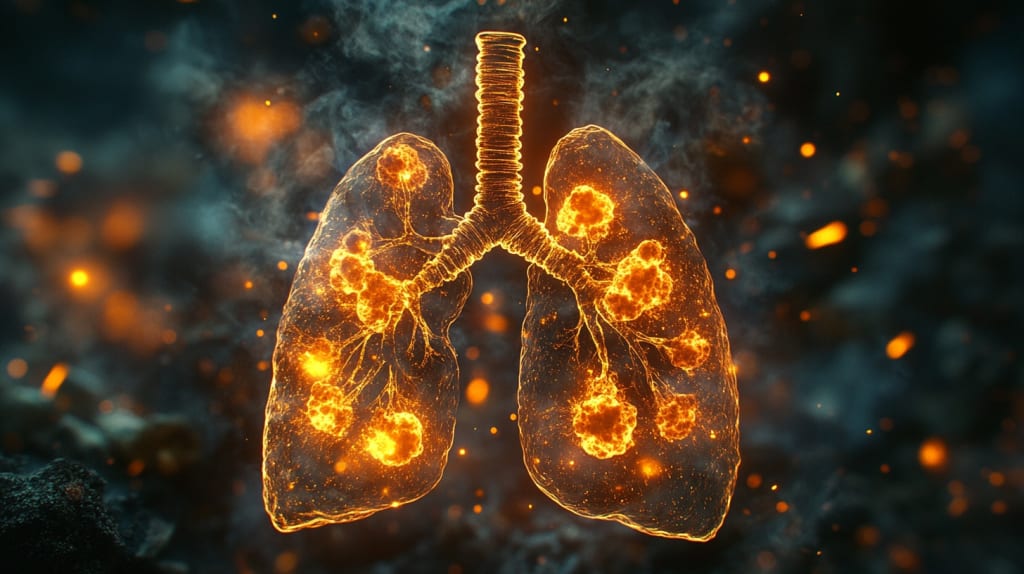
Lung cancer is the leading cause of incidence and mortality from cancer worldwide, according to the International Agency for Research on Cancer (IARC), part of the World Health Organization (WHO).
In 2022, 2.5 million cases of lung cancer were diagnosed, corresponding to an annual incidence rate of 23.6 cases per 100,000 people. It also remains one of the most lethal cancers globally, with more than 1.8 million deaths each year.
According to BBC News, although the majority of diagnoses are still related to tobacco use, the sustained decline in smoking rates in many countries has caused the proportion of cases in people who have never smoked to increase significantly. Currently, between 10% and 20% of lung cancer diagnoses are in individuals who have never smoked. The culprit? Environmental pollution.
Different characteristics in lung cancer detection in non-smokers
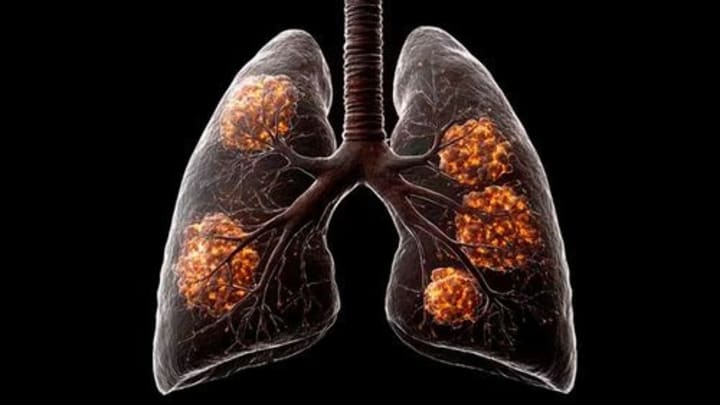
BBC News detailed that lung cancer in nonsmokers presents distinct molecular characteristics than those in tobacco-related cases, which directly influences therapeutic decisions and clinical outcomes.
Recent research has shown that differences in molecular pathways, such as activation of EGFR (epidermal growth factor receptor) signaling and specific mutations, are more common in nonsmokers than in smokers. This factor contributes to more personalized treatments, although prognosis remains challenging due to late diagnosis.
Air pollution from fine particulate matter (PM2.5) is increasingly recognized as a significant risk factor for lung cancer, with studies demonstrating its direct relationship with the increase in adenocarcinoma, especially in regions like East Asia, where exposure to these pollutants is high.
According to a study in the Journal of Advanced Research, prolonged exposure to fine particles and nitrogen oxides contributes to DNA damage and oxidative stress, mechanisms that promote the development of lung cancer, particularly adenocarcinoma.
The most common tumor type in young people diagnosed with lung cancer is adenocarcinoma, which originates in the mucus-producing cells of the lungs and, for decades, has displaced squamous cell carcinoma as the predominant form in both smokers and nonsmokers.
For decades, adenocarcinoma has experienced significant growth, particularly among younger generations, largely due to exposure to environmental pollutants such as fine particulate matter (PM2.5), as indicated by research on the effects of pollution on respiratory health.
According to the British Journal of Cancer, exposure to PM2.5, especially in densely populated urban areas, is strongly associated with an increased risk of adenocarcinoma. Fine particulate matter released by the burning of fossil fuels, industry, and vehicular traffic contain carcinogens, such as polycyclic aromatic hydrocarbons (PAHs), which contribute to genetic damage and the proliferation of cancer cells.
Adenocarcinoma is often diagnosed in advanced stages, as initial symptoms—such as a persistent cough, chest pain, or shortness of breath—usually appear after the tumor has already grown or spread.

In other words, this type of tumor is particularly insidious due to its silent development, which delays detection until the cancer is at a more advanced stage, reducing effective treatment options.
Air Pollution, a Growing Risk Factor
The increase in lung cancer cases among nonsmokers has prompted the search for preventative strategies for this group. BBC News reported that, in addition to secondhand smoke and radon exposure, factors such as cooking fumes and the use of wood or coal stoves in poorly ventilated spaces increase the risk.
However, outdoor air pollution has emerged as the second most important risk factor after tobacco.
Various studies have shown that people who live in areas with high levels of pollution are more likely to die from lung cancer.
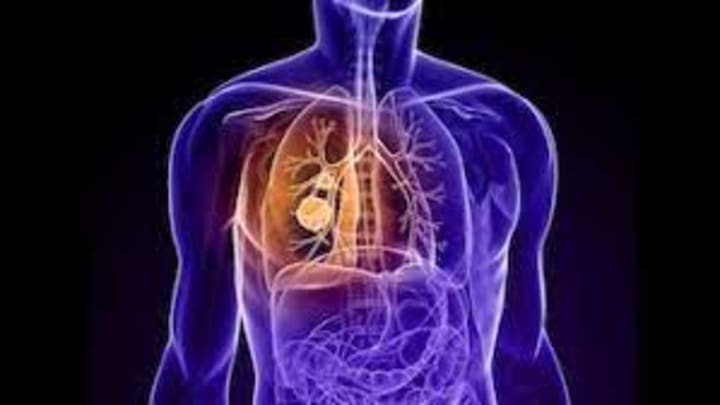
The UN report on pollution and health thus underscores how prolonged exposure to air pollution, especially fine particulate matter, affects not only people living in highly polluted urban areas but also those with a greater genetic predisposition.
In this regard, it also highlights that lung cancer related to environmental pollution is a global public health problem, particularly in countries with high levels of pollutant emissions, such as certain parts of Asia, requiring a multifaceted approach to its prevention.
The Asian problem and advances in lung cancer treatment
The relationship between pollution and lung cancer is not new. In 1950, a pioneering study linking smoking to lung cancer suggested that pollutants from burning fossil fuels could be a cause. However, public policies have focused almost exclusively on tobacco control, and now, environmental pollution is beginning to receive greater attention.
In Europe and the United States, pollution levels have decreased in recent decades, but the impact of these changes on lung cancer rates has yet to be reflected.
In 2021, the World Health Organization (WHO) halved its annual recommendation on levels of fine particulate matter from vehicles, industry, fuel combustion, and natural activities.
A study cited by BBC News identified that the greatest burden of lung cancer attributable to these fine particulates is concentrated in East Asia, especially China. In countries like India, where pollution levels are among the highest in the world, according to the WHO, the number of pollution-related lung cancer deaths could increase in the future. In Delhi, average levels of fine particulate matter exceed 100 micrograms per square meter, twenty times higher than the WHO guidelines.
Advances in treatment have improved the survival rate of non-smoking lung cancer patients. According to BBC News, this type of cancer is expected to become the most common form of a disease historically associated with older male smokers, changing social perceptions of patient responsibility.
About the Creator
Omar Rastelli
I'm Argentine, from the northern province of Buenos Aires. I love books, computers, travel, and the friendship of the peoples of the world. I reside in "The Land of Enchantment" New Mexico, USA...
Keep reading
More stories from Omar Rastelli and writers in Journal and other communities.
IBM Quantum Starling, the quantum computer 20,000 times more powerful than current computers
IBM announced the development of “Quantum Starling,” a quantum computer that plans to multiply the current capacity of quantum computing by 20,000 times. The company's goal is to deliver the first large-scale, fault-tolerant machine by 2029, capable of solving problems impossible for today's technology.
By Omar Rastelli7 months ago in Journal




Comments
There are no comments for this story
Be the first to respond and start the conversation.