
AI in Music: The New Era of Perfect Harmonies
Redefining Creativity with AI-Driven Melodies and Beats

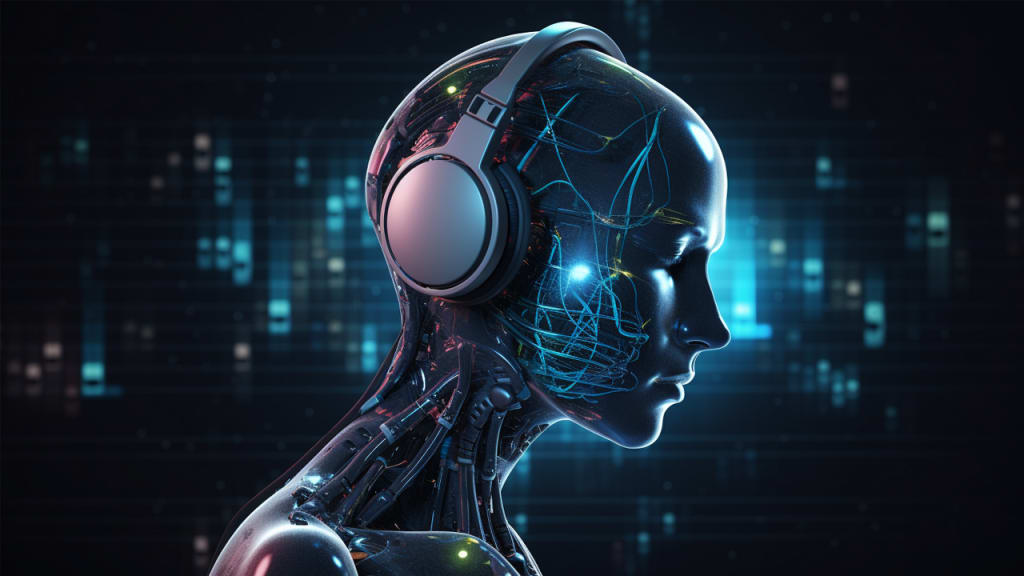
Can you differentiate between AI music and human-generated melodies? Well, a true music lover can tell the difference within seconds. However, since AI replicates human emotions and sentiments, it might be a bit difficult to understand the difference between automated and human-generated music because of its realistic humanized tone.
Today, Artificial Intelligence is becoming a go-to technology for various industries and music is not an exception With its ability to process vast amounts of data, AI is transforming how music is composed, performed, and consumed.
According to a report by The Business Research Company, AI in the music market stood at 0.34$ billion in 2024. However, it is expected to grow at an annual rate of 28.8% and reach 0.95$ billion by 2028.
This shows the combination of AI and music has created a new era of perfect harmonies, where creativity meets computation.
Let's talk about how AI is playing a crucial role in redefining how music is generated, composed and consumed by the audiences.
AI in Music Composition
AI in music composition enables the creation of original melodies and harmonies with minimal human intervention. With the introduction of many AI devices such as an AI laptop helps creators analyze vast datasets of music and generate pieces that reflect specific styles or genres. It allows artists to experiment with innovative sounds and collaborate creatively with machines in real time. It uses various technologies such as:
Generative Adversarial Networks (GANs):
Generative Adversarial Networks are often used to create music that mimics human compositions. The model comprises a generator, which creates music, and a discriminator, which evaluates its quality.
Markov Chains
It is a probabilistic model that predicts the next note in a sequence based on the current state, producing coherent melodic progressions.
Symbolic Music Modeling
AI systems analyze MIDI (Musical Instrument Digital Interface) files to understand musical structures like chord progressions and scales.
For example: Algorithms like OpenAI's MuseNet use deep learning models to create music across multiple genres and styles.
How AI Brings a New Era of Music Composition?
Music is an emotion and when it comes to crafting resonating music, AI holds immense potential to compose music just like humans. Some of the major reasons include:
1. The Rise of the Digital Composer
Gone are the days when music creation mainly relied on virtuosos. Today, AI-powered systems can analyse decades of music theory, spanning genres and styles, to create original compositions that challenge traditional boundaries.
Imagine a virtual Mozart composing an ethereal symphony or an AI-powered DJ creating beats that perfectly sync with the vibe of a party.
Tools like AIVA (Artificial Intelligence Virtual Artist) are doing just that, blending logic with creativity.
AI uses neural networks where deep learning models are trained on millions of tracks, enabling AI to understand harmony, melody, and rhythm.
2. AI in Performance and Production
The production studio is no longer limited by human constraints; AI has enhanced the music production process by automating time-consuming tasks. Producers and sound engineers now rely on AI tools to achieve a professional-grade sound.
Dynamic Mixing: AI tools like iZotope’s Neutron use machine learning to balance tracks automatically, ensuring clarity in every note.
AI-Generated Instruments: Virtual instruments, powered by AI, replicate the timbre of physical instruments or generate completely new sounds never heard before.
3. A Personal Symphony for Every Listener
Music is deeply personal, and AI is making it even more intimate. By analysing listener behaviour, preferences, and even physiological data, AI can craft playlists, tracks, or entire soundscapes uniquely tailored to an individual.
AI offers mood-responsive playlists that use AI algorithms to suggest music that matches your current mood or activity.
Biometric Harmonies: As AI is advancing at a rapid pace, future technologies could analyze your heart rate or stress levels to create calming melodies or energizing beats.
Real-Time Audio Adaptation: These systems could adjust a song’s tempo, pitch, or dynamics based on where and how you are listening, be it on headphones or in a concert hall.
4. The Art of Collaboration: Human + AI
Rather than replacing human musicians, AI is becoming their partner. Together, they are exploring new musical heights, breaking creative barriers, and reimagining what’s possible. For example:
Co-Creative Tools: AI suggests chord progressions, melodies, or lyrics based on an artist’s input. This “second brain” for musicians opens doors to new ideas.
Virtual Bandmates: AI can simulate instruments and voices, allowing solo artists to create full-band experiences without hiring a single musician.
Breaking Writer’s Block: For musicians struggling with writing lyrics and poems, AI lyric generators like Jarvis can offer poetic motivation to help music composers generate lyrics that automatically match your overall music rhythm or theme.
Concluding Statements
In a nutshell, AI is not just changing music, it is reinventing it. From composing to performing to personalizing, AI has become a vital part of the music ecosystem. Rather than replacing the human touch, it enhances and complements it, creating harmonies that take the music composition to the next level
AI Music: A perfect harmony of technology and art.
About the Creator
Gabriella Browne
Gabriella Browne is a sharp, detail-oriented news writer with a passion for investigative journalism. She delivers timely, well-researched stories, covering politics, business, and global affairs with accuracy.
Keep reading
More stories from Gabriella Browne and writers in Journal and other communities.
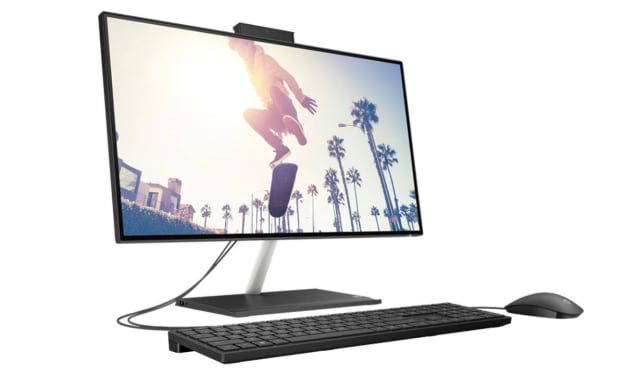
What are the Must-Have Features in a Black Friday All-in-One PC?
Black Friday brings the buzz of incredible deals, endless shopping, and the excitement of snagging the best tech at a fraction of the price. If you’re in the market for an upgrade this year, an all-in-one PC is one of the smartest choices you can make.
By Gabriella Browneabout a year ago in Journal



Comments
There are no comments for this story
Be the first to respond and start the conversation.