
AI and the Erosion of the Middlemind.
What happens when average creative jobs disappear.


Creative work once followed a stable curve. A few people produced elite work. Many people produced solid, competent output. A smaller group struggled. The middle carried industries. Designers, writers, editors, illustrators, and marketers filled this space. They earned steady income through reliable skill. AI is now reshaping this structure.
You see the change already. Tools generate logos, articles, videos, music, and ads in seconds. The output meets professional standards. It lacks personality at times. It still satisfies briefs. For many buyers, this level works. Cost drops. Speed rises. Demand for average creative labor shrinks.
This shift targets the middlemind. The middlemind refers to workers who deliver competent creativity without extreme originality or fame. They once handled most commercial tasks. Brochures, blog posts, product images, explainer videos, and brand copy relied on them. AI now fills this role at scale.
You should understand why this layer mattered. The middlemind trained juniors. It supported seniors. It stabilized teams. It translated vision into execution. Without it, workflows fracture. Companies either automate or chase rare talent.
AI favors patterns. Average creative work relies on patterns. Templates, styles, formats, and trends define it. AI learns these quickly. It reproduces them endlessly. This efficiency undercuts human pricing. Clients ask why they should pay more for similar results.
You feel the pressure in hiring data. Entry and mid level creative roles decline. Freelance rates compress. Contracts shorten. Output expectations rise. One person now oversees what five once handled. The role shifts from creator to supervisor.
This change alters career ladders. You once progressed from junior to mid level through repetition. Repetition built judgment. Judgment built mastery. AI removes repetition. Juniors lose practice. Seniors lose teams. The ladder breaks in the middle.
You also see a split in value. At the top, distinctive voices gain leverage. Original thinkers, strong storytellers, and cultural leaders still matter. At the bottom, low cost automation dominates. The center thins out.
This pattern echoes other industries. Manufacturing lost middle skill roles through automation. Services now follow. Creativity once felt safe. It relied on taste and intuition. AI learned enough of both to compete.
You should not frame this as total replacement. AI still depends on direction. Prompts shape output. Review refines it. Strategy guides use. The human role shifts upward or sideways. The count of roles still drops.
The erosion affects more than income. It affects identity. Many people defined themselves through creative competence. They enjoyed solving briefs and polishing work. When machines do this faster, confidence erodes. Motivation drops. Anxiety rises.
Culture feels the impact too. Middle creators produced diversity within constraints. They adapted global trends to local contexts. AI flattens style. It averages taste. Without human mediation, sameness spreads.
Education struggles to respond. Schools still teach tools and techniques. Students graduate into shrinking demand. They face competition from software trained on their field. Curriculum lags reality.
You need to ask what survives. Roles tied to judgment endure. Roles tied to accountability endure. Roles tied to trust endure. Clients still want humans to own outcomes. They want explanation, responsibility, and ethical awareness.
New roles form around curation. You select, refine, and contextualize AI output. You integrate it into broader narratives. This work values taste over execution. Taste remains hard to automate.
Another path favors deep originality. This path rewards strong point of view. It demands risk. It rejects safe output. AI struggles here because it depends on precedent. Novelty still needs human rupture.
A third path blends disciplines. Creatives who pair design with strategy, writing with data, or art with engineering gain resilience. AI handles pieces. You connect them.
You should expect turbulence during this shift. Wages fluctuate. Titles blur. Metrics change. Those who adapt early gain advantage. Those who wait face narrowing options.
Organizations also face risk. Removing the middlemind saves money short term. It weakens long term capability. Teams lose mentors. Quality control slips. Strategic thinking thins. Leaders notice this after damage appears.
Some firms now rebuild with smaller, senior heavy teams supported by AI. Others invest in training taste and judgment. The market tests models in real time.
Policy lags behind. Labor frameworks assume stable roles. Creative work now shifts faster than regulation. Support systems fail to catch freelancers and contractors displaced by automation.
You play a role in shaping the outcome. Choices about pricing, attribution, and workflow matter. Transparency builds trust. Clear standards preserve value. Silence accelerates erosion.
The middlemind does not vanish overnight. It contracts. It transforms. It either moves upward toward judgment or downward toward automation management. Standing still no longer works.
History shows similar transitions. Photography changed painting. Desktop publishing changed print. Each time, average roles shrank. New forms emerged. Pain preceded adjustment.
This moment feels sharper due to speed. AI spreads globally in months. Adoption requires little training. Scale arrives instantly. The shock hits faster than before.

You should focus on what machines lack. Lived experience. Moral intuition. Contextual awareness. Responsibility for harm. These traits anchor future creative work.
The erosion of the middlemind marks a structural shift. Creativity moves from execution to decision. From making to choosing. From producing to meaning.
You stand at a fork. One path competes with machines on speed and cost. The other builds value machines struggle to match. The second path demands growth and risk. It also offers durability.
This change reshapes how society values creativity. Not as volume. Not as polish. As insight. As direction. As human judgment under uncertainty.
About the Creator
Wilson Igbasi
Hi, I'm Wilson Igbasi — a passionate writer, researcher, and tech enthusiast. I love exploring topics at the intersection of technology, personal growth, and spirituality.
Keep reading
More stories from Wilson Igbasi and writers in Journal and other communities.
Animals That Built Their Own Internet.
You live online. Other species also move information at scale. They do this without screens or servers. They rely on chemistry, vibration, and living networks. These systems link individuals across space. They guide food sharing, defense, and growth.
By Wilson Igbasi2 months ago in Journal
What Is the Best Fire Extinguisher for a Car and Where Should You Store It?
Most drivers are concerned with maintenance such as changing oil filters, checking tire pressure and brakes. Nevertheless, a car fire extinguisher is one of the safety tools that is frequently disregarded. Fire of vehicles is infrequent but once it occurs, it can be transmitted rapidly. The availability of the right extinguisher can be of great help in the safety of passengers and property.
By Deborah Larson8 days ago in Journal
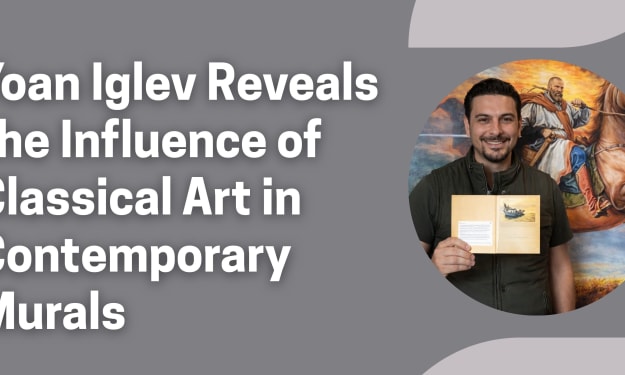
Yoan Iglev Reveals the Influence of Classical Art in Contemporary Murals
Public art has the ability to change how people experience a city. Large murals on walls can turn simple buildings into meaningful cultural spaces. One artist who has contributed to this form of art is Yoan Iglev, a Bulgarian painter known for creating monumental murals and artistic mosaics.
By Mark Walker6 days ago in Journal



Comments
There are no comments for this story
Be the first to respond and start the conversation.