
Ai and America
The AI Coding Revolution: How Machines Are Redesigning the Future of Tech Work

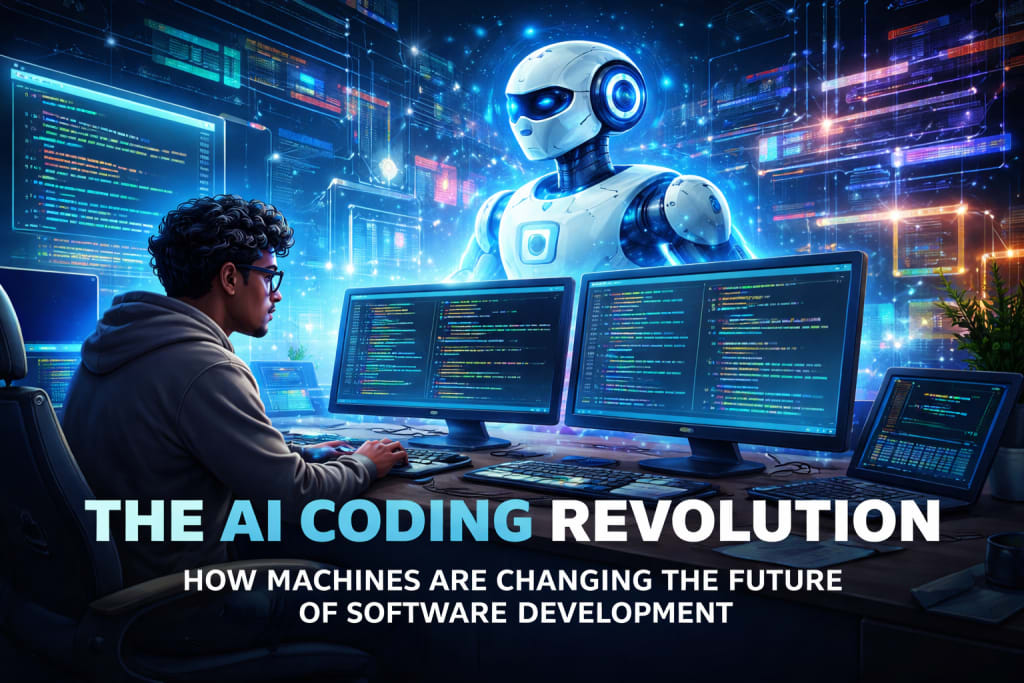
In 2026, Artificial Intelligence (AI) isn’t just a buzzword — it has become a central force shaping the software industry in the United States. A recent study published in Science shows that AI-assisted tools are now helping write almost 30% of all newly written software code in the U.S. — up from just about 5% a few years ago. This rapid shift highlights a drastic transformation in how software is built, how developers work, and how jobs in tech might evolve in the coming years.
At first glance, these numbers are astonishing. Nearly one in three lines of code in new software projects now has the fingerprints of AI on it. Tools like AI code assistants — which include advanced models integrated into platforms like GitHub Copilot, Google’s code assistants, and other generative AI systems — are capable of producing, editing, and suggesting code based on natural language descriptions and previous patterns. They’re no longer simple auto-complete helpers; they are active partners in programming workflows.
But how did we reach this point? The idea of using AI to assist software development isn’t brand-new, but its adoption accelerated dramatically over the last few years. In the early 2020s, AI was mostly an experimental tool for developers — something that might help with small tasks like writing documentation or generating basic code templates. But with improvements in generative AI models, especially large language models (LLMs), these tools became capable of understanding complex instructions and producing useful, production-ready code. This shift has changed the expectations and realities of coding in major tech hubs across the United States.
For many seasoned developers, AI offers a productivity boost. In aggregate, the same study indicates that AI assistance has increased coder productivity by around 3.6%, which may sound modest but translates into billions of dollars in economic value when multiplied across an industry that spends hundreds of billions on programming labor annually. That means faster development cycles, quicker bug fixes, and the ability to prototype new products more rapidly than ever before.
Despite the clear advantages, this transformation raises several critical questions. One of the most pressing is how AI will impact jobs in tech — especially for entry-level developers. According to workforce studies, AI is already reshaping labor markets, sometimes replacing certain tasks that junior professionals typically perform, such as writing repetitive code, supporting simple features, or performing initial debugging. Some reports even suggest that roles most exposed to AI — including entry-level software engineers — have seen employment declines as automation takes hold.
However, the story isn’t purely one of job losses. Instead, many experts describe a rebalancing of roles. AI tends to handle routine and repetitive parts of coding, freeing human developers to focus on higher-level tasks like system design, complex problem solving, and business logic. This shift can be seen as a chance for developers to grow into more strategic positions rather than remain trapped in monotonous tasks. But it also means that professionals must continually adapt and learn new skills to stay relevant.
Another important dimension is equity. While AI tools can help increase productivity, access to and comfort with these tools is not uniform. Some groups of developers — such as those early in their careers or with limited access to specialized training — may struggle to benefit fully. Research shows that while less experienced programmers might use AI tools more often, the biggest productivity gains tend to go to developers with more experience, potentially widening existing gaps in the workforce.
Moreover, as AI becomes more deeply integrated into development workflows, it brings new challenges. There are concerns about code quality, security, and technical debt — a term used to describe the future cost of fixing poor or rushed code. If an AI system generates code quickly but without deep understanding of architectural needs or edge cases, that code might introduce vulnerabilities or complexities that human developers will need to address later.
Finally, the rise of AI in coding isn’t just a technological change — it’s a cultural and economic one. In many companies, developers are now expected to be not just coders but AI collaborators — guiding AI tools, interpreting their output, and ensuring that everything aligns with broader project goals. This change affects hiring practices, educational priorities, and even how teams are structured. It’s no longer enough to know a programming language; developers must understand how to work with intelligent tools effectively.
In conclusion, the rise of AI-assisted coding in the United States represents both a remarkable opportunity and a significant challenge. It promises greater productivity, faster innovation, and new ways of building software. But it also demands new skills, raises questions about equity and job security, and requires careful handling of the risks and responsibilities that come with faster, AI-augmented development. The future of software development will likely be shaped by those who not only write code but also understand how to make AI a true partner in the creative process.
About the Creator
USA daily update
News, Politics, Technology Updates
Keep reading
More stories from USA daily update and writers in Journal and other communities.
“Iran VS United States, Tensions at the Breaking Point. Trump’s Next Move Could Reshape the Middle East”
1. Background: What’s Happening Now • Nationwide protests in Iran are ongoing due to a severe economic crisis, skyrocketing inflation, and public anger about conditions inside the country. • President Donald Trump has publicly threatened Iran, warning that if Tehran violently suppresses protesters or gets too aggressive, the U.S. could intervene. • Iran’s government has responded by warning of swift and comprehensive retaliation if the U.S. attacks. • Iran’s airspace and infrastructure remain tense, but some diplomatic communications have briefly reopened, signaling both sides are weighing options.
By USA daily update 2 months ago in Journal
Author’s Advice
If you would’ve asked me 20 years ago did I know I’d become a writer and an author, I would’ve said “nope, ain’t happening”. As fate would have it I did become an author and I can honestly say I’m loving it so far. It really does feel good to be a writer. I’ve learned a lot on this journey and I feel like with even me being as new to this world as I am, there’s some wisdom I need to share with every other aspiring author.
By Joe Patterson2 days ago in Journal




Comments
There are no comments for this story
Be the first to respond and start the conversation.