
A Journey Through the Seasons of Our Solar System
A Closer Look at Planetary Weather Patterns

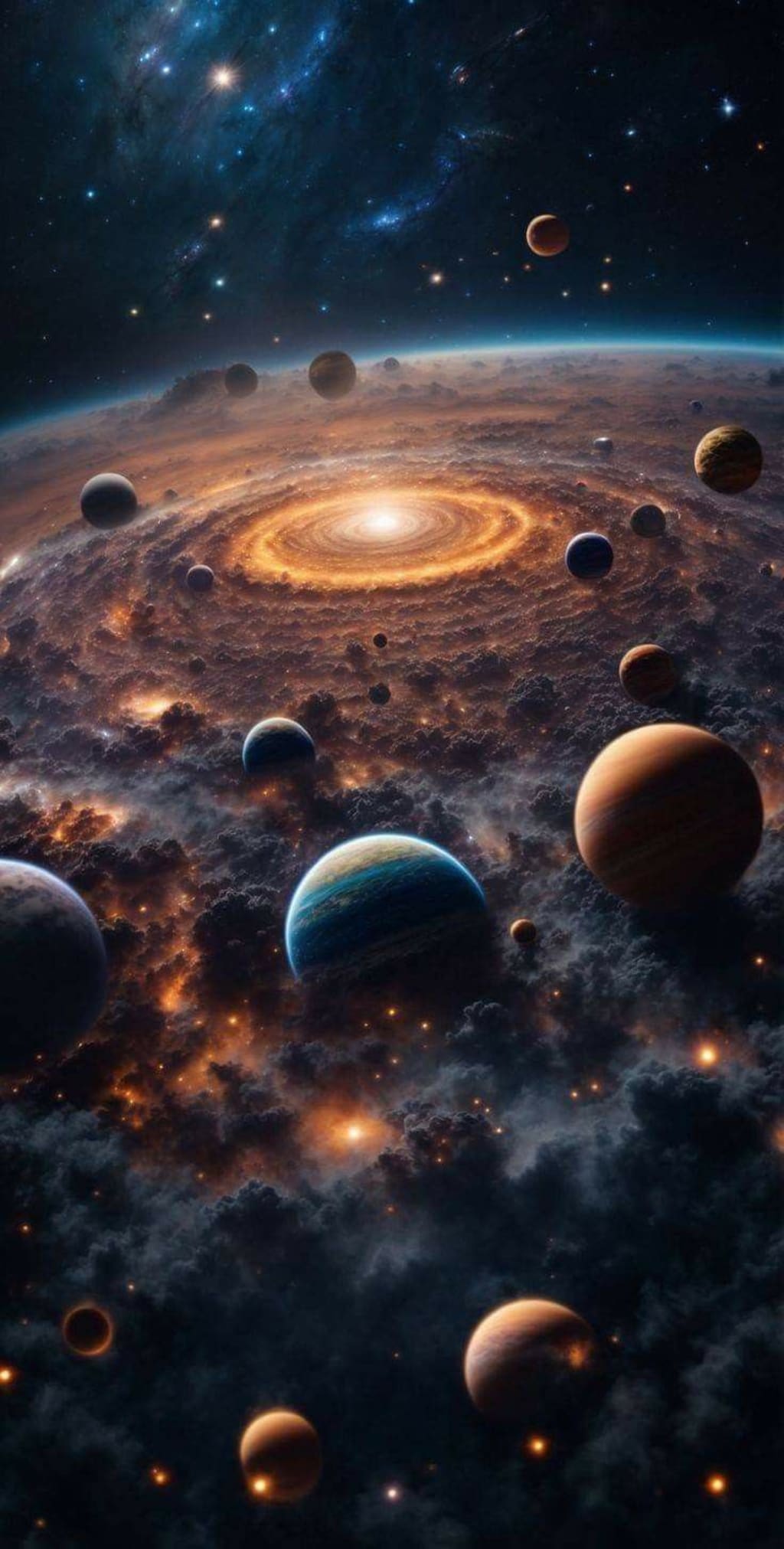
Uranus experiences extremely long winters, with each season lasting about 22 Earth years. If it were somehow habitable, the landscape would be one of stark beauty, dominated by vast ice deserts in shades of white and gray. The frozen surface would require inhabitants to stock up on supplies well in advance, construct sturdy homes to withstand the planet’s harsh conditions, and wear thick, warm clothing to protect against the frigid temperatures. With its severe weather patterns and relentless cold, transportation would be nearly impossible, turning daily life into a challenging endeavor.
The weather, climate, and seasons of each planet in our solar system are profoundly influenced by their distance from the Sun. For instance, Mercury, the closest planet to the Sun, experiences extreme heat, with surface temperatures soaring during the day and plummeting at night due to its lack of a substantial atmosphere. Conversely, Pluto, now classified as a dwarf planet, is at the farthest edge of our solar system, enduring frigid temperatures even during its brief summer months. This vast disparity in temperatures highlights how each planet’s position plays a critical role in its climate.
In addition to distance from the Sun, a planet’s rotation speed significantly impacts its climate. Mercury has long days and nights, leading to one side being scorched while the other side freezes in darkness. Earth, with its moderate rotation speed, maintains a balanced climate that supports diverse ecosystems. The thickness of a planet’s atmosphere is another crucial factor; a dense atmosphere helps regulate temperature by trapping heat, while a thin atmosphere can result in extreme temperature fluctuations, leading to inhospitable conditions.
Let’s take a closer look at some planets in our solar system:
Mars
Mars, the fourth planet from the Sun, features a climate that bears some resemblance to Earth’s, including four distinct seasons. However, these seasons last about twice as long as those on Earth due to Mars’s more eccentric orbit. The temperature on Mars can drop significantly, with winter temperatures plummeting to around -90°F. The planet’s lack of large oceans contributes to its struggles with extreme temperatures and seasonal ice caps. During winter, carbon dioxide freezes out of the atmosphere, creating polar ice caps that expand and contract with the changing seasons.
Saturn
Saturn, a gas giant, remains chilly even during its summer months due to its distance from the Sun. It is characterized by a thick atmosphere that helps regulate its temperatures, preventing extreme variations across the planet. Saturn’s iconic rings are made of ice and rock, reflecting sunlight and contributing to the planet’s stunning visual appearance. While Saturn does not experience traditional seasons like Earth, its axial tilt means that its atmosphere undergoes subtle changes as it orbits the Sun, leading to variations in weather patterns.
Uranus
Known for its extreme axial tilt of 98 degrees, Uranus is perpetually cold, with one pole in constant sunlight and the other in darkness during its summer months. This unique orientation means that temperatures can drop significantly. Each of Uranus’s seasons lasts about 22 Earth years, making its climate and seasonal cycles unlike any other planet in the solar system. The planet’s frigid atmosphere is primarily composed of hydrogen, helium, and methane, giving it a bluish color. The lack of significant internal heat leads to an overall chilly environment, making it one of the coldest places in our solar system.
Neptune
Neptune, the furthest icy giant, possesses a similar axial tilt to Earth but receives only a tiny fraction of the sunlight that Earth does. Its temperatures remain low year-round, with little variation between seasons. Despite its distance from the Sun, Neptune exhibits the most active weather system among the gas giants, with strong winds and storms that can be observed from afar. The planet’s atmosphere consists of hydrogen, helium, and methane, the latter contributing to its deep blue hue.
Other Planets
While some planets experience traditional seasons, others have unique temperature cycles. Mercury, for instance, has no real seasons due to its thin atmosphere, resulting in extreme temperature swings that can shift from scorching heat to freezing cold within a single cycle. Venus, with its dense atmosphere, maintains a relentless heat year-round, with stable temperatures around 820°F, creating a greenhouse effect that traps heat effectively. Jupiter, the largest planet, has a slight axial tilt and a nearly circular orbit, resulting in minimal seasonal variation. Its rapid rotation ensures that temperatures remain relatively constant across its atmosphere. Lastly, although Pluto’s long, elliptical orbit results in extreme cold, with temperatures around -380°F, its faint sunlight and thin atmosphere create a unique environment, making it one of the coldest places in our solar system.
Understanding the unique climates and seasons of our solar system not only fascinates us but also underscores the incredible diversity of environments beyond our own planet. As we explore these celestial bodies, we gain insights into the complexity of our universe and the various factors that shape planetary climates. If you found this exploration intriguing, consider sharing it with friends or diving deeper into more resources to learn about the wonders that await us in the cosmos!
About the Creator
Mahsa
“Curious mind on a journey to uncover the extraordinary. I write about intriguing facts and science. Join me to explore the unknown details in everyday life, while also focusing on self-care and the art of understanding ourselves better.”
Daily Liturgy: January 20, 2026 – Tuesday of the Second Week in Ordinary Time
Today’s readings invite us to reflect on God’s extraordinary insight into human hearts and the gentle ways He calls us to serve Him. In the first reading from 1 Samuel, the prophet Samuel is sent to anoint the future king of Israel. When he sees Jesse’s sons, he is impressed by their outward appearances, but the Lord reminds him, “The Lord looks at the heart.” Samuel anoints David, the youngest son, a humble shepherd, chosen not for what the world sees but for what God perceives within. This reading teaches that God often works through the seemingly ordinary, calling forth greatness in ways that defy human expectation. The psalm echoes this theme, celebrating the faithfulness and guidance God grants to His chosen servants, reminding us that God’s perspective is always higher, wiser, and deeper than our own.
By Sound and Spirit4 days ago in Journal



Comments
There are no comments for this story
Be the first to respond and start the conversation.