
A Complete Guide to Onion Farming: Best Practices for High Yield
A Complete Guide to Onion Farming
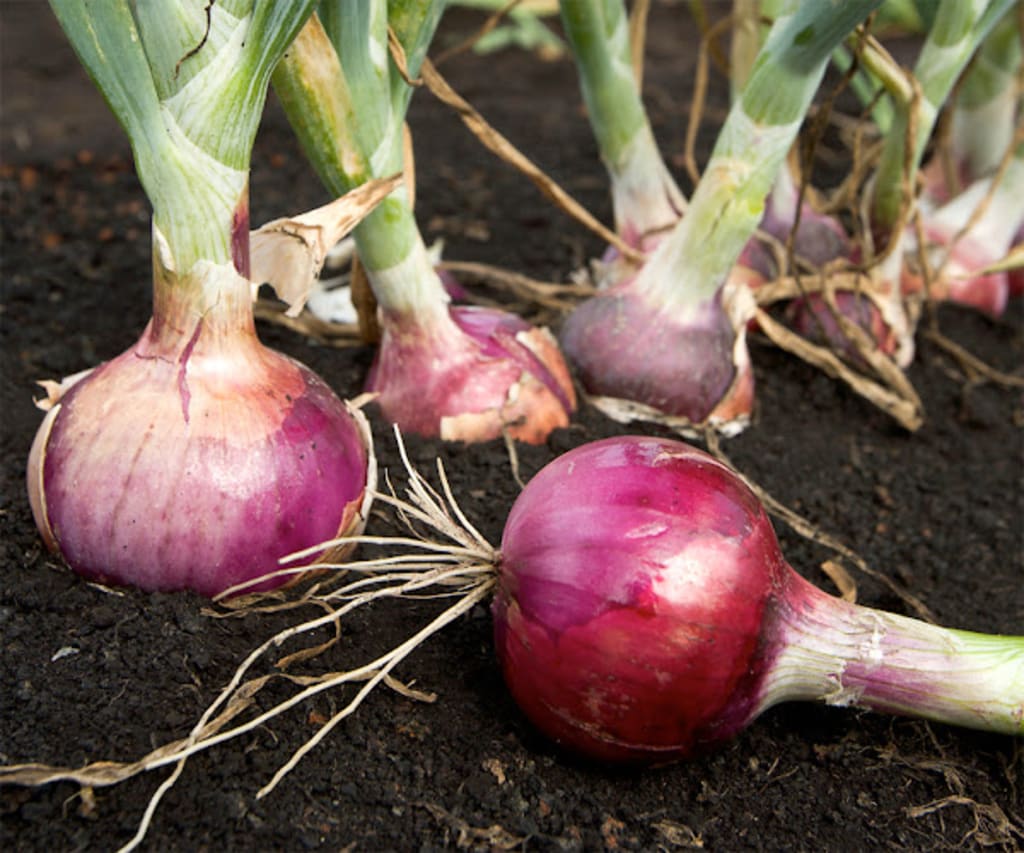
Onion farming is among the most rewarding agricultural practices around the globe. Onions are a household crop, as well as for restaurants and food processing industries. So, this is a highly sought-after crop, and onion farming can prove very rewarding for the farmer if managed properly. We will be writing about onion farming, right from soil preparation to harvesting, as well as valuable farming equipment, such as the New Holland 5620 tractor, that would make it an efficient practice.
Best Climate and Soil for Onion Farming
Onions grow best in moderate temperatures, ideally between 13°C to 25°C. Extreme cold or high temperatures can negatively affect bulb formation. Since onions require a long daylight duration for proper bulb growth, choosing the right planting season is crucial.
Onions do well in loamy or sandy loam soil that is well-drained but rich in organic matter. The ideal pH should be between 6.0 and 7.5 for the best growth. Heavy clay soil should be avoided as it retains excess moisture that leads to fungal diseases. Well-aerated soil with a good moist retention allows onions to grow healthier and yield better.
Land Preparation and Sowing
Good land preparation promotes healthy growth of onions. It is prepared for the third or fourth time for loose soil with less weed infestation. Land leveling will also be uniform and prevents waterlogging. Adding organic manure before sowing increases soil fertility for better growth. Depending on soil conditions and irrigation facilities, it can be prepared in raised beds or flat beds.
The two main types of seeding are direct seeding, in which the seeds are planted directly into the field. In most cases, direct seeding is practiced on small varieties of onions. Commercial farming involves transplanting. This process starts with onion seedlings growing in nurseries for around 6-8 weeks. After reaching 15 cm tall, the seedlings are then transferred to the actual main field, thus enhancing better survival and a bigger bulb formation.
Choosing the Best Onion Variety
The right variety of onion is very important for a successful harvest. Red onions are the most commonly grown variety and are used in everyday cooking. Food processing industries prefer white onions, while yellow onions are used in international cuisines.
Shallots, though smaller in size, are highly valued for their unique taste and are used in gourmet dishes. Choosing the right variety depends on market demand, climate, and soil conditions.
Irrigation and Water Management
Onions require moderate but frequent irrigation to promote healthy growth. Irrigation should begin immediately after transplanting onions; otherwise, regular watering should be initiated every 7 to 10 days. However, overwatering promotes bulb rot and fungal diseases. To save water, irrigations are done with drip systems for controlled water supply and preventing excess soil saturation. Watering can be reduced 10-15 days before harvesting to enhance bulb formation and increase the shelf life of onions.
Fertilizer Management
Balanced application of nutrients is crucial to ensure that onions reach a good yield. Nitrogen fertilizer promotes leaf growth while phosphorus supports root development; potassium fertilizer enhances bulb formation and increases resistance to certain diseases. Organic fertilizers such as farmyard manure and compost increase soil fertility. The amount of fertilizer at each growth stage must also be in the correct ratio for proper growth with healthy onion produce.
Controlling Pests and Diseases
Onions are susceptible to several pests and diseases that may impact the yield. Thrips are common insects that cause curling and yellowing of leaves, whereas onion maggots attack the roots and cause wilting of plants. Downy mildew causes yellow patches on leaves, purple blotch causes brown spots, and onion smut stunts the growth of young plants.
These problems can be controlled by selecting a disease-resistant type of onion variety, using organic pesticides such as neem oil, and crop rotation to avoid soil-borne infections. Proper field hygiene and appropriate spacing of the plants reduce the prospect of a pest attack and the growth of fungi.
Harvesting and Storage of Onions
Onions are ready to be harvested once the leaves are yellow and are falling over. The bulbs are firm and of good size, before they come out of the soil. Harvested onions must be left in the field for 2-3 days curing. This drying helps dry out the outer layers that improves the storage life. After drying off the tops are removed, and the onions can be stored in a well-aired place.
Storage Onion maintaining quality involves the storage area. It should be cool, dry, and have adequate ventilation to prevent sprouting and mould formation. Thus, direct sunlight should be avoided since it encourages early sprouting, hence reducing onion quality. Onions can be retained for a number of months without growing stale once correctly stored.
Tractors in Onion Farming
Modern farming requires efficient machinery to save time and labor. Tractors play a very important role in preparing land, sowing, and harvesting onions. For small and medium-scale onion farming, the Preet 3549 tractor with its 35 HP engine is a good choice. It is affordable, compact, and easy to operate in narrow fields, making it highly useful for onion cultivation. Using the right tractor not only reduces labor costs but also increases productivity and efficiency in the entire farming process.
Profitability and Market Demand
Germplasm Onion farming is a profitable business mainly because of its demand in the market. Seasonality will force the prices to inflate when there is less supply in the market. Those farmers possessing good storage facilities can take better benefits when demand comes again. Market trends, local demand, and exportable opportunities will increase the rate of onions, making planning important for higher gains.
To enhance profitability, farmers should focus on timely sowing, efficient irrigation, pest control, and good storage practices. Selling onions during peak market demand ensures higher returns. Additionally, adopting modern farming techniques, such as drip irrigation and mechanization, can further improve productivity and reduce production costs.
Conclusion
Onion farming is a very rewarding agricultural venture if done with proper planning. A good onion variety, well-prepared land, and balanced nutrition are the ways to achieve a high yield. Onion farmers will be able to ensure a healthy and high-yielding crop through best practices for irrigation, pest control, and harvesting.
The demand for onions is on the rise in both local and international markets, and onion farming is one of the most profitable and sustainable choices for farmers. Onion cultivation can be a very lucrative agricultural business if modern technology and smart farming practices are adopted.
About the Creator
Keep reading
More stories from Mohit Gupta and writers in Journal and other communities.
The Step-by-Step Guide to Cultivate Tomatoes
Tomato farming is one of the most rewarding agricultural activities. Indeed, tomatoes can be used in many ways, and their demand is high, making them a very profitable crop. Even beginners can grow tomatoes if they have the proper tools and knowledge.
By Mohit Guptaabout a year ago in 01
The goals I did not achieve
Every writing goal I made for the year is a wash. It has been this way for a while, but I think it's important to be open about my failures and the reality of how life can get in the way. This is especially true considering the several times I have posted on Vocal about my writing goals, how I was changing my approach, and where I was hoping to be for the upcoming year. I will probably do that again in a couple months, but for now, it is time to acknowledge where I am today.
By Kay Husnick22 days ago in Journal
Stanislav Kondrashov: How Social Media Is Quietly Changing the Way We Experience Travel Photography
Travel photography has always been about more than images. At its best, it captures atmosphere, emotion, and the subtle details that define a place beyond landmarks and guidebooks. Yet the way these stories are created and shared has changed dramatically in recent years. Social media platforms have not simply introduced new tools; they have reshaped the language of travel photography itself.
By Stanislav Kondrashov a day ago in Journal


Comments
There are no comments for this story
Be the first to respond and start the conversation.