
A Cat at the Edge of the Courtyard
Notes on a Shared Silence
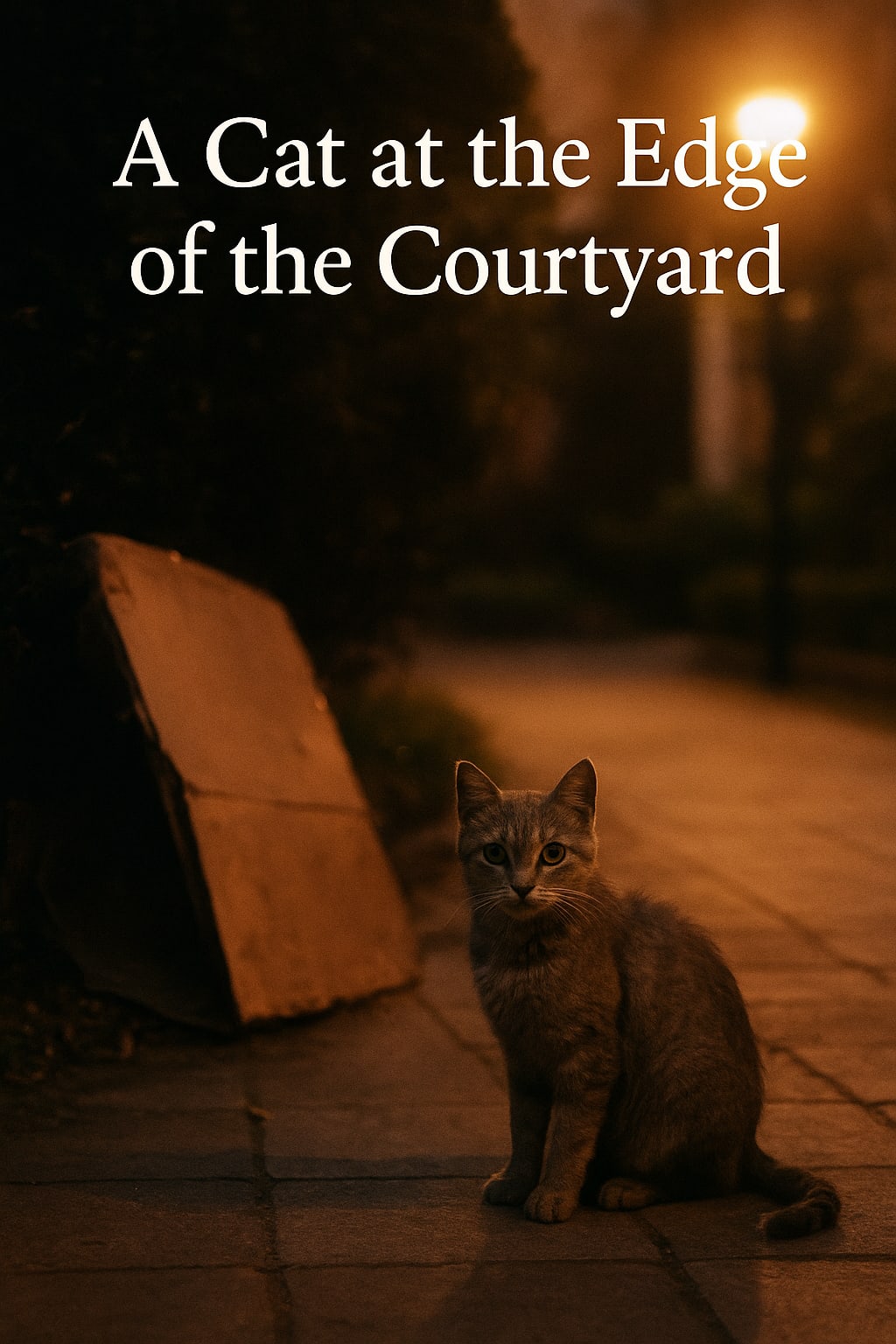
The stray cat appeared in the courtyard during winter, though no one could recall exactly when it arrived.
The evenings at that time of year carried a particular stillness. Cold air settled between the buildings, lingering long after daylight faded, and the familiar walkways took on a narrow, enclosed quality. One evening, pausing near the recycling bins, I heard a sound so slight that it seemed uncertain of itself. It was neither a cry nor a call for attention, but something closer to hesitation, as though the cat were testing whether the space around it might respond.
I found it behind a partially collapsed cardboard box. Its body was thin, its outline difficult to distinguish from the surrounding shadows. Only its eyes were immediately visible, reflecting the muted glow of the streetlight. They did not convey alarm, nor trust, but a reserved attentiveness.
The cat did not retreat when it noticed me, yet it did not approach. It maintained a measured distance that suggested habit rather than fear. When people passed, it acknowledged them briefly; when they moved on, it returned to its previous stillness. The pattern repeated itself often enough to feel deliberate.
In time, it became clear that the cat occupied a defined area of the courtyard. During the day it remained concealed among the shrubs, revealing itself only when the wind disturbed the leaves. At night it moved between buildings with quiet assurance. Its steps were careful but unhesitating, as though it knew precisely where to place them. It seemed familiar with the ground—where rain collected, where warmth lingered, where human presence was least intrusive. Within this limited territory, the cat moved with a familiarity earned through attention rather than possession.
Gradually, others took notice.
An elderly resident on the ground floor began leaving food near the wall in the evenings. A clerk from the nearby convenience shop occasionally placed small pieces of sausage at a respectful distance. Parents guided their children past with lowered voices. These gestures were not coordinated, nor discussed. They occurred independently, yet with enough regularity to suggest an unspoken understanding.
The cat approached the food only after the surroundings had settled. It waited, sometimes for several minutes, before moving forward. When it ate, it did so without haste, tail resting loosely behind it. Once finished, it withdrew without pause or acknowledgement, leaving the space as it had found it.
Spring arrived with little ceremony.
The grass returned, and the flowerbeds showed new growth. The cat’s coat grew thicker, its movements less guarded. In the afternoons, it began to rest on the stone steps near the entrance, stretching out as sunlight reached the courtyard. When I passed, it occasionally lifted its head to observe me. The glance was brief and unremarkable, carrying neither invitation nor suspicion, but a simple recognition.
For a period, the cat disappeared.
The places it usually occupied remained empty. Food left out in the evenings went untouched. Explanations circulated quietly: the cat might have been taken in, or it might have been injured. Meanwhile, daily routines continued uninterrupted. Deliveries arrived. Children played. Doors opened and closed. Yet the absence altered the atmosphere of the courtyard in subtle ways, as though a familiar arrangement had been disturbed.
On the eighth morning, the cat returned.
It moved more slowly than before, one hind leg favoured over the other. Its body appeared lighter, its posture cautious. Without sound or display, it settled again near the steps it had once occupied. Watching it, I became aware that whatever distance it had travelled, the courtyard had come to serve as a point of return.
As summer approached, the cat adjusted once more. It learned where shade persisted beneath the bicycle shelter, which corners of the parking garage remained cool, which stairwells stayed quiet after dark. It did not enter any of the flats, yet it became a familiar presence. People noticed when it was there, and when it was not.
I found myself considering whether the cat could be said to belong to the place.
It had no name, no collar, and no recognised owner. Yet it followed habitual routes and relied on a pattern of small, consistent kindnesses. It belonged to no one in particular, and perhaps for that reason, it was allowed to remain.
By autumn, the evenings grew colder. The cat curled in on itself beneath the streetlights, its shadow pressed close to the pavement. When I paused nearby, it did not withdraw. It met my gaze briefly, without expectation.
The cat remained at the edge of the courtyard, neither fully within nor entirely outside it. And in observing it, I came to understand how a presence may be sustained not through possession, but through restraint.
About the Creator
lin yan
Jotting down thoughts, capturing life, and occasionally writing some fiction.
Costco Gas Prices and the Use of AI to Manage Gas Demand
If you’ve ever pulled into a Costco gas station, you probably know the routine. Cars line up in long rows. Drivers slowly move forward pump by pump, hoping the price posted on the sign makes the wait worthwhile. For many Costco members, the lower fuel price has become one of the main reasons they visit the store in the first place.
By Navigating the Worlda day ago in Journal



Comments
There are no comments for this story
Be the first to respond and start the conversation.