

In winter, sunlight feels earned. It arrives later than we expect, filtered through long mornings of gray, as though the day itself hesitates before beginning. When it finally appears, it does not flood the world with confidence. Instead, it moves carefully, touching the ground in narrow bands, slipping between buildings and bare branches, testing whether it is still welcome. And in that restraint lies its quiet power.
The cold remains undeniable. It settles into the bones and stiffens the air, making each breath a deliberate act. Yet the presence of sunlight alters the experience of that cold. It does not remove the chill, but it gives it shape and meaning. Standing in the light, one becomes aware of contrast: the sharpness of the wind against the softness of warmth on the face, the tension between what the season takes away and what it briefly returns.
Winter sunlight behaves differently from the sun of other months. It travels low in the sky, stretching shadows far across streets and fields. Buildings cast long silhouettes that feel almost architectural, as though the city were revealing a second, hidden structure made entirely of darkness. The light itself seems thinner, more fragile, but also more precise. It finds details that summer overlooks—the texture of brick, the fine cracks in pavement, the faint color variations in stone and bark.
There is a slowness to winter light that invites attention. People who rush through summer days often find themselves pausing without realizing why. A bench warmed by the sun becomes a temporary refuge. A window illuminated from the inside feels less like a barrier and more like an invitation. Even brief exposure can recalibrate the mood, restoring something that had been quietly depleted by weeks of overcast skies.
Human behavior subtly changes in response. Faces turn upward, eyes narrowing against the brightness, as though instinctively searching for reassurance. Conversations linger outdoors longer than planned. Gloves are loosened, coats unbuttoned, if only for a few minutes. These gestures are small and often unconscious, yet they reveal an ancient understanding: warmth, when scarce, must be acknowledged.
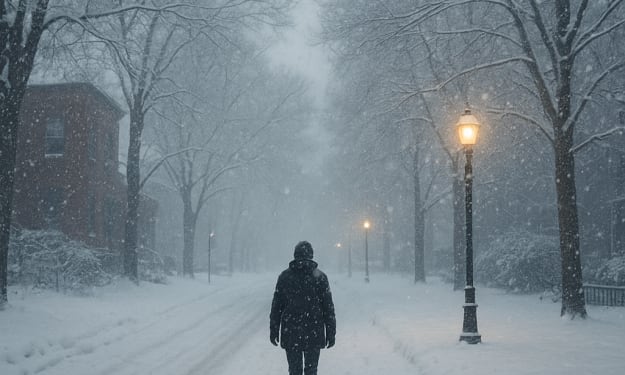
Nature responds with equal attentiveness. Birds gather in sunlit branches, feathers puffed, conserving energy. Plants, though dormant, seem to hold the light on their surfaces—frost dissolving into moisture, bark absorbing a faint glow. Snow, when present, transforms sunlight into something expansive, scattering it across the landscape until even shaded areas seem to borrow a little brightness. The world becomes quieter, but also more defined, as though winter were stripping away excess sound and color to let form and light speak more clearly.
Emotionally, winter sunlight carries a particular weight. It does not inspire the carefree optimism of spring or the fullness of summer. Instead, it offers reassurance without promises. It suggests that endurance itself can be meaningful, that moving forward does not always require momentum, only persistence. In this way, winter light feels deeply honest. It does not pretend that hardship has ended; it simply confirms that it is not absolute.
Many people associate winter with absence—short days, fallen leaves, empty landscapes. Yet sunlight complicates that narrative. It introduces presence into a season defined by reduction. In its glow, even sparse environments feel intentional rather than lacking. A leafless tree becomes an intricate network of lines. A frozen field becomes a canvas of subtle shadows. What once seemed bare begins to appear deliberate, even elegant.
Memory plays a role here as well. Winter sunlight often carries echoes of other times: childhood afternoons spent near a window, hands wrapped around a warm cup; quiet walks taken during periods of uncertainty; moments when progress felt slow but necessary. The light becomes a bridge between past and present, linking survival with reflection. It encourages stillness not as stagnation, but as a form of listening.
There is also humility in winter sunlight. Its presence is temporary, its warmth limited. Clouds may reclaim the sky without warning. The sun sinks early, leaving the day unfinished. And yet, this impermanence is precisely what sharpens its impact. Knowing that the warmth will not last makes it easier to be fully present within it. One does not take winter light for granted; one accepts it with gratitude, aware of its rarity.
As afternoon fades, the sunlight withdraws gradually, pulling its warmth back into the horizon. Shadows lengthen once more, and the cold reasserts itself with renewed authority. But something remains. The body remembers the warmth, and the mind carries its quiet affirmation. Even after the light has gone, its effect persists, subtle but sustaining.
In this way, winter sunlight becomes more than a physical phenomenon. It becomes a reminder of balance, of restraint, of the value of small comforts in difficult seasons. It teaches that not all warmth needs to be overwhelming to be transformative. Sometimes, it is enough for light to appear briefly, do its work silently, and leave behind the certainty that cold, however persistent, is never the whole story.
About the Creator
lin yan
Jotting down thoughts, capturing life, and occasionally writing some fiction.
The Politics of Playing Dress-Up
Well, to start off I'd like to say a happy world book day to all who celebrate. I know I haven't really posted anything on my socials about it but I'm not a jubilant kind of person. I lay low most of the time. Let's start off with a popular anecdote from the vaults...
By Annie Kapur6 days ago in Geeks


Comments
There are no comments for this story
Be the first to respond and start the conversation.