
5 Tip To Create Effective Hooks For Your Restaurant Brand
Hooks for your restaurant

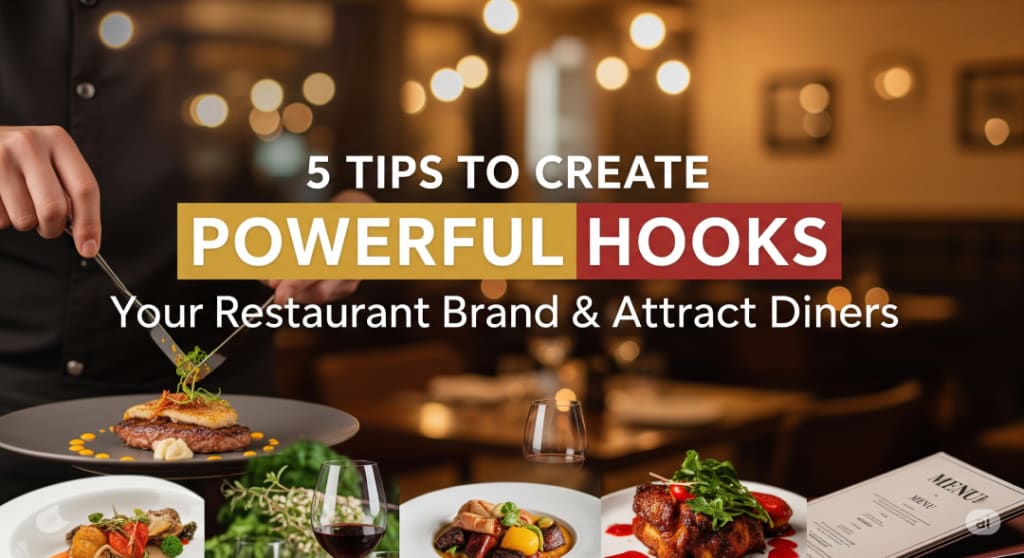
But what makes a hook actually work? And why do some restaurants nail it while others sound like everyone else?
Understand Your Restaurant's Unique Identity
Identifying your restaurant's core values and mission
Ever notice how some restaurants just feel right from the moment you walk in? That's no accident.
Before you can hook diners, you need to know exactly who you are. Grab a notepad and answer these questions:
What drove you to open your restaurant in the first place?
What three words perfectly capture your restaurant's essence?
What promise do you make to every diner who walks through your door?
The answers reveal your core values - maybe it's family tradition, culinary innovation, or community connection. Whatever they are, these values should guide everything from your menu to how your staff greets guests.
Analyzing your target audience's preferences and needs
Your hooks won't land if you're fishing in the wrong pond.
Think about your ideal diners. Not just demographics, but real people with specific cravings and dining habits. Are they:
Young professionals seeking quick, Instagram-worthy lunches?
Families needing kid-friendly options and high chairs?
Food enthusiasts hunting for authentic, never-before-tasted flavors?
Talk to your current customers. What brought them to you? What keeps them coming back? Their answers might surprise you – and they're pure gold for creating hooks that actually work.
Differentiating your brand from competitors
In a sea of restaurants, why should diners choose yours?
Drive around your neighborhood and visit competing restaurants. Order their food. Observe their service. Then ask yourself:
What are they doing that you're not?
More importantly, what can you offer that they don't?
Maybe it's your grandma's secret sauce recipe. Or tableside preparation. Or the fact that you source ingredients within a 20-mile radius.
Find that gap and own it completely.
Crafting a compelling brand story that resonates with diners
Humans connect through stories, not feature lists.
Your brand story isn't just "we opened in 2018 and serve Italian food." It's the why behind your restaurant. Maybe you're recreating flavors from your childhood in Naples. Or revolutionizing comfort food with global influences.
The best brand stories:
Create emotional connection
Feel authentic, not manufactured
Give diners something to tell their friends about
When crafting your story, keep it simple and genuine. Test it on people who don't know your restaurant. If their eyes light up, you've got a winner.
Create Visual Hooks That Captivate Potential Customers
Designing an eye-catching logo that reflects your brand
Your restaurant's logo isn't just a pretty picture—it's the face of your business. Think about the golden arches or the mermaid on your coffee cup. You recognized those brands instantly, right?
A killer logo captures the essence of your restaurant in one glance. Serving up authentic Italian cuisine? Maybe incorporate elements like olive branches or the colors of the Italian flag. Running a modern fusion spot? Go for something sleek and unexpected.
Whatever you choose, keep it simple. The most memorable logos aren't complicated masterpieces—they're clean, distinctive marks that work everywhere from tiny business cards to massive billboards.
Developing a consistent color scheme and visual identity
Colors trigger emotions and memories faster than anything else. Red makes people hungry (there's a reason so many fast-food chains use it). Blue can feel refreshing for seafood restaurants.
Pick 2-3 colors that capture your restaurant's vibe and stick with them everywhere—menus, website, staff uniforms, interior design. This consistency makes your brand instantly recognizable.
Your visual identity goes beyond colors though. It includes typography, patterns, and imagery style. A rustic farm-to-table restaurant might use handwritten fonts and natural textures, while a sleek sushi bar could opt for minimalist sans-serif fonts and clean lines.
Using high-quality food photography to showcase signature dishes
Bad food photos kill appetites. Good ones make mouths water.
Invest in professional food photography for your signature dishes. A skilled photographer knows how to capture the steam rising from a fresh pasta dish or the perfect glistening sheen on your famous chocolate cake.
These photos are gold for your website, social media, and menu. They give potential customers a taste of what to expect before they even walk through your door.
Lighting makes all the difference—natural light brings out vibrant colors and textures in food. And styling matters too. The right props and backgrounds enhance your dish without distracting from it.
Creating shareable visual content for social media platforms
Social media is your restaurant's digital storefront. The visual content you post there needs to stop thumbs from scrolling.
Create visuals that beg to be shared—behind-the-scenes videos of your chef preparing specials, boomerangs of cocktails being mixed, or time-lapses of your bustling Saturday night service.
Different platforms demand different approaches. Instagram loves beautiful plating shots and short recipe videos. TikTok thrives on personality and quick, entertaining content. Facebook works well for event announcements with eye-catching graphics.
The goal? Make content so visually compelling that your customers become your marketing team by sharing it with their networks.
Designing memorable menus that reinforce your brand
Your menu is more than a list of dishes—it's a powerful visual hook.
The design should match your restaurant's personality. A playful taco joint might use bright colors and illustrations, while a high-end steakhouse might opt for elegant typography on quality paper.
Layout matters too. Strategic placement draws eyes to your most profitable items. Photos (used sparingly) can highlight signature dishes.
Don't forget about digital menus. Whether it's on your website or accessed via QR code, your digital menu should maintain the same visual identity while taking advantage of interactive elements that physical menus can't offer.
Think of your menu as a portable piece of your restaurant's atmosphere that customers can hold in their hands—make it count.
Develop a Signature Dish or Experience
Creating a unique menu item that becomes synonymous with your brand
Want to know the secret weapon of wildly successful restaurants? A signature dish that makes people line up around the block.
Think about it - when I say "Cronut," you immediately think of Dominique Ansel Bakery. The Shack Burger? Shake Shack all day. These iconic menu items aren't just food; they're powerful brand hooks that live rent-free in customers' minds.
Your signature dish needs three key ingredients:
Uniqueness that can't be easily copied
Consistency that keeps customers coming back
A story that customers want to share
The best signature dishes create those "OMG, you have to try this" moments. Maybe it's your grandma's secret recipe with a modern twist, or a local ingredient prepared in a way nobody's seen before.
Give it an unforgettable name, feature it prominently on your menu, and train your staff to talk it up. When your servers say, "Have you tried our famous [signature dish]?" - that's your hook in action.
Crafting an unforgettable dining atmosphere or ritual
The food matters. The experience? That's what they'll talk about tomorrow.
Your restaurant's atmosphere isn't just about décor – it's about creating moments your customers will photograph, remember, and tell friends about.
Some hooks that work:
The tableside preparation ritual (think guacamole made fresh at your table)
The Instagram-worthy presentation (flames, smoke, dramatic reveals)
The quirky service style (servers who sing, food delivered by mini-train)
The unexpected touch (handwritten thank-you notes, complimentary palate cleansers)
One restaurant I know serves a "community toast" at 7pm sharp every night. Everyone raises their glass together. Simple? Yes. Memorable? Absolutely.
Your dining ritual becomes a powerful hook when it hits that sweet spot between delightful and different. It should feel special without being awkward.
Building anticipation through limited-time offerings
Nothing creates buzz like scarcity.
When McDonald's brings back the McRib, people lose their minds. Not because it's the world's greatest sandwich, but because they can't have it whenever they want.
Smart restaurants leverage this psychology with:
Seasonal menu items that showcase peak ingredients
Weekly specials that give regulars a reason to return
"Secret menu" items that make customers feel like insiders
Pop-up concepts that create urgency
The trick is balancing novelty with reliability. Your core menu creates trust, while limited-time offerings create excitement.
Announce these specials strategically. Email subscribers get early access. Social media followers get a behind-the-scenes look at preparation. Regular customers get a taste test.
When you nail this, your customers become your marketing team - telling friends "You better go this week before it's gone!"
Leverage Digital Storytelling to Connect with Diners
Sharing your restaurant's origin story across platforms
People don't just eat food anymore—they crave the story behind it. Your restaurant's origin story isn't just fluff; it's marketing gold.
Think about it. Did your grandma's secret recipe inspire your signature dish? Was your restaurant born from a life-changing trip to Italy? These stories create instant connection.
But here's the kicker—different platforms need different approaches:
Instagram: Share throwback photos of your first day, vintage family recipes, or the building before renovation
TikTok: Create quick 30-second clips walking through your journey
Website: Dedicate a "Our Story" page with timeline and founding moments
Email: Send anniversary newsletters that celebrate your milestones with loyal customers
The magic happens when your story feels authentic. Don't manufacture drama—diners can smell inauthenticity from a mile away.
Highlighting the people behind your restaurant
Your team isn't just staff—they're the heart of your restaurant experience.
Spotlighting your people humanizes your brand instantly. When diners see the passionate chef who wakes up at 4am to make fresh bread or the server who remembers everyone's favorite drink, they feel part of something special.
Try these approaches:
Feature staff picks on your menu with personal recommendations
Create social media takeovers where different team members share their day
Highlight special skills (Your bartender competes nationally? Your host speaks five languages? Share it!)
Document team building events and celebrations
Restaurants with visible, approachable teams create stronger emotional bonds with customers. That server who always remembers a guest's name? They're your secret marketing weapon.
Showcasing sustainable or local sourcing practices
Today's diners care deeply about where their food comes from. If you're sourcing locally or sustainably, that's not just an operational choice—it's a powerful hook.
The key is making these practices visible:
Create a map showing the local farms you partner with
Share photos of your chef at the farmers market selecting produce
Post videos of deliveries arriving fresh from local producers
Tell the stories of your suppliers and why you chose them
Don't just say "we use local ingredients"—show specific examples: "Our tomatoes come from Green Valley Farm, just 12 miles away, where Farmer Bob has been growing heirloom varieties for 20 years."
This transparency builds trust and gives customers another reason to choose you over competitors. Plus, it makes your food taste better knowing the story behind each ingredient.
Creating content that evokes emotional responses
The restaurants people remember aren't just about food—they trigger emotions. Your digital storytelling should aim for the heart, not just the stomach.
Emotions drive decisions, including where to eat. Try these approaches:
Capture genuine moments: A couple's anniversary celebration, a child's first taste of your signature dish
Use sensory language in descriptions: Don't just list ingredients—describe the sizzle, aroma, and memories each dish evokes
Share customer stories and testimonials in their own words
Create behind-the-scenes content that shows the care that goes into each dish
The most powerful content often features genuine human moments: the look on someone's face when tasting something amazing, the chef's pride in a perfectly executed dish, or the joy of a celebration unfolding at your tables.
When you nail emotional storytelling, you're not just selling meals—you're selling moments and memories. That's what brings diners back again and again.
Implement Consistent Branding Across All Touchpoints
A. Training staff to embody your brand personality
Your brand isn't just your logo or menu—it's your people. When your servers, hosts, and kitchen staff truly get what makes your restaurant special, magic happens.
Start by clearly defining what your brand personality actually is. Are you upscale and refined? Quirky and playful? Family-oriented and warm?
Then build training programs that bring those traits to life:
Role-play different customer scenarios
Create scripts for common interactions that reflect your tone
Show videos of "brand-aligned" service in action
The key? Make it concrete. Don't just say "we're friendly"—explain exactly what "friendly" looks like at your restaurant.
One restaurant I know gives each new hire a "brand personality card" they keep in their wallet during training. It has five key descriptors with real examples of how to demonstrate each one.
B. Aligning online ordering experiences with in-restaurant dining
The disconnect between your in-person vibe and online ordering experience can be jarring. Your physical space might scream "rustic Italian trattoria" while your online ordering feels like... every other generic food app.
Fix this gap:
Customize your online ordering platform with your exact color palette and fonts
Use the same language and tone in digital communications as in-restaurant menus
Include the same signature touches (like your special greeting or farewell message)
Add photos that showcase your actual restaurant atmosphere
Many diners now experience your brand first through delivery apps. Make sure that first impression matches what they'll find when they finally visit in person.
C. Designing takeout packaging that extends your brand experience
Your packaging isn't just a container—it's a mini-ambassador for your brand that enters people's homes.
Think beyond slapping your logo on a box. How can your packaging tell your story?
A neighborhood taco spot I love includes a QR code on their takeout bags linking to a Spotify playlist of the same music they play in the restaurant. Brilliant! Their vibe follows you home.
Other smart packaging moves:
Use materials that reflect your values (sustainable? luxury? homestyle?)
Include personal notes or surprise elements
Design packaging that's Instagram-worthy without trying too hard
Add functional elements unique to your cuisine (built-in sauce compartments, clever utensil designs)
When someone opens your takeout at home, they should instantly recognize it as uniquely yours.
D. Creating loyalty programs that reinforce your restaurant's unique value
Cookie-cutter loyalty programs scream "we're just like everyone else!" Instead, build a rewards system that actually reflects what makes your restaurant special.
A farm-to-table restaurant might offer garden tours or cooking classes instead of generic discounts. A pizza place could name a special pie after customers who hit certain visit milestones.
The best loyalty programs:
Reward behaviors that align with your brand values
Offer experiences, not just discounts
Include tiers that make regulars feel like VIPs
Have names and terminology unique to your restaurant concept
Ask yourself: "If our restaurant personality designed a loyalty program, what would it look like?" Then build that.
E. Gathering and showcasing authentic customer testimonials
Nothing sells your restaurant like real customers telling their stories. But generic "food was great, service was friendly" reviews don't capture what makes your place special.
Instead:
Ask specific questions that prompt storytelling: "What moment during your meal made you smile?" or "How would you describe our restaurant to your foodie friend?"
Capture video testimonials from regular customers (with permission)
Create testimonial categories that highlight different aspects of your brand
Feature real customer photos alongside their comments
Display these testimonials strategically—not just on review sites, but on menu inserts, bathroom walls, or even spoken by servers when describing signature dishes.
The most powerful testimonials capture the emotional experience of dining with you, not just the transactional details.
About the Creator
Ashish Sudra
Ashish Sudra is the founder of Deonde, with over 16 years of experience in IT and On-demand Solutions. He is also an accomplished Business Consultant specializing in delivering Online Food Ordering and Delivery System for startups and SMEs.
Keep reading
More stories from Ashish Sudra and writers in Journal and other communities.
The Power of Restaurant Marketing Software: Boosting Your Bottom Line
In today's competitive restaurant industry, relying solely on culinary excellence isn't enough for sustained success. Effective engagement with your audience, fostering customer loyalty, and attracting new diners are crucial. This is where Restaurant Marketing Software proves invaluable, transforming fragmented efforts into a cohesive, data-driven strategy that can significantly enhance your Return on Investment (ROI).
By Ashish Sudra7 months ago in Journal
The Numbers Behind the Name: Echos News ZA
Got myself into blogging, again. So I dusted my desk, laptop in front of me, cup of fresh tea. I searched for my blog account which had been sitting there for years — blank. Instead of writing a blog like everyone else, a News Hub idea came to me, and it sounded nice. Suddenly, a name appeared: ECHOS.
By Vongani Bandi5 days ago in Journal
Flower Bloom 369
FLOWER Bloom 2/25/26 Wednesday By Mariann Carroll Karen had been with Tony for 7 years. Tony started acting strangely after her surgery. He would mow the lawn in the rain and be on his cellphone. He started pushing Karen away. Tony came clean about seeing someone. Karen moved out two months later. Karen moved in with a friend. She felt betrayed.
By Mariann Carroll6 days ago in Fiction


Comments
There are no comments for this story
Be the first to respond and start the conversation.