
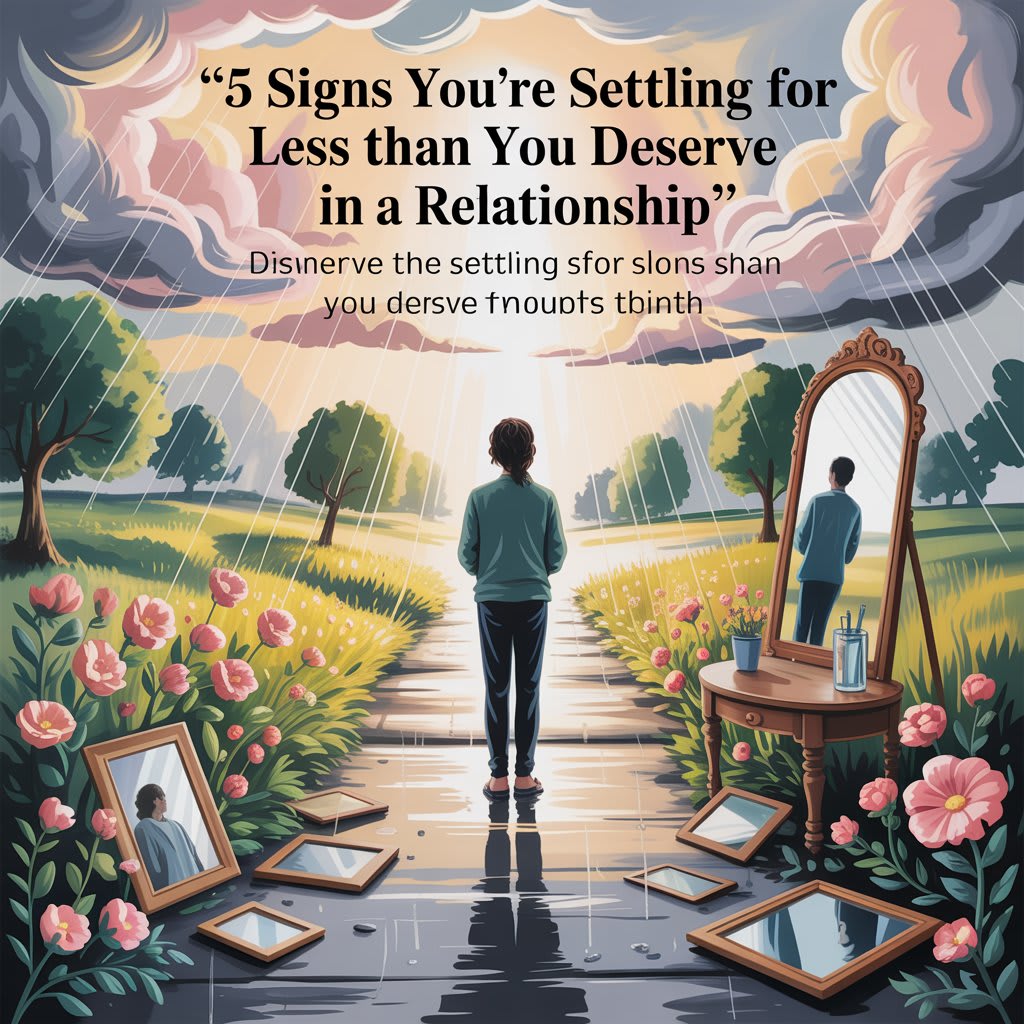
5 Signs You're Settling for Less Than You Deserve in a Relationship
"Discover the subtle signs that you're compromising your worth—and learn how to reclaim your standards in love."
Introduction
Love is supposed to feel empowering, fulfilling, and secure. But what if your relationship feels like a quiet compromise instead? Many people find themselves staying in partnerships that don’t truly meet their emotional needs—not because they want to, but because they’ve convinced themselves that it’s “good enough”.
Settling in a relationship doesn’t always involve dramatic conflict or obvious abuse. Often, it looks like silence where there should be depth, complacency where there should be passion, or loneliness while still being together.
If you've ever found yourself questioning whether you’re asking for too much or wondering if this is just “as good as it gets”, this blog is for you. Let's explore 5 signs that you're settling for less than you deserve—and how to reclaim your sense of worth and purpose in love.
1. You're Always Making Excuses for Their Behaviour
When you’re settling, you tend to justify your partner’s actions—even when they consistently hurt, neglect, or disappoint you. You might say things like:
“They’re just stressed lately.”
“It’s not a big deal, I’m probably being too sensitive.”
“At least they don’t cheat.”
These excuses become a coping mechanism. Instead of facing the fact that your needs aren’t being met, you rationalise and minimise. Over time, this creates emotional self-neglect. You begin to believe that your standards are unrealistic, or worse, that you don’t deserve more.
Ask yourself:
If my best friend were treated the way I’m being treated, would I tell them to stay?
If the answer is no, it may be time to re-evaluate your expectations and boundaries.
2. Your Emotional Needs Are Constantly Ignored or Undervalued
A fulfilling relationship thrives on emotional connection. This includes feeling heard, valued, supported, and understood. When you're settling, these emotional needs often go unmet. You may feel:
Unimportant during conversations
Emotionally disconnected even when together
Like your feelings are dismissed or belittled
Instead of open communication, there’s silence, avoidance, or indifference. You might try to express yourself, but your partner responds with defensiveness or disengagement.
Being in a relationship should make you feel more emotionally alive, not emotionally starved. If you’re consistently pouring into someone who doesn’t pour back, it’s a one-sided dynamic that chips away at your self-worth.
3. You're Afraid to Be Alone—So You Stay
One of the most common reasons people settle is fear: fear of loneliness, fear of starting over, or fear that they won’t find anyone better. This fear convinces us that an unsatisfying relationship is safer than uncertainty.
But staying in the wrong relationship doesn’t protect you from loneliness—it often deepens it. There's a unique kind of isolation that comes from being with someone who doesn't truly see or value you.
If you’re staying because the idea of being single feels scarier than being with someone who doesn’t fulfil you, it’s a sign you’re settling out of fear—not love.
Truth: It’s better to be alone and growing than together and shrinking.
4. You've Lost Sight of Who You Are
When you settle, you slowly compromise parts of yourself. It might start small—skipping your interests to spend time with them, changing your opinions to avoid arguments, or silencing your voice to keep the peace.
Over time, these sacrifices add up. You no longer recognise the confident, vibrant person you used to be. Your dreams feel distant. Your individuality fades. Your identity becomes more about "us" than about you.
Healthy love should enhance your identity—not erase it. If being in the relationship feels like a constant adjustment of who you are, it’s likely you’ve settled into a space that doesn’t allow you to fully thrive.
5. You’re Constantly Hoping They’ll Change
Hope can be beautiful—but in relationships, it can also be blinding. If you find yourself constantly waiting for your partner to become more attentive, more affectionate, more mature, or more committed, you're likely holding onto potential rather than reality.
You may say things like:
“Once they get that new job, things will be better.”
“They just need time to grow emotionally.”
“Maybe I can help them change.”
The danger here is that you’re investing your emotional energy into a version of the person who doesn’t exist yet. Meanwhile, your needs continue to go unmet. A healthy relationship is built on mutual effort and growth in the present—not just on hope for the future.
Don’t fall in love with who they could be.
Honour who they actually are today.
Why We Settle
Understanding the "why" behind settling is just as important as recognising the signs. People often settle due to:
Low self-esteem
Past relationship trauma
Fear of starting over
Societal or family pressure
A belief that love should be hard
It’s important to realise that choosing not to settle is not about expecting perfection—it's about knowing your worth and refusing to compromise on your emotional, mental, and relational wellbeing.
How to Stop Settling and Reclaim Your Worth
If you’ve realised that you’re settling, don’t be discouraged. Awareness is the first step to transformation. Here’s how you can start moving toward a healthier, more fulfilling relationship with yourself and others:
1. Reconnect With Yourself
Start spending time alone. Journal. Reflect on who you were before the relationship. Revisit hobbies, passions, and goals you may have shelved. Fall in love with your own company again.
2. Define Your Non-Negotiables
Create a clear list of your relationship values and needs. This may include emotional availability, respect, shared vision, or communication. Use this list as your guidepost—not your partner’s potential.
3. Speak Your Truth
Have honest conversations about your needs. If the other person is unwilling to listen or change, that’s your answer. It’s better to face the truth than to live in denial.
4. Seek Support
You don’t have to do it alone. Talk to friends, a therapist, or a coach. Healing and clarity often come from being heard and challenged in a safe space.
5. Be Brave Enough to Let Go
Sometimes, reclaiming your worth means walking away. Not out of bitterness—but out of deep self-respect. The right relationship won’t ask you to shrink. It will meet you where you are—and rise with you.
Conclusion
Settling in a relationship often starts subtly—but over time, it can leave you emotionally drained, disconnected, and full of self-doubt. You deserve more than just "getting by" in love. You deserve passion, peace, partnership, and growth.
Remember: Choosing not to settle isn’t about rejecting others. It’s about choosing yourself first.
Because when you know your worth, you stop begging for crumbs—and start demanding the whole table.
What to Do Next
Reflect: Take some time to journal your thoughts. Are you settling? If so, why?
Share: Send this blog to someone who may need a reminder of their worth.
Take a Step: Whether it’s a conversation, a boundary, or a goodbye—choose one action that moves you closer to emotional alignment.
Speak Kindly to Yourself: You’re not weak for settling. You’re strong for recognising it—and even stronger for deciding to grow beyond it.
About the Creator
Keep reading
More stories from MaazHassan and writers in Journal and other communities.
"The Difference Between Love, Infatuation, and Attachment"
Introduction Relationships are a fundamental part of our lives, yet many people struggle to understand their emotions within them. At times, what feels like love may actually be infatuation or unhealthy attachment. Understanding the key differences between these feelings is vital for developing emotionally balanced and meaningful connections. This blog explores the psychological and emotional distinctions between love, infatuation, and attachment—and how recognising them can lead to healthier, more fulfilling relationships.
By MaazHassan9 months ago in Psyche
Driving Simulator Market: What’s Next for Virtual Roads
You grip the wheel. The road ahead never existed in the real world. Yet every curve feels familiar, every reaction instinctive. No risk, no injuries, no traffic. Just you and a digital highway that teaches you how to drive better than any classroom lecture ever could.
By william jack4 days ago in Journal


Comments
There are no comments for this story
Be the first to respond and start the conversation.