
"The Difference Between Love, Infatuation, and Attachment"
"The Difference Between Love, Infatuation, and Attachment"
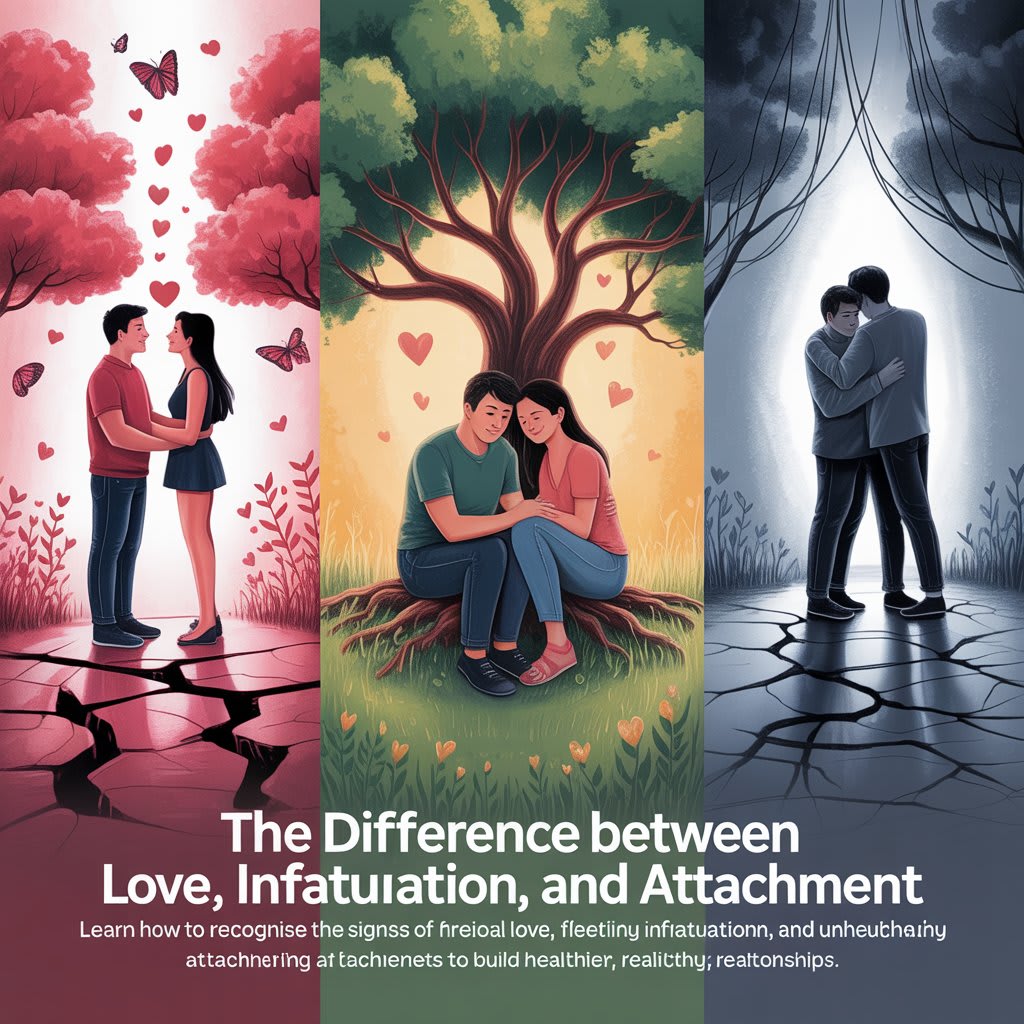
Introduction
Relationships are a fundamental part of our lives, yet many people struggle to understand their emotions within them. At times, what feels like love may actually be infatuation or unhealthy attachment. Understanding the key differences between these feelings is vital for developing emotionally balanced and meaningful connections. This blog explores the psychological and emotional distinctions between love, infatuation, and attachment—and how recognising them can lead to healthier, more fulfilling relationships.
1. What Is Love?
Love is a deep emotional bond built over time through trust, respect, understanding, and shared experiences. Unlike infatuation or attachment, love is rooted in reality. It allows both individuals to grow independently and together without fear or control.
Characteristics of Love:
Mutual Respect: Both partners honour each other’s opinions, emotions, and space.
Emotional Safety: You feel safe, supported, and understood even in difficult moments.
Growth-Oriented: Love encourages individual growth and personal freedom.
Consistent and Steady: Love isn't overwhelming—it builds gradually and deepens over time.
Acceptance: You accept your partner’s flaws and don't try to change them.
Love Example:
You’ve been with someone for over a year. You've seen each other through highs and lows. You trust them. They listen when you speak. They encourage you to pursue your goals. You feel calm and secure in their presence.
2. What Is Infatuation?
Infatuation is often mistaken for love. It’s intense, passionate, and usually based on physical attraction or idealisation of the other person. But infatuation is short-lived and tends to fade when the excitement wears off or when reality sets in.
Characteristics of Infatuation:
Instant Spark: There's a rush of excitement and chemistry early on.
Idealisation: You overlook red flags and imagine the person to be perfect.
Obsessive Thoughts: You constantly think about them and crave their attention.
Fear of Rejection: You worry they’ll lose interest or leave if you're not "good enough".
Lack of Depth: The connection may be shallow, with limited emotional intimacy.
Infatuation Example:
You meet someone and feel an instant spark. Within a week, you can’t stop thinking about them. You imagine a future with them, even though you barely know them. You ignore signs that you’re not compatible, focusing only on how good they make you feel.
3. What Is Attachment?
Attachment is an emotional dependence that develops when we rely on someone for validation, security, or self-worth. While some level of attachment is natural in relationships, unhealthy attachment can become toxic and lead to co-dependency, control, or fear-based bonding.
Characteristics of Unhealthy Attachment:
Fear of Abandonment: You feel anxious or panicked when your partner pulls away.
Emotional Dependency: Your mood depends on their actions or approval.
Possessiveness: You try to control their time, emotions, or social interactions.
Low Self-Worth: You believe you’re not complete without them.
Tolerating Toxicity: You stay in unhealthy dynamics just to avoid being alone.
Attachment Example:
You feel uneasy when your partner doesn’t text back quickly. You constantly worry they’ll leave, even without reason. You tolerate emotional neglect or manipulation because the thought of being without them is unbearable.
4. Key Differences Summarised
Aspect Love Infatuation Attachment
Foundation Trust, respect, shared values Fantasy, physical attraction Fear, insecurity
Time Grows slowly Appears instantly Forms quickly or over time
Emotional Response Calm, secure, balanced Excited, nervous, intense Anxious, needy, dependent
Focus Them as a whole person Their looks or how they make you feel Your emotional needs
Outcome Growth and partnership Burnout or disillusionment Emotional exhaustion
5. Why It Matters
Not being able to differentiate between love, infatuation, and attachment can lead to heartbreak, toxic patterns, and emotional burnout. Many people jump into relationships based on intense chemistry or neediness, only to find themselves emotionally drained later.
By understanding what you’re truly feeling, you can:
Make conscious dating decisions.
Set healthy boundaries.
Avoid co-dependency.
Build meaningful, long-term relationships.
6. How to Tell What You're Feeling
Here are some practical questions you can ask yourself:
To Check for Love:
Do I accept this person for who they are, flaws included?
Do I feel calm and emotionally safe with them?
Am I growing as a person while being with them?
To Check for Infatuation:
Do I know much about their values, or just how they look/act?
Am I ignoring red flags because I’m afraid of losing the spark?
Do I feel addicted to how they make me feel?
To Check for Attachment:
Do I panic when I don’t hear from them?
Do I fear being alone more than being with the wrong person?
Am I staying because I feel incomplete without them?
7. Moving Towards Healthier Love
If you recognise that you’re caught in infatuation or attachment, don’t be harsh on yourself. Emotional awareness takes time and self-compassion. Here are some ways to shift towards healthy, grounded love:
Build Self-Worth: Work on your confidence and identity outside of relationships.
Slow Down: Let love develop naturally. Don’t rush emotional intimacy.
Journal Your Feelings: Reflect on what draws you to a person—excitement, safety, or fear?
Therapy or Counselling: Talk to a therapist if you notice recurring patterns of attachment or heartbreak.
Practice Boundaries: Create emotional space in relationships. Don’t lose yourself in someone else.
Conclusion
Love, infatuation, and attachment are all powerful emotions, but they serve very different purposes in our lives. While infatuation may feel exciting and attachment may feel comforting, neither can replace the grounded strength of real love.
By learning to recognise these emotional states, we can choose healthier connections, break free from destructive cycles, and develop relationships that nourish us—body, mind, and soul.
What to Do Next?
Share this blog with someone who might be struggling with relationship confusion.
Reflect on your own relationship history—were your past experiences rooted in love, infatuation, or attachment?
Start journaling about your emotional needs and patterns.
If you notice a pattern of unhealthy attachments, seek support from a therapist or relationship coach.
About the Creator
Keep reading
More stories from MaazHassan and writers in Psyche and other communities.
"Why Modern Dating Feels So Empty – And What You Can Do About It":
Introduction Modern dating should be easier than ever. With countless dating apps, endless profiles at your fingertips, and the ability to connect instantly, you’d think finding love would be simple. Yet, for many people, dating in the digital age feels lonelier and more emotionally draining than ever before. Swiping left and right, brief conversations that lead nowhere, ghosting, and superficial connections—this is the reality many face.
By MaazHassan9 months ago in Lifehack
The Color We Learned to Fear
Black is a color that refuses to be neutral. It enters a room with history on its shoulders and silence in its wake. For some, it is elegant, powerful, and endlessly modern. For others, it is heavy—too heavy—with meanings they did not choose but inherited. The dislike of black is rarely about the color alone. It is about what black has been taught to represent, the emotions it awakens, and the stories people carry inside them.
By LUNA EDITH4 days ago in Psyche



Comments
There are no comments for this story
Be the first to respond and start the conversation.