
5 Examples of Video-based Learning for Training your Employees
In this blog, we will look at five examples of video-based learning to train your employees.


Videos have proven to be an effective method of learning new concepts and training in new skills. If you use the right tools and technologies and implement them properly, video-based learning solutions significantly impact learners’ minds. Why don’t you use videos to train your employees who spend ample time every day on their mobile devices? You may wonder how can video-based learning be used for specific ‘skill training’, which generally happens within classrooms and in instructor-led training (ILT) sessions.
In this blog, we will look at five examples of video-based learning to train your employees.
Example 1: Use Videos To Provide Skill Training To Employees
Setting a goal and focus on the work is an important skill that every employee needs to learn. The main criterion for goal setting is that employees should set their personal goals aligned with the company’s business goals.
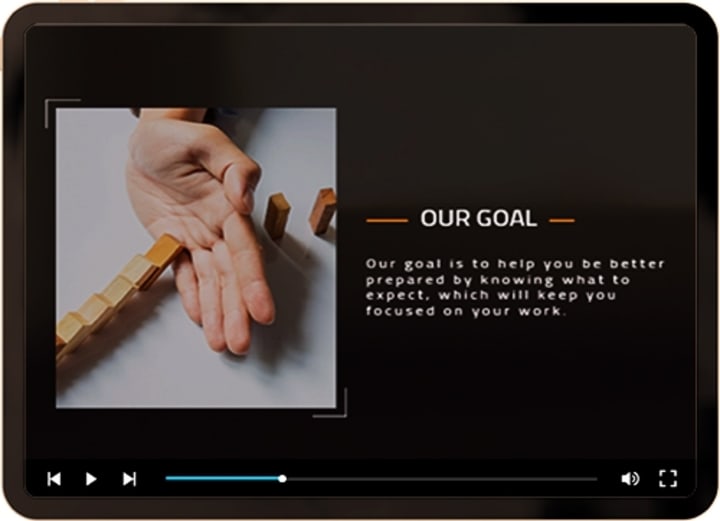
This short video intends to help the learners prepare for what to expect and keep focused on work. We have developed a video-based learning nugget that combined messages from experts and team members with interesting infographics and visuals to provide training. This set the tone for the eventual training that was delivered later. This is a good example of implementing a video-based learning strategy for skill training.
Example 2: Use Videos To Provide Skill Training To Field Staff
Short videos can be a powerful mode of providing skill training to field personnel like sales teams, customer service executives, and the front office. Whether the training is about newly added features in a product or service, how to pitch a sale, how to deal with difficult customers, address the customer needs, or close a sale, videos are a great way to provide skill training to sales teams. You can build videos using stock images, icons, illustrations, or a combination of all these to provide training on day-to-day problems or issues in simple ways.

Time management is an important skill for sales teams, customer service executives, and other field staff. In this short video, Covey’s Priority-Urgency matrix is clearly explained with engaging infographics, which helps the employees decide the priority or important things and prioritize the tasks to maintain time for important things. It helps them on how to fix time management issues and how to improve time management skills.
Example 3: Use Videos To Provide Process Training To Employees
A process is a series of actions or steps taken to achieve a particular result. Processes are an integral part of many industries like the computers, electronics, pharmaceuticals, petrochemical, etc. You can effectively use video-based learning to provide process training to your employees.
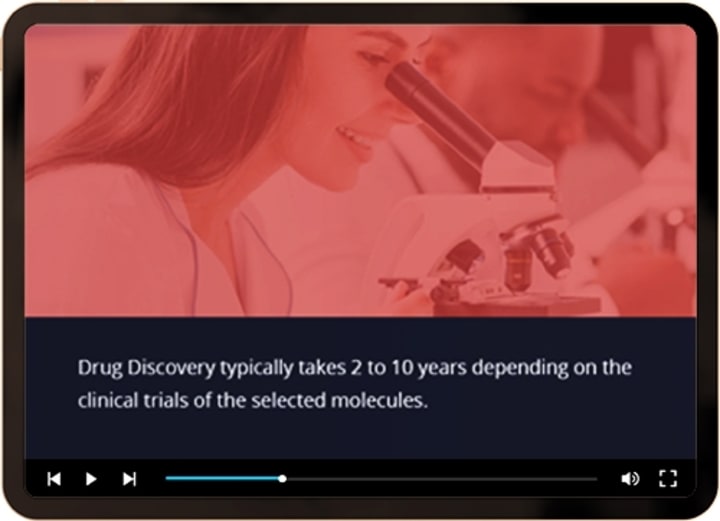
This is a 4-minute short video about understanding the drug discovery process in the pharmaceutical industry. The company wants to roll out short video-based learning modules to their employees on the concept of timelines in the drug discovery process. They want to sensitize their employees on the need to maintain strict timelines during the discovery-test-adoption process. This short video covers the important elements of the process.
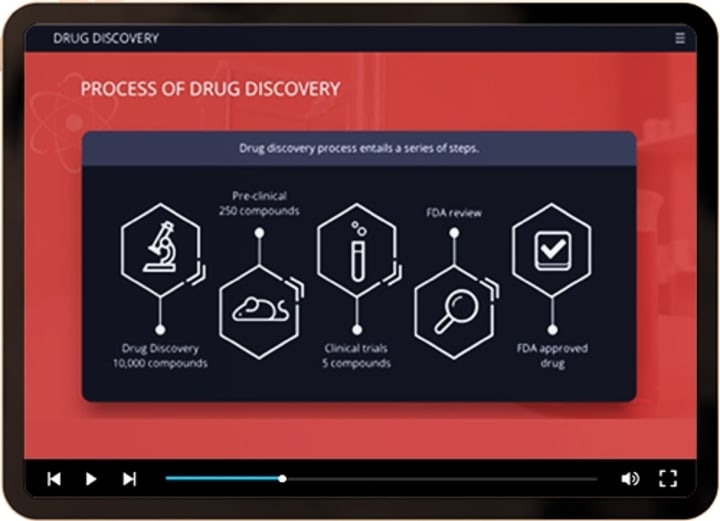
The video-based learning has been provided to the employees in the preliminary stage to give them a broader understanding of the drug discovery process followed in the company. Then, the employees had taken up the actual full-length course on the drug discovery process, which included interesting activities, gamification elements, and real-life scenarios. The video received a good response from employees. This is a suitable example of video-based learning, in which you can provide any other type of training to your employees, like process training know more
About the Creator
Suresh Kumar DN
A Learning Professional with 15+ years of experience in strategizing and providing learning solutions for customer requirements. I work with several global customers in understanding their business challenges & proposing learning solutions.
Keep reading
More stories from writers in Journal and other communities.
Ai and America
In 2026, Artificial Intelligence (AI) isn’t just a buzzword — it has become a central force shaping the software industry in the United States. A recent study published in Science shows that AI-assisted tools are now helping write almost 30% of all newly written software code in the U.S. — up from just about 5% a few years ago. This rapid shift highlights a drastic transformation in how software is built, how developers work, and how jobs in tech might evolve in the coming years.
By Hamd Ullahabout 21 hours ago in Journal




Comments
There are no comments for this story
Be the first to respond and start the conversation.