
5 Best Use Cases of Artificial Intelligence in Marketing
From predictive analytics to AI-powered chatbots, artificial intelligence is reshaping every corner of marketing. Discover the top use cases where AI is helping businesses boost engagement, save time, and scale smarter.

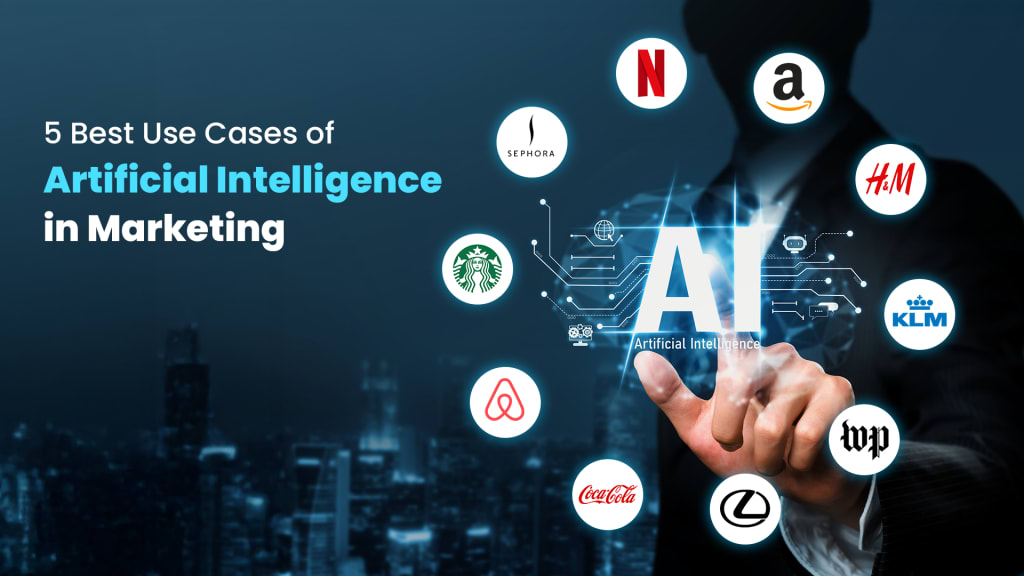
Artificial Intelligence (AI) is redefining the way businesses approach customers and deliver personalized services. From analyzing customer behavior to building a robust market strategy, AI empowers marketers to make faster, data-driven decisions that enhance performance and ROI.
According to a 2023 Statista report, over 80% of industry experts use AI technology in their online marketing activities. Ad targeting, personalizing content, email marketing, and conversion analytics are some key applications of AI in marketing.
Here are five ways a business can use the technology to achieve effective marketing results with real-time examples.
1. Personalized Customer Experiences
Analyzing customer data based on browsing behavior and purchase history, AI offers hyper-personalized content and product recommendations. This helps the brands deliver a tailored experience that boosts customer satisfaction and engagement. Improved customer experience often leads to high conversion.
👉 Netflix & Amazon
Netflix uses AI algorithms to analyze data and recommend personalized content based on viewing history, searches, location, rating, and time spent. Viewers get recommendations of content with similar genres or themes.
Amazon implements its AI system to suggest product recommendations based on customer preferences, including purchase and browsing history, and items saved in the cart. Product recommendations help deliver personalized shopping experiences.
2. Chatbots for Customer Support
AI chatbots effectively handle 24/7 customer support by providing instant assistance to customer needs. These bots and AI agents use Machine Learning (ML) and Natural Language Processing (NLP) to resolve customer queries efficiently and provide more human interaction. Bots ensure faster resolution, streamline automated tasks, and enhance cost efficiency by freeing up the workforce for more creative, focused tasks.
👉 H&M & KLM Royal Dutch Airlines
H&M uses AI chatbots on messaging and chat apps like Kik to help shoppers browse and receive personalized outfit styling suggestions, acting like a digital personal shopper.
KLM Airlines uses its BlueBot (BB) chatbot to assist customers with booking tickets, flight updates, and customer service, efficiently handling thousands of queries.
Ticketmaster LLC employs AI-powered chatbots to handle customer inquiries about buying tickets for concerts, sports, and theaters.
3. Content Generation & Optimization
AI tools like Jasper, Copy.ai, and ChatGPT help generate content ideas and ad copies for better optimization. They also optimize SEO by suggesting keywords and conducting A/B tests of ad copy for better performance. Be it images, blog posts, social media captions, or product descriptions, they help speed up content creation and boost marketing results.
👉 The Washington Post & Lexus
The Washington Post developed an AI tool called Heliograf, which generates short news reports and social media posts. It helped publish hundreds of articles during events like the 2016 Rio Olympics.
Lexus launched an AI-scripted ad for its ES model. They used IBM Watson to analyze 15 years’ car ads and wrote an ad script optimized for emotional engagement.
4. Programmatic Advertising
AI automates the bidding system for buying or selling digital ads in real time to ensure the ads are shown to the right people at the right time for the best price. It allows advertisers to purchase and provide relevant ad impressions to the audience for a few milliseconds. It uses data to target audiences more precisely and maximizes ad budget efficiency. Google Ads and Facebook Ads have already implemented this method.
👉 Coca-Cola & Airbnb
Coca-Cola uses AI to run programmatic ad campaigns, such as “Share a Coke,” which features personalized bottles with names. They analyze customer data to deliver highly targeted ads across platforms in real time.
Airbnb leverages AI in programmatic advertising to optimize ad placements and personalize promotions for travel bookings based on users’ search history, demographics, and travel preferences.
5. Predictive Analytics of Customer Insights
AI tools help gather valuable customer insights and predict customer behavior by spotting trends in massive datasets. Marketers use this to forecast future buying patterns and identify high-value customers. It allows marketers to optimize campaigns by focusing on those potential leads that are more likely to convert.
👉 Starbucks & Sephora
Starbucks uses its Deep Brew AI platform to predict customer preferences and behaviors. The platform analyzes data based on customer location, purchase history, individual preferences, etc., and recommends drinks and foods accordingly.
Sephora’s AI-driven predictive analytics helps forecast product demand and customer behavior by analyzing data from Beauty Insider programs, browsing patterns, and past purchases. It helps increase customer retention and loyalty program engagement.
Conclusion
Artificial Intelligence marketing helps create personalized experiences, predict trends, and improve overall campaign performance. The broad integration of AI-powered tools, such as NLP, ML, Generative AI, and agentic AI, contributes to optimizing marketing efforts and strategies. By leveraging AI, businesses can deliver hyper-personalized experiences, optimize campaigns, and drive higher conversions and customer loyalty.
About the Creator
Akrati Raina
Passionate about bridging the gap between technology and user engagement, I aim to share insights, strategies, and innovations that empower brands to thrive in the evolving digital landscape.
Keep reading
More stories from Akrati Raina and writers in Journal and other communities.
7 best ways and tips to use QR codes for forms
QR codes for forms are innovative ways to enhance customer engagement and streamline business processes through digitalized forms. They are the best tools for collecting first-party data, providing valuable insights for marketers, product managers, and business owners.
By Akrati Rainaabout a year ago in Journal



Comments
There are no comments for this story
Be the first to respond and start the conversation.