
The Unmatched Value of Human Transcription in Interview Quality
Unlocking the Power of Precision: Why Human Transcription Remains the Gold Standard


In an era where automated transcription tools promise speed and cost-effectiveness, the true value of a transcription service lies in its ability to accurately capture the essence and nuances of a conversation. This is where human transcription shines. While machines excel at processing large volumes of data, they often fall short in delivering the depth and contextual understanding that only a human can provide.
Capturing the Core Message with Precision
Human transcribers have an innate ability to grasp the central themes of an interview. They are not merely converting speech into text; they are interpreting the content.
With an understanding of industry-specific terminology and subtle language cues, a skilled transcriber can differentiate between technical jargon, colloquial expressions, and context-dependent language.
For instance, in a medical interview, specialized terms and subtle variations in speech that indicate a patient's condition or treatment nuances are more accurately captured by a human, ensuring that the transcript is both detailed and reliable.
Smart Organization and Logical Flow
One of the key strengths of human transcription lies in its ability to structure information logically. Unlike automated tools that produce a raw, often unstructured dump of words, human transcribers organize content in a way that mirrors the natural flow of conversation.
They intuitively segment the dialogue, identifying topic shifts, natural pauses, and transitions. This results in a transcript that is not only easy to read but also enables researchers, journalists, and professionals to quickly locate and extract the most relevant information.
Preserving Conversational Nuances and Emotional Depth
A true conversation is rich with nuance, emotion, and subtle inflections—elements that machines frequently overlook. Human transcriptionists capture these details by paying close attention to tone, pauses, interruptions, and even the emotional undertones conveyed by the speakers.
This attention to detail is crucial, especially in qualitative research interviews, where understanding the mood and context can be just as important as the words spoken. By preserving these nuances, human transcribers provide a transcript that goes beyond a simple verbatim account, offering deeper insights into the emotional and psychological dimensions of the conversation.
Ethical Accuracy and Cultural Sensitivity
In today’s diverse and globalized world, interviews often involve complex cultural and ethical dimensions. Human transcribers are particularly adept at handling sensitive content with the required tact and discretion. They are aware of cultural nuances and ethical considerations, ensuring that language remains respectful and contextually appropriate throughout the transcription.
This is especially critical in fields like legal proceedings, healthcare consultations, and academic research, where even a minor error in transcription can lead to significant misunderstandings or misinterpretations.
Real-Time Adaptability to Dynamic Conversations
Interviews are inherently dynamic, often characterized by spontaneous changes in tone, language, or subject matter. Human transcribers possess the cognitive flexibility to adapt to these shifts in real time.
Whether it’s a sudden switch from formal to informal language or an unexpected interruption in the dialogue, a human transcriber can adjust seamlessly, ensuring that the final transcript accurately reflects the natural ebb and flow of the conversation. This adaptability is a significant advantage over automated systems, which may struggle with unpredictable variations in speech.
Versatility Across Diverse Industries
The benefits of human transcription extend well beyond accuracy and structure. In legal settings, even a minor transcription error can have profound consequences, potentially impacting the outcome of a case. In the healthcare sector, precise transcription of patient interviews can directly influence treatment decisions and care quality.
Educational institutions and research organizations also rely on accurate transcriptions to support learning and analysis. Human transcription services cater to these diverse needs by delivering documents that are not only correct but also tailored to the specific requirements of each industry.
A Commitment to Quality and Reliability
At the end of the day, human transcription is about ensuring that every detail is captured with care and precision. For organizations that depend on accurate records—whether for legal compliance, academic research, or business insights—the reliability of a human-transcribed document cannot be overstated. Services like GMR Transcription are dedicated to providing 100% human, USA-based excellence, ensuring that every transcript is of the highest quality.
Conclusion
In summary, while automated transcription tools offer the allure of quick turnaround times and lower costs, they lack the human touch that is essential for truly accurate and meaningful transcriptions. Human transcribers bring a depth of understanding, attention to detail, and ethical awareness that machines cannot replicate.
By capturing the full spectrum of a conversation—from core messages and logical structure to emotional nuance and cultural sensitivity—human transcription remains the gold standard for interview transcription quality.
For anyone serious about elevating their transcription, translation, and proofreading needs, investing in a service that values human expertise is a decision that ensures clarity, precision, and trustworthiness in every document produced.
About the Creator
Beth Worthy
Beth Worthy is President of GMR Transcription Services, Inc., a U.S. company offering 100% human transcription, translation, and proofreading for academic, business, legal, and research clients.
Keep reading
More stories from Beth Worthy and writers in Interview and other communities.
Understanding the Time it Takes to Transcribe a 1-Hour Interview
Transcription, the process of converting spoken language into written text, plays a critical role in various fields such as journalism, research, and legal documentation. It ensures that valuable spoken content, whether from interviews, meetings, or presentations, can be accurately documented for analysis, reference, or accessibility.
By Beth Worthyabout a year ago in Interview
Twenty-First Century Disability Podcast
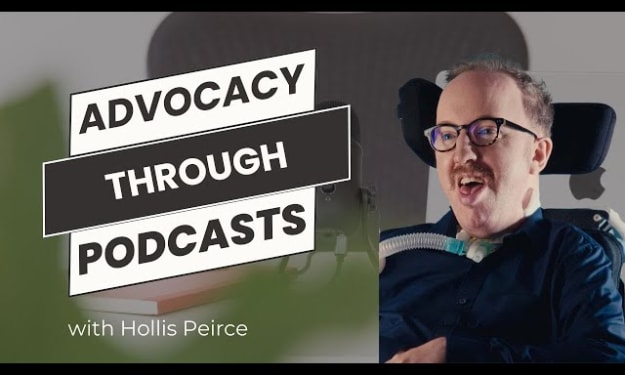
Twenty-First Century Disability was created and is hosted by Hollis Peirce, a chronically physically disabled man with Congenital Muscular Dystrophy. Mr. Peirce, who is on a ventilator, can narrate his podcast using only his bottom lip. His voice is intelligible and intelligent.
By Frank Racioppi3 days ago in Interview
Why I Built an AI Therapist
I’ve been a waiter, a construction worker, a DJ, a kitchen hand, a porter, a caregiver, and a supermarket cashier. I’ve washed dishes in Australia and meditated in the Himalayas. I’ve battled addictions, eating disorders, anxiety, depression, and self-destructive behavior. Before I ever sat across from a client as a psychotherapist, I had already lived a dozen lives — and nearly destroyed myself in several of them.
By Laurentis Theofanus5 days ago in Interview


Comments
There are no comments for this story
Be the first to respond and start the conversation.