Authors
My 2nd Interview with Misty Rae, From Vocal Challenge Winner To Best Selling Author
Misty Rae is a writer with a special passion for Black History. That passion stems from her mixed racial background. Her father was Black and the family are the descendants of slaves from South Carolina 's rice coast.
By Mariann Carroll11 days ago in Interview
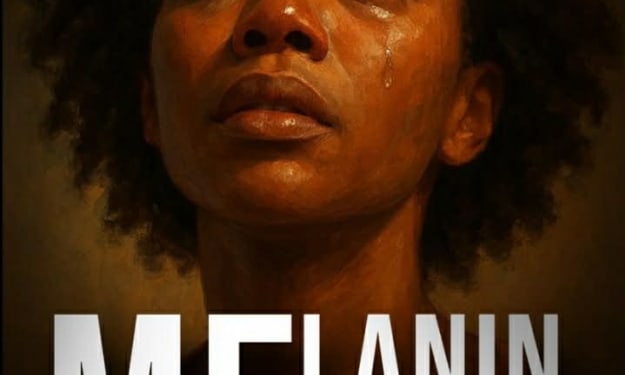
Part 2 Interview With Joe Patterson, Author Of Melanin Memoirs. Top Story - February 2026.
This is my second interview with Joe Patterson. His 4th anniversary writing on Vocal will be in March 2026. He has one achievement on Vocal, The Other Foot. He has over 17,000 reads on Vocal since he started on Vocal in 2022. Joe Patterson is very creative poet and rapper. Joe is deep thinker and I feel it is reflected in his latest published book, Melanin Memoirs.
By Mariann Carroll17 days ago in Interview
Matthew Scillitani on Measuring the Extreme Right Tail with a Supervised Timed High-Range Ability Test
Matthew Scillitani is a psychometrics practitioner at Neurolus Psychometrics focused on developing supervised, time-limited high-range ability examinations. He co-launched The Mental Inventor with Paul Cooijmans as an empirical testbed for a central measurement question: whether performances can be validly differentiated in the extreme right tail under proctored conditions. His approach emphasizes procedural integrity—identity verification, approved proctoring, and rule enforcement—alongside cautious claims about interpretation until reliability and validity evidence is established. He highlights emerging threats to unsupervised testing, including AI-assisted responding and large-scale collaboration, and advocates peer review before formal reclassification.
By Scott Douglas Jacobsen21 days ago in Interview
Summitfall: Andreas Szakacs Explores Leadership and Survival in a New Himalayan Drama
By andreasszakcsproductions Coming Soon Extreme environments have a way of exposing character. In the thin air of the Himalaya, decisions are made quickly, consequences arrive faster, and leadership is tested without mercy.
By Andreas Szakacs23 days ago in Interview
Fumfer Physics 40: Cosmic Ratios, Large Numbers, and the Information Structure of the Universe
In this exchange, Scott Douglas Jacobsen asks Rick Rosner about striking ratios in physics that appear across vastly different scales. Rosner points to large-number disparities, such as the enormous strength difference between electromagnetism and gravity at the particle level, and contrasts microscopic lengths with the scale of the observable universe. He cautions against misapplied figures, noting that some famous numbers belong to entirely different physical contexts. While no single cosmic object strikes him as anomalous, Rosner emphasizes unresolved questions about cosmic maturity, heavy-element origins, and the nature of time. He ultimately frames time as closely tied to information flow, arguing that our lack of a rigorous definition of information remains one of physics’ deepest gaps.
By Scott Douglas Jacobsen30 days ago in Interview
Sharmiin Meymandinejad: Repression, War, and Human Dignity in Iran
Sharmiin (also spelled Sharmin) Meymandinejad is an Iranian human rights defender, writer, and theatre artist who founded the Imam Ali’s Popular Student Relief Society (IAPSRS) in 1999 to combat poverty and support vulnerable children and families. Iranian authorities arrested him in 2020 and charged him with “insulting” Iran’s leaders amid a broader crackdown on independent civil society; he was held for months, including time in solitary confinement, and reportedly denied medical care. After sustained pressure, IAPSRS was ordered dissolved. Now in exile, Meymandinejad speaks on repression, public executions, social trust, and civilian harm from sanctions and war, through grassroots work.
By Scott Douglas Jacobsenabout a month ago in Interview
Center Stage with Paul Stewart. Top Story - March 2023.
*** I'm keen to republish the interviews I did for my series with Vocal creators. It's been a few years and I thought it might be nice to revisit these wonderful conversations. I'll be releasing them one at a time for a few weeks/months.
By Heather Hubler2 months ago in Interview
10 Minutes with Bill Gates
Introduction Spending 10 minutes with Bill Gates may sound brief, but even a short conversation with one of the world’s most influential innovators can offer insights that last a lifetime. As the co-founder of Microsoft, a philanthropist, an author, and a global thought leader, Bill Gates has shaped how the world uses technology and how it addresses some of its most pressing challenges. In just ten minutes, one could explore decades of experience in innovation, leadership, failure, success, and global responsibility.
By shaoor afridi2 months ago in Interview
Fumfer Physics 36: Proto-Thoughts, Context, and Memory Hooks
Scott Douglas Jacobsen asks whether it is naïve to look for a discrete “unit” of thought, given that thoughts vary in informational content and rarely arrive as neat sentences. Rick Rosner argues that language captures only a thin slice of cognition: perception, background knowledge, self-critique, and half-formed associations run in parallel as “proto-thoughts.” He uses the example of viewing a painting to show how sensory input and contextual inference accompany any sentence-like notion. Most thoughts, he adds, pass without leaving retrieval “hooks,” much like dreams. Without deliberate encoding—or a later contextual trigger—mental material vanishes, because recall depends on activating the right associative patterns.
By Scott Douglas Jacobsen2 months ago in Interview
A Chat with Andrew Chancellor, CEO at Wellbeing International Foundation
Tell us about Wellbeing International The Wellbeing International Foundation was created to close the gap between scientific discovery and everyday medicine. The aim has always been to turn strong biologic research into treatments that genuinely help people, rather than leaving good science stuck inside laboratories. Our focus is on regenerative medicine and cell-free biologic therapies. These are treatments built from the body’s own healing signals rather than whole cells or surgery.
By Wellbeing International Foundation2 months ago in Interview
T. Michael W. Halcomb on Disillusionment, Community, and Accountability in the Modern Church
T. Michael W. Halcomb is an American professor, author, podcaster, and stand-up comedian. He is the author of around 30 books, an educator with five degrees (including a PhD), and a frequent academic presenter with nearly 100 conference presentations. He co-founded GlossaHouse in 2012, a publishing house focused on language-learning resources, especially biblical languages. He gave a TEDx talk, "Silent no more: Resurrecting dead languages," in Evansville, IN in October of 2015. His comedy work has been featured in outlets such as Yahoo! Entertainment, TheWrap, and The Mirror US.
By Scott Douglas Jacobsen2 months ago in Interview