
Shalev Grados on the Art of Hybrid Scoring for ‘Star Trek: Strange New Worlds’
“Hybrid scoring is the fusion of traditional orchestral writing with modern production elements—electronics, sound design, processed textures, rhythm programming, and non-traditional instrumentation,” Grados explains.

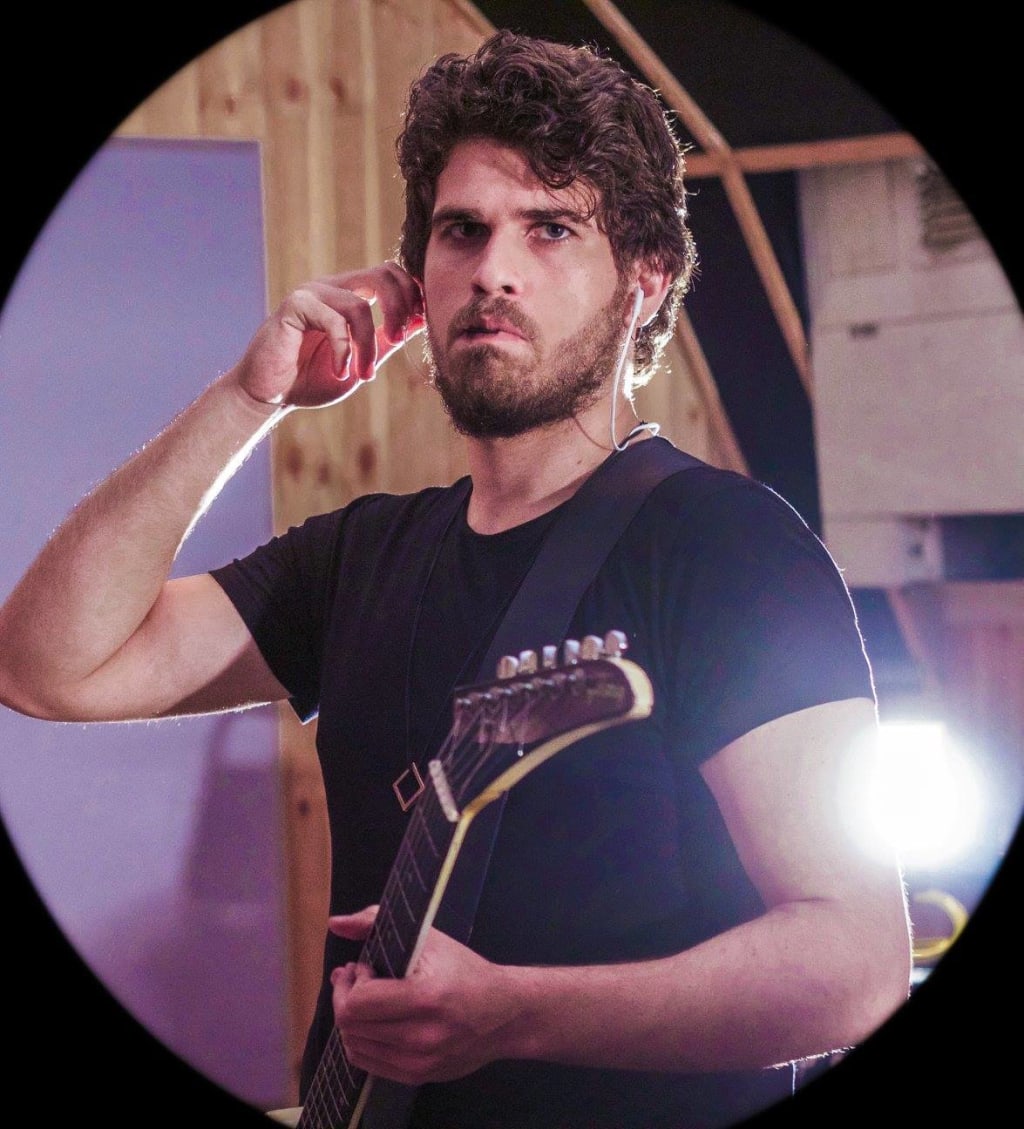
In the vast universe of Star Trek: Strange New Worlds, where the starship Enterprise explores the final frontier with classic episodic storytelling, a new sonic frontier is being charted every week.
The series, a spin-off from Star Trek: Discovery and currently in production on its fifth and final season on Paramount+, is renowned for its balance of legacy and innovation. This duality is perhaps most vividly captured in its score, a masterful blend of classical orchestral grandeur and cutting-edge electronic production courtesy of composer Shalev Grados.
Grados, a contemporary composer whose resume includes work on high-profile projects like the Peacock series, sat down to discuss the intricate craft of "hybrid scoring"—a technique he employs not as a gimmick, but as a fundamental storytelling language. For Strange New Worlds, which follows Captain Christopher Pike (Anson Mount), Spock (Ethan Peck), and Number One (Rebecca Romijn) in the decade before The Original Series, the score must bridge the gap between the nostalgic warmth of 1960s television and the cinematic expectations of 21st-century audiences.
For Grados, hybrid scoring is more than just layering synthesizers over a string section. It is the pursuit of a singular, cohesive sonic identity.
“Hybrid scoring is the fusion of traditional orchestral writing with modern production elements—electronics, sound design, processed textures, rhythm programming, and non-traditional instrumentation,” Grados explains. “To me, it’s not about layering synths on top of an orchestra for effect; it’s about creating a single, cohesive musical language where acoustic and electronic elements feel inseparable. When hybrid scoring works, you can’t really point to where ‘orchestra’ ends and ‘production’ begins. It just feels like one world.”

This philosophy is essential for a show like Strange New Worlds. The series pays homage to the episodic structure of The Original Series while utilizing modern filmmaking techniques. The score reflects this tension. “On large-scale projects like Star Trek: Strange New Worlds, the orchestra often represents scope, legacy, and heroism,” Grados notes. “While hybrid elements help modernize the sound and support tension, motion, or conflict.”
Creating these complex textures requires a sophisticated command of technology. Grados operates within a multi-software ecosystem, tailoring his tools to specific stages of the composition process.
“I do most of my composing and mockup work in Cubase, especially when dealing with complex MIDI programming and detailed tempo mapping,” he says. “Avid Pro Tools is essential for recording, editing, and final delivery—particularly on major studio sessions. When recording live music at places like Warner Bros. or Fox, Pro Tools is the industry standard.”
Alongside these digital audio workstations (DAWs), Grados relies on Avid Sibelius for notation and orchestration. This workflow allows him to move fluidly between the creative freedom of MIDI programming and the precision required for live orchestral sessions. On Strange New Worlds, this means he can experiment with futuristic, electronic soundscapes in the studio and seamlessly translate them into sheet music for a 60-piece orchestra.

While the sound of Star Trek is often associated with sweeping melodies and brass fanfares, Grados brings a modern rhythmic sensibility to the bridge of the Enterprise. He cites hip-hop as a foundational influence on his approach to scoring, not necessarily through direct genre sampling, but through its inherent sense of groove and physicality.
“I grew up listening to Eminem, Dr. Dre, and more old-school stuff like N.W.A., and that sense of momentum and rhythmic clarity really stuck with me,” Grados shares. “I’m drawn to music that moves, music that has pulse and physicality. If someone instinctively starts nodding their head while listening, that means the music is connecting on a visceral level.”
This rhythmic drive is evident in the action cues of Strange New Worlds, where the orchestra provides the melodic narrative, but the underlying electronic pulses keep the energy high, mirroring the urgency of space exploration.
Film and TV scoring is rarely a solitary endeavor, especially on a production of this scale. Grados emphasizes that the complex soundscape of Strange New Worlds is the result of a tight-knit collaboration involving orchestrators, music editors, engineers, contractors, and musicians.
“Film and TV scoring is a team sport. Clear communication is EVERYTHING,” Grados stresses. “Everyone involved—from orchestrators to librarians—needs accurate information and enough creative trust to do their best work. My job is to make sure the musical vision translates cleanly through every stage: writing, prep, recording, editing, and final delivery.”
This collaborative spirit extends to the show’s creative leadership, including creators Akiva Goldsman, Alex Kurtzman, and Jenny Lumet, and showrunners Goldsman and Henry Alonso Myers. The music must serve the narrative vision, balancing the episodic nature of the stories with the overarching character arcs of Pike, Spock, and Number One.
As streaming platforms like Paramount+ push the boundaries of visual storytelling, the demand for hybrid scoring continues to grow. Grados sees this not as a replacement for traditional composition, but as an expansion of the composer’s palette.
“Audiences today are used to layered sound worlds—from games, streaming, and modern music production,” he said. “Hybrid scoring reflects how people experience sound now. That said, strong fundamentals still matter. Hybrid scoring isn’t replacing deep musical knowledge—it’s expanding the palette. The most effective scores understand both worlds deeply and know when to lean into each.”
About the Creator
Lisa Rosenberg
I am a writer based in New York City writing about artists, creative leaders and entrepeneurs.
Keep reading
More stories from Lisa Rosenberg and writers in Interview and other communities.
Urban Designer Sakshi Nanda Discusses Her Roots and the Inspiration Behind Her Work
Urban designer Sakshi Nanda carries a unique perspective when it comes to city planning. Having grown up in the vibrant, densely populated streets of Mumbai her views have been honed by her experiences in the sprawling city of Atlanta and planned city of Portland. During her formative years, Nanda witnessed the transformative power of efficient public transportation through Mumbai’s famed local train system, and now, in her professional life, she strives to recreate that sense of a connected, sustainable community.
By Lisa Rosenberg24 days ago in Interview
Part 2 Interview With Joe Patterson, Author Of Melanin Memoirs
This is my second interview with Joe Patterson. His 4th anniversary writing on Vocal will be in March 2026. He has one achievement on Vocal, The Other Foot. He has over 17,000 reads on Vocal since he started on Vocal in 2022. Joe Patterson is very creative poet and rapper. Joe is deep thinker and I feel it is reflected in his latest published book, Melanin Memoirs.
By Mariann Carrollabout 12 hours ago in Interview
Claus D. Volko on Symbiont Conversion Theory: Reprogramming Bacteria and Tumors to Counter Antimicrobial Resistance
Claus D. Volko, M.D. (born 1983) is an Austrian software engineer and medical scientist in Vienna. He holds degrees in medicine (M.D.), medical informatics (B.Sc.) and computational intelligence (M.Sc.). In the demoscene he is known as “Adok” and served as main editor of the electronic magazine Hugi. Volko formulated Symbiont Conversion Theory in 2018. He founded and leads the Prudentia High IQ Society, and joined Mensa in 2002. In 2018 he published “Volko Personality Patterns,” a Jungian-inspired extension of MBTI typology. In 2025 he posted “Reprogramming Bacteria for Symbiont Conversion: A Review” on Prudentia’s blog, and maintains Prudentia’s journal and blog.
By Scott Douglas Jacobsen6 days ago in Interview



Comments