
Urban Designer Sakshi Nanda Discusses Her Roots and the Inspiration Behind Her Work
Urban designer Sakshi Nanda carries a unique perspective when it comes to city planning. Having grown up in the vibrant, densely populated streets of Mumbai her views have been honed by her experiences in the sprawling city of Atlanta and planned city of Portland.

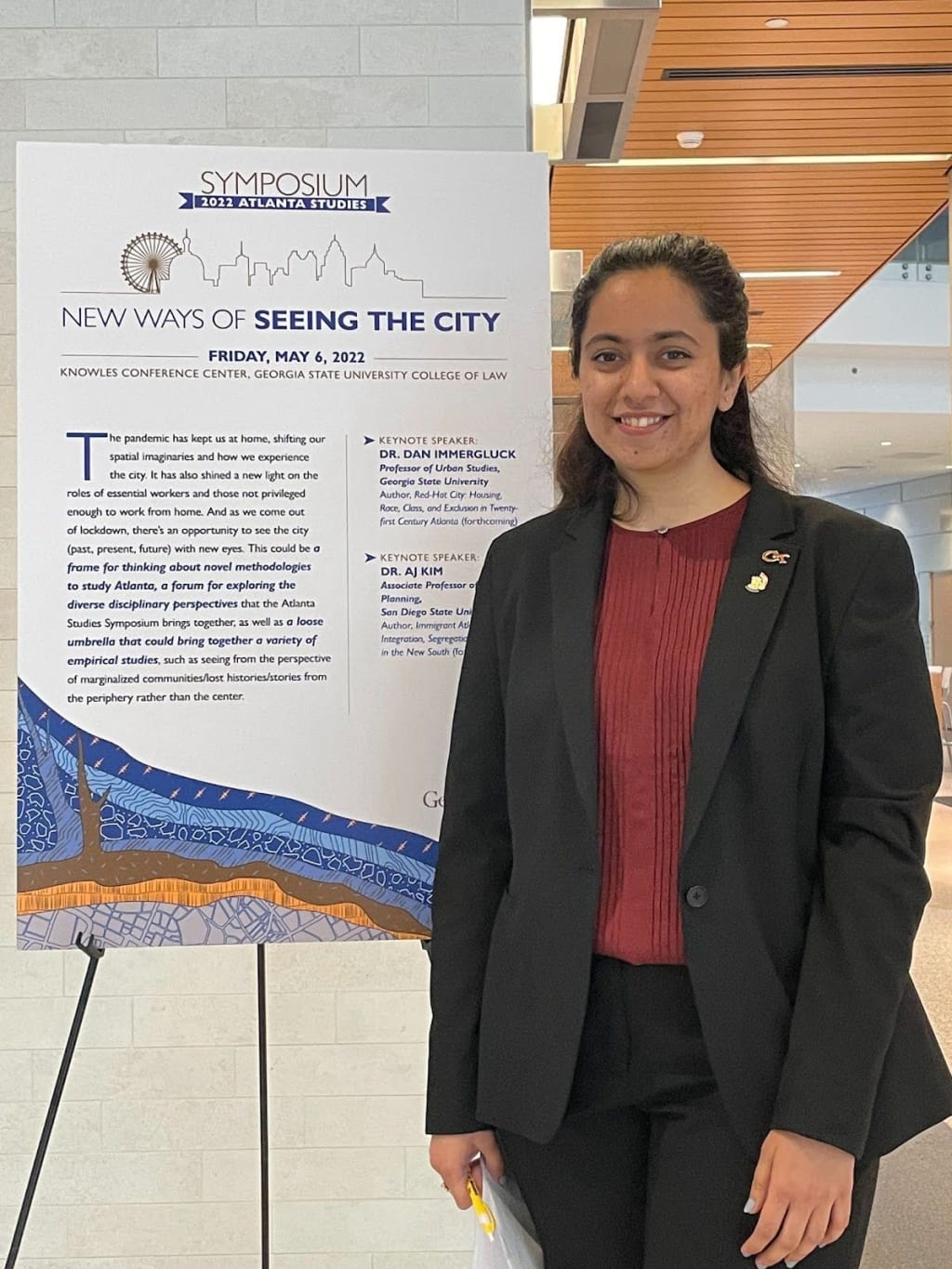
Urban designer Sakshi Nanda carries a unique perspective when it comes to city planning. Having grown up in the vibrant, densely populated streets of Mumbai her views have been honed by her experiences in the sprawling city of Atlanta and planned city of Portland. During her formative years, Nanda witnessed the transformative power of efficient public transportation through Mumbai’s famed local train system, and now, in her professional life, she strives to recreate that sense of a connected, sustainable community.
Following her early affinity for design, Nanda pursued this passion by obtaining a Bachelor’s in Architecture from the University of Mumbai. Buoyed by the support of her parents, and older brother, Nanda honed in on her true passion. Finding herself drawn to urban design, she attended the Georgia Institute of Technology where she achieved a masters in Urban Design. Her career, while still young, has seen her focus on modern civil rights and giving back to the community, as evidenced through her exhibition showcased at the 3rd Annual ACCelerate Creativity + Innovation Festival, in 2022 at the acclaimed Smithsonian National Museum of American History.
Nanda knew from the age of 10 that she aspired to be a designer. “Art and creativity was a constant in my life and my grandfather helped to train me at home,” she says. While she enjoyed all aspects of art from photography to calligraphy and sculpting, it was always with an eye for design-build. With her family’s support she was able to actively pursue the artistic side of learning and finding her focus with architecture. Embarking on a five year intensive course at the University of Mumbai was her first step in realizing her dream.
Arriving in Atlanta to pursue urban design, was a little bit of a culture shock for Nanda with the large sprawling city dominated by cars, seemingly sparsely populated compared to Mumbai. Instantly drawn in by the culture of those who have formed the incredible civil rights movements in the United States, she developed a deep admiration for their individual histories and it is the people who remain central to her design philosophy. “Mumbai, while chaotic, always prioritizes people over cars.” She has brought this philosophy with her while focusing on the local context to create designs that bring the community together.
“I focus a lot on equity and contextual strategies as well as pedestrian oriented urbanism,” Nanda explains. Her approach is one that builds from the ground up and prioritizes public transport and community engagement over the use of cars. The American reliance on automobiles is one that has contributed significantly to air pollution and greenhouse gas emissions. This is not to mention exacerbating social inequalities for those who do not have access to cars.
It’s not about completely abandoning cars, but creating applicable alternatives that help people reconnect with the city they live in. A reduction in commute time, while increasing the walking and biking routes within an urban area helps to promote small business growth, a cornerstone of equitable cities. “In India, the diversity of climate, culture and urban conditions, taught me the importance of designing spaces that respond to local context,” she says. She has utilized that to her approach within the U.S. tailoring designs to reflect the environmental, social and cultural needs of a community.
Sustainability is at the core of almost every sector at the moment, and urban design is no differential matter. Nanda’s work looks to accentuate the natural landscape, and bring back greenspaces to the urban landscape. As part of the cities of the future an attention to the natural ecosystem is all but important. By looking to reduce reliance on automobiles while adding more greenery to grey cityscapes, the Georgia Institute of Technology graduate is taking active steps towards a more sustainable future.
At her core, Nanda looks to honor the individuals in each community. Like her family who supported her, she knows that there are unique people who positively affect culture. These very people often struggle through the constraints of urban culture within the United States. Along with long commutes to work, combined with expensive housing and a high cost of living, it is difficult for many to escape the daily toils of living in a major city.
Drawing on inspiration from global art movements that have occurred throughout history gives Nanda hope. “The art movements and world expositions, driven by artists challenging the status quo, have profoundly influenced my approach to design,” she explains, “It has fostered in me a deep appreciation for the power of creativity, innovation and the way art intersects with the built environment.” Drawing from these incredible artists, Nanda has begun to weave her own design story, letting her creativity flow.
“It wasn’t until I was older that I realized an architect and urban designer could affect people’s lives in the same way any other profession could,” Nanda states. Her journey from Mumbai to Atlanta has provided her with invaluable insights into the way cities are designed. It is this very insight that has imbued her work with a deep care for the people who inhabit these very cities. Rooted in her Indian heritage is the belief that the people come first and by prioritizing them it promotes cultural growth.
While Sakshi Nanda’s journey is still just beginning, it is one that has already shown incredible promise. Her compassion shows through in each of her designs as she focuses on shining a spotlight on what makes each city unique, while simultaneously improving people’s daily lives. For urban designers like Nanda, culture is not only vital, but it is pivotal in the development of their work. As we evolve towards the cityscapes of tomorrow, they look a little bit brighter thanks to the hard work of dedicated individuals like Sakshi Nanda.
About the Creator
Lisa Rosenberg
I am a writer based in New York City writing about artists, creative leaders and entrepeneurs.
Keep reading
More stories from Lisa Rosenberg and writers in Interview and other communities.
The Amsterdam Rainbow Dress: A 'Living Work of Art' in the Fight for Global LGBTQ+ Equality, Championed by Fashion Icon Elton Ilirjani
In a striking convergence of high fashion and human rights advocacy, the Amsterdam Rainbow Dress stands as a powerful, living testament to the global struggle for LGBTQ+ equality. This monumental gown, ingeniously crafted from the flags of countries where identifying as LGBTQ+ can lead to severe punishment, serves as both a stark reminder of injustice and a beacon of hope. Its message is amplified through its international travels and partnerships, notably with influential figures like Albanian-American genderless model and activist Elton Ilirjani (HANKO), who embodies the very spirit of breaking barriers and advocating for inclusion, who wore the dress last month in Albania.
By Lisa Rosenberg2 months ago in Interview
Center Stage with Paul Stewart
*** I'm keen to republish the interviews I did for my series with Vocal creators. It's been a few years and I thought it might be nice to revisit these wonderful conversations. I'll be releasing them one at a time for a few weeks/months.
By Heather Hubler5 days ago in Interview
A Story of Taylor Swift
On a quiet Christmas morning in Reading, Pennsylvania, a young girl sat on the edge of her bed holding a guitar that was nearly as big as she was. Her fingers pressed carefully against the strings as she tried to match the melodies she heard in her head. Her name was Taylor Swift, and even at that young age, she understood something important: music was not just sound—it was a way to tell the truth. Long before stadium lights and chart-topping records, Taylor was learning how to turn feelings into stories.
By Organic Products 3 days ago in Interview
Wild Card Weekend Recap: What Happens Now?
I think I figured out why I love Wild Card Weekend so much. It's because it's the first playoff anything of the calendar year. The NFL season starts in the fall, and once upon a time, the champion was crowned either on or slightly before New Year's. The evolution of the NFL schedule has resulted in the playoffs starting just into the New Year, and currently, the final week of the season falls on the first weekend of the New Year, with Wild Card Weekend coming a week after that. So yes, chronologically, the NFL's Wild Card Weekend serves as the first playoff anything of the calendar year.
By Clyde E. Dawkins8 days ago in Unbalanced




Comments