
LaMonica McIver: A Rising Political Star at the Center of a National Controversy
Congresswoman LaMonica McIver

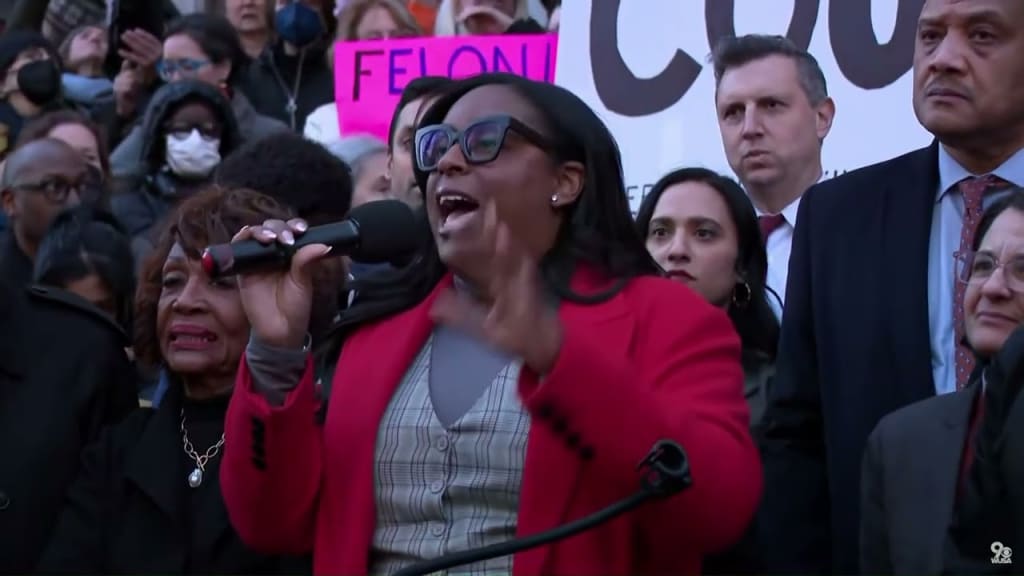
LaMonica McIver, a Democratic representative from New Jersey's 10th Congressional District, has found herself at the heart of a national political storm following her recent charge by the U.S. Department of Justice. The charge stems from an incident on May 9, 2025, at the Delaney Hall Immigration and Customs Enforcement (ICE) detention facility in Newark, New Jersey. McIver, who was accompanied by fellow Democratic Representatives Bonnie Watson Coleman and Rob Menendez Jr., conducted an oversight visit to the ICE facility, an event that quickly escalated into a heated confrontation involving local officials and law enforcement.
Background and Political Rise
Born in Newark in 1986, McIver’s political journey began with her election to the Newark Municipal Council in 2018, where she represented the city’s Central Ward. Her leadership abilities quickly gained recognition, and by 2022, she had risen to the presidency of the council. In 2024, she won a special election to the U.S. House of Representatives, filling the seat of the late Rep. Donald Payne Jr. She then secured a full term in November 2024, reflecting her deep ties to her community and her growing influence in state and national politics.
Throughout her career, McIver has earned a reputation for her commitment to the people of Newark, focusing on issues ranging from economic justice to healthcare access. Her advocacy for immigrant rights and criminal justice reform has made her a prominent voice in the Democratic Party, particularly among progressives.
The Incident at Delaney Hall
On May 9, 2025, McIver, along with her colleagues, visited the Delaney Hall ICE facility as part of their duties to oversee conditions at federal detention centers. The visit was part of an ongoing effort to monitor the treatment of detainees and ensure that the facilities were meeting federal standards. The visit, however, took a dramatic turn when Newark Mayor Ras Baraka, who had been outspoken in his opposition to ICE’s presence in the city, attempted to join the delegation.
After an initial approval, Baraka was later asked to leave the secure area of the facility. He exited the building and gathered with protesters outside the facility. Shortly after, federal agents arrested him, which led to a chaotic scene. The confrontation between law enforcement and protesters was captured on video, with McIver appearing to engage in a heated exchange with federal officers.
The situation soon escalated, and McIver was charged by the U.S. Department of Justice with assault, impeding, and interfering with law enforcement officers during the protest. This charge is significant as it marks the first time a Democratic lawmaker has faced charges from the Trump administration's Department of Justice. The charge immediately drew national attention, as many questioned whether McIver’s actions were an abuse of power or an exercise of her rights as an elected official conducting oversight.
Political and Public Reactions
The charges against McIver have sparked a fierce debate within both political parties. Republicans, including Rep. Jeff Van Drew and Rep. Buddy Carter, have called for McIver and her colleagues to be stripped of their committee assignments, arguing that their actions at the ICE facility were unlawful. Some conservative commentators have gone so far as to compare the incident to the January 6th Capitol riots, suggesting that McIver’s actions represented an overreach of power.
On the other hand, Democratic leaders have rallied around McIver. House Minority Leader Hakeem Jeffries strongly condemned the charges, labeling them as politically motivated and an attempt to suppress legitimate oversight by elected officials. New Jersey Governor Phil Murphy and other state Democratic leaders echoed these sentiments, decrying the actions of the federal authorities as an attempt to intimidate political opponents.
Legal experts are divided on the implications of the charges. Some argue that the video evidence clearly shows McIver engaging in unlawful behavior by obstructing law enforcement, while others believe that her actions were within her rights as a member of Congress conducting her duties. McIver’s legal team has stated that the charges are an attempt to stifle dissent and prevent lawmakers from carrying out their responsibilities.
The Broader Implications
The charges against McIver have far-reaching implications for the balance of power between the executive and legislative branches. The incident at Delaney Hall raises serious questions about the limits of executive authority and the protection of lawmakers conducting oversight. If the charges are upheld, it could set a dangerous precedent for the treatment of lawmakers in the future, particularly those engaged in contentious issues such as immigration policy.
The case also underscores the growing tension between the federal government and local governments over immigration enforcement. McIver and other Democratic leaders have been vocal in their criticism of the Trump administration’s handling of immigration issues, particularly the detention of immigrants in facilities like Delaney Hall. The charges against McIver have brought these tensions to the forefront of the national conversation, further dividing the political landscape.
Moreover, the incident has fueled the debate over the treatment of detainees in ICE facilities. Critics argue that the conditions in these facilities are inhumane, with reports of overcrowding, inadequate healthcare, and a lack of basic human rights. Supporters of the administration, however, contend that the enforcement of immigration laws is necessary to maintain order and uphold national security.
Looking Ahead
As McIver faces these charges, her political future is now uncertain. The legal proceedings will likely play out over the coming months, and the outcome could have lasting effects on her career. If convicted, McIver could face significant legal consequences, including potential expulsion from Congress. However, if the charges are dismissed or reduced, it could cement her position as a leading figure in the Democratic Party and a staunch advocate for immigrant rights.
In the coming weeks, McIver will have to navigate the political fallout from the incident. The case is sure to become a focal point of national politics, with both Democrats and Republicans using it to further their respective agendas. McIver’s actions at Delaney Hall, whether seen as a violation of the law or an exercise of her constitutional rights, will continue to be a topic of intense debate.
A National Test for Civil Liberties
The charges against McIver serve as a critical reminder of the ongoing struggle for civil liberties and the protection of democratic institutions. As the legal process unfolds, it will be important to ensure that justice is served fairly and impartially, regardless of political affiliations. The case also highlights the need for greater transparency and accountability in government, particularly when it comes to controversial issues like immigration enforcement and the treatment of detainees.
This situation is not just about one individual or one political figure. It represents a broader challenge to the principles of democracy, oversight, and the balance of power between the branches of government. As the nation watches, the outcome of McIver’s case will have lasting implications for the future of American governance and the protection of individual rights.
Conclusion
LaMonica McIver’s rise to prominence in American politics has been marked by her dedication to social justice and her strong support for immigrant rights. However, the charges against her over the incident at Delaney Hall have thrust her into the center of a national controversy that could define her legacy. As she prepares for the legal battle ahead, McIver faces an uncertain future. Regardless of the outcome, the incident at Delaney Hall will likely remain a pivotal moment in American political history, raising important questions about the balance of power, the rights of lawmakers, and the treatment of immigrants in the United States.
As the case develops, it will be essential to monitor the legal, political, and social ramifications of McIver’s actions and the broader implications for American democracy. The situation is not just a legal matter but a critical moment for civil liberties, oversight, and the ongoing struggle for justice in the United States.
About the Creator
Umer Web Geek
Top-rated freelancer with 100+ professional WordPress websites designed. As an Elementor Pro expert, I create eye-catching, responsive designs. Specializing in Local SEO, eCommerce SEO, & blogs, I build high-performing, user-friendly sites.
Keep reading
More stories from Umer Web Geek and writers in Interview and other communities.
President Trump Signs 'Take It Down Act' into Law: A Landmark Step in Combating AI-Generated Deepfakes and Revenge Porn
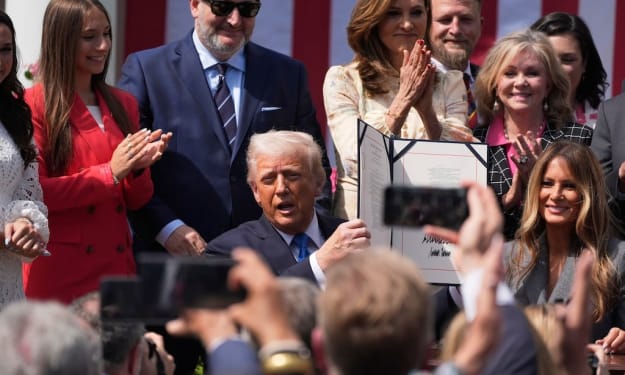
In a historic move, President Donald Trump signed the "Take It Down Act" into law on May 19, 2025, marking a significant federal effort to combat the non-consensual distribution of intimate imagery, including AI-generated deepfakes. The legislation, passed with overwhelming bipartisan support, aims to protect individuals—particularly women and minors—from online exploitation and harassment.
By Umer Web Geek8 months ago in Interview
Center Stage with Paul Stewart
*** I'm keen to republish the interviews I did for my series with Vocal creators. It's been a few years and I thought it might be nice to revisit these wonderful conversations. I'll be releasing them one at a time for a few weeks/months.
By Heather Hubler4 days ago in Interview
William Stern on Community, Jewish Values, and Leadership at Cardiff
William Stern is a finance entrepreneur and founder and CEO of Cardiff, a B2B financing firm operating in North America, Portugal, and Israel. He launched Cardiff in 2004 after seeing many small and lower-middle-market businesses struggle to secure timely, cost-effective capital. Stern emphasizes transparency in rates and margins, relationship-based underwriting, and “ethical financing with a soul,” often using phone conversations rather than purely automated decisions. He describes leadership as a series of consistent, small actions that compound over time. Inside Cardiff, he favours frequent check-ins over annual reviews to support employees as whole people and to protect trust with customers, applicants, and stakeholders.
By Scott Douglas Jacobsen36 minutes ago in Interview



Comments
There are no comments for this story
Be the first to respond and start the conversation.