
President Trump Signs 'Take It Down Act' into Law: A Landmark Step in Combating AI-Generated Deepfakes and Revenge Porn
take it down act

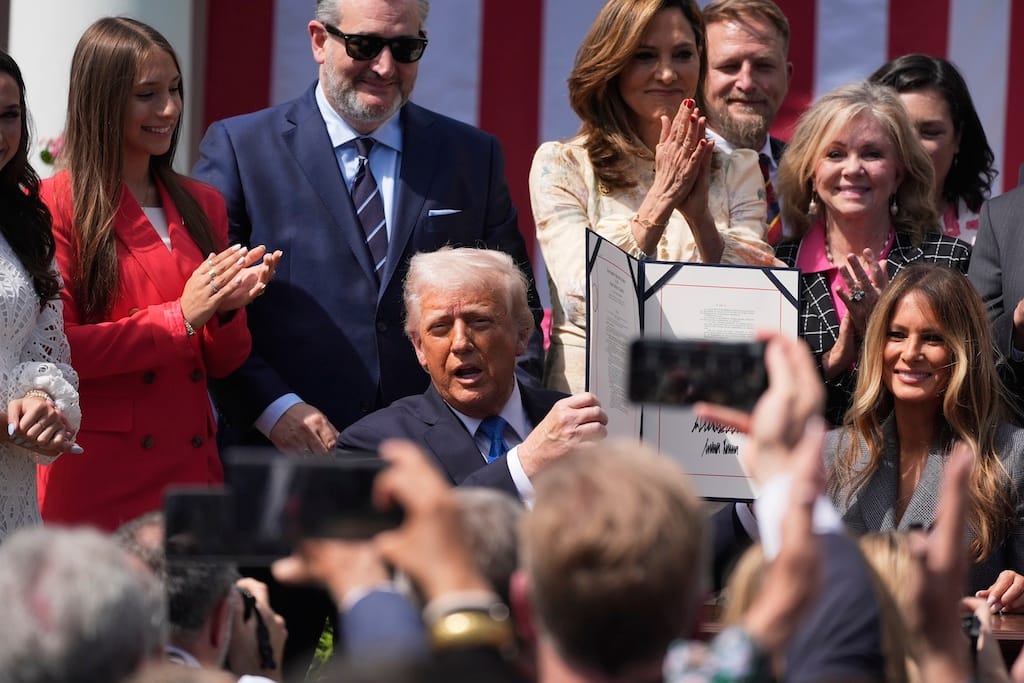
In a historic move, President Donald Trump signed the "Take It Down Act" into law on May 19, 2025, marking a significant federal effort to combat the non-consensual distribution of intimate imagery, including AI-generated deepfakes. The legislation, passed with overwhelming bipartisan support, aims to protect individuals—particularly women and minors—from online exploitation and harassment.
What Is the Take It Down Act?
The "Take It Down Act" criminalizes the distribution of non-consensual intimate imagery (NCII), encompassing both traditional "revenge porn" and AI-generated deepfakes. Under the new law, individuals found guilty of knowingly publishing or threatening to publish such content can face federal prison sentences of up to two years for adult victims and three years for minors. Additionally, the law mandates that online platforms remove flagged NCII content within 48 hours of notification and make reasonable efforts to eliminate any copies. The Federal Trade Commission (FTC) is tasked with overseeing enforcement, and platforms are given one year to comply with the new requirements.
Melania Trump's Advocacy and Role
First Lady Melania Trump played a pivotal role in championing the "Take It Down Act." Aligning the initiative with her "Be Best" campaign, she emphasized the importance of protecting children and families from online exploitation. In a rare public appearance, Melania lobbied lawmakers on Capitol Hill to pass the bill, highlighting the dangers posed by AI and social media in fueling online sexual exploitation. During the White House signing ceremony, she described the law as a "national victory" for child protection. Notably, Melania co-signed the bill alongside her husband, making her the first U.S. First Lady to do so.
Bipartisan Support and Legislative Journey
Introduced by Senators Ted Cruz (R-TX) and Amy Klobuchar (D-MN) in January 2025, the "Take It Down Act" garnered widespread bipartisan support. The bill passed the Senate unanimously in February and the House with a 409–2 vote in April. It was signed into law by President Trump during a ceremony attended by lawmakers, cabinet officials, and advocates who contributed to the bill's passage.
Legal and Privacy Concerns
While the law has been lauded for its intent to protect individuals from online exploitation, it has also faced criticism from digital rights organizations. Groups such as the Electronic Frontier Foundation (EFF) and the Center for Democracy and Technology (CDT) have expressed concerns that the law's broad language could lead to overreach, potentially suppressing legitimate content and threatening privacy tools like encryption. The Cyber Civil Rights Initiative (CCRI), despite supporting the bill's goals, warned that the takedown provisions could overwhelm platforms with false reports, making it challenging to identify authentic complaints.
Impact on Victims and the Public
The "Take It Down Act" is expected to have a profound impact on victims of non-consensual intimate imagery. Individuals who have been subjected to such exploitation can now take legal action against perpetrators and seek the removal of harmful content more swiftly. The law also holds online platforms accountable for hosting and distributing such content, compelling them to implement more robust content moderation practices.
Looking Ahead
As the "Take It Down Act" begins to take effect, it sets a precedent for future legislation aimed at addressing the challenges posed by emerging technologies. The law underscores the need for a balanced approach that protects individuals from harm while safeguarding fundamental rights such as free speech and privacy. Ongoing dialogue between lawmakers, advocacy groups, and technology companies will be crucial in ensuring that the law is implemented effectively and equitably.
In conclusion, the signing of the "Take It Down Act" represents a significant milestone in the fight against online exploitation and the misuse of AI technologies. It reflects a collective commitment to upholding the dignity and rights of individuals in the digital age.
About the Creator
Umer Web Geek
Top-rated freelancer with 100+ professional WordPress websites designed. As an Elementor Pro expert, I create eye-catching, responsive designs. Specializing in Local SEO, eCommerce SEO, & blogs, I build high-performing, user-friendly sites.
Keep reading
More stories from Umer Web Geek and writers in Interview and other communities.
Billie Eilish's 'Hit Me Hard and Soft' Tour: A Global Phenomenon
Billie Eilish, the 23-year-old pop sensation, continues to captivate audiences worldwide with her "Hit Me Hard and Soft" tour, supporting her third studio album of the same name. The tour, which began in September 2024, has been a monumental success, breaking records and drawing fans from all corners of the globe.
By Umer Web Geek8 months ago in Interview
Center Stage with Paul Stewart
*** I'm keen to republish the interviews I did for my series with Vocal creators. It's been a few years and I thought it might be nice to revisit these wonderful conversations. I'll be releasing them one at a time for a few weeks/months.
By Heather Hubler4 days ago in Interview




Comments
There are no comments for this story
Be the first to respond and start the conversation.