
How to stay calm when you know you'll be stressed
Daniel Levitin speech

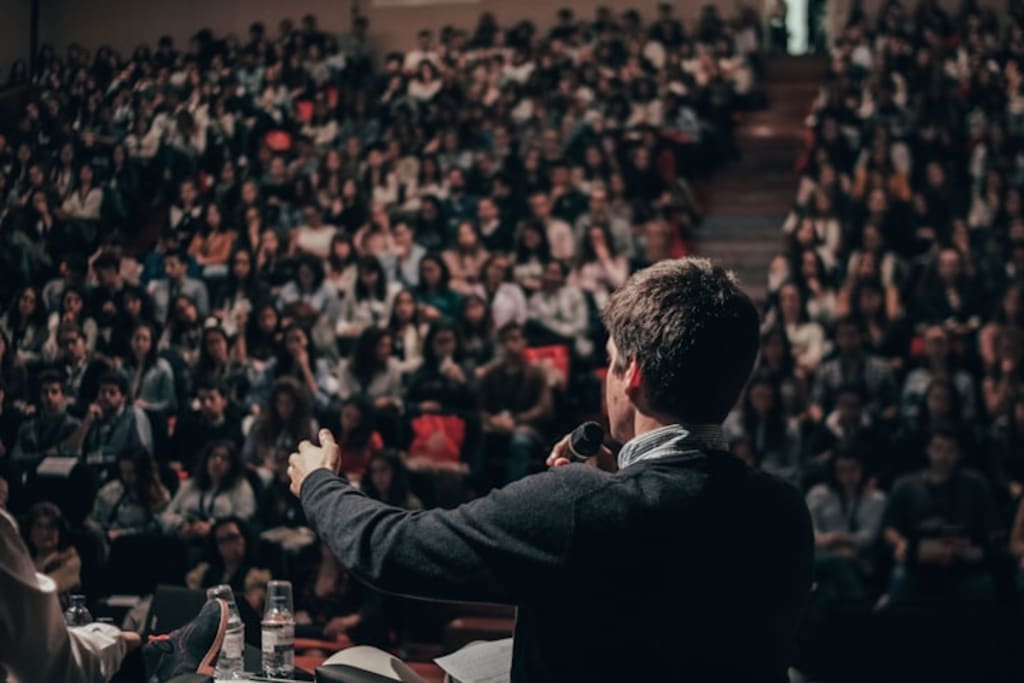
Sarah Hickey Editing: Angelika Lückert
A few years ago I broke into my own house. It was the middle of the night, I had just gotten home from visiting my friend Jeff. The Montreal winter was unforgiving, and the thermometer on my porch read -40° - don't ask me Celsius or Fahrenheit, -40° is where the two scales meet - it was very cold.
As I stood on the porch, rummaging through my pockets, I realized my keys were missing. I could see them through the window, lying on the dining room table where I had left them. I ran around the house and checked all the other doors and windows, but they were locked tight. Calling a locksmith occurred to me, but in the middle of the night it would have taken a long time for someone to come and it was freezing cold. I couldn't stay at Jeff's because I had an early flight to Europe that morning and needed my passport and suitcase. Desperate and shivering from the cold, I found a large stone, broke the basement window, cleared away the broken glass and climbed in. I found a piece of cardboard and taped it over the hole, with a plan to contact my construction manager in the morning to repair it.
That would cost a lot, but probably no more than a late night locksmith visit, so I figured it would amount to the same thing. As a neuroscientist, I know a little about how the brain reacts under stress: it releases cortisol, which increases heart rate, adjusts adrenaline levels, and impairs thinking.
The next morning, after little sleep and because of the broken window, I had to remember to call my construction manager. With all the cortisol in my brain and the upcoming meetings in Europe, my thinking was clouded, but I didn't notice it because my mind was just foggy. (Laughter) It was only at the check-in counter at the airport that I noticed that my passport was missing. (Laughter) So I raced home in 40 minutes through the snow and ice, got my passport and raced back to the airport. I barely made it, but my seat was already taken and I ended up at the back of the plane next to the restrooms, in a non-reclining seat for the eight-hour flight.
During those eight sleepless hours, I had a lot of time to think. (Laughter) I was wondering if there are mechanisms that can be put in place to prevent bad events or at least reduce the likelihood of them becoming a total catastrophe. It wasn't until a month later that the idea took shape. At dinner with my colleague Daniel Kahneman, the Nobel Prize winner, I told him, slightly embarrassed, about my broken window and forgotten passport. Danny told me about something he called "predictive review," a technique he learned from psychologist Gary Klein, also known as pre-mortem.
(Laughter) While a post-mortem involves trying to figure out what went wrong after a disaster, a pre-mortem involves looking ahead to see what could go wrong and thinking about how to minimize those risks.
Today I want to talk about a few things we can do as part of a pre-mortem. Some are obvious, others are not. Let's start with the obvious. Designate a designated place in your home for things that easily get lost. This sounds logical, but it is based on how our spatial memory works. The hippocampus, a part of the brain that has evolved over millennia, keeps track of where important things are placed - like the well, the place where you find fish, or the trees with fruit. The hippocampus allows squirrels to find their nuts even when their sense of smell has been turned off.
However, our brains are less well suited to moving objects such as car keys, glasses and passports. Therefore, we often lose these things. So determine where these things will always be stored - a hook for keys, a drawer for your passport, a table for your glasses. If you stick to this fixed location, your things will always be there when you look for them.
For travel: Take a photo of your credit cards, driver's license and passport and email it to be stored in the cloud. This allows you to request replacements if these items are lost or stolen.
Remember, when you're stressed, the brain releases cortisol, which makes it difficult to think clearly. Part of the pre-mortem is recognizing that you are not at your best when stressed and preparing mechanisms for that. This can be particularly important when making medical decisions. Faced with an important decision about your own or a loved one's health, you can make rational decisions once you've thought about it.
For example: Your doctor tells you that your cholesterol is high and prescribes you a statin. Before agreeing, you should know the number of treatments necessary - the number of people who will have to take the drug before one person is helped. The most frequently prescribed ward has 300 people. 300 people need to take the drug for a year before it prevents a heart attack or stroke. At the same time, 5% of patients experience side effects such as muscle weakness or joint pain.
When we're stressed, we don't think clearly. Plan ahead to help you think through such decisions. The point is not whether you should take the statin or not, but rather that you should talk to your doctor about the risks.
The situation is similar to prostate removal for cancer: 49 operations are required before a person is helped, and the side effects occur in 50% of patients. Think about such questions in advance and discuss them with your family and friends.
Our brains release cortisol under stress, which shuts down many functions, including rational thinking. It is important to prepare for such situations and anticipate possible failures in order to develop mechanisms that minimize the damage or prevent bad events from occurring.
Back to the snowy night in Montreal: Upon my return, I had a combination lock installed on the door that integrated a front door key with a memorable combination. I still have unsorted mail and unread emails, but I see organization as an ongoing process and I'm on the right track.
Thank you. (Applause)
About the Creator
Djihad Dz
no one but im all you need
Keep reading
More stories from writers in Interview and other communities.
Part 2 Interview With Joe Patterson, Author Of Melanin Memoirs
This is my second interview with Joe Patterson. His 4th anniversary writing on Vocal will be in March 2026. He has one achievement on Vocal, The Other Foot. He has over 17,000 reads on Vocal since he started on Vocal in 2022. Joe Patterson is very creative poet and rapper. Joe is deep thinker and I feel it is reflected in his latest published book, Melanin Memoirs.
By Mariann Carroll24 days ago in Interview
I MADE THE SHADE ROOM!!!!
Honestly, this was unexpected but yes I was on the Shade Room. Three months ago, I wrote a story about Celebrities getting Honorary Degrees and how Rapper Young Joc, Reality Stars Cynthia Bailey and Towanda Braxton are receiving their honorary doctorates and accepting their titles from this so-called bible christian university.
By Gladys W. Muturi6 days ago in Interview
TUS NUA - ch 53
TUS NUA – ch 53 New Beginnings – Mia and Midnight (*)(*)(*) Finola knew Ali’s brother-in-law needed to put his mind at rest. She fed her arm through his and led him outside. “We’ll sit here. If you like, I can put a block around us so our conversation will be private.”
By Margaret Brennanabout 23 hours ago in Fiction
From ad men to mad men
It's after 2am in the morning when a local police patrol vehicle in Northern New Jersey spots a figure costumed as Quasimodo, The Hunchback of Notre Dame, proceeding southbound on the sidewalk along Lydecker Street. Though the hunchback’s costume stuffing offers added insulation, it's January, and friggin’ freezing. Carefully, the officers slow down, gently question the subject, and offer him a ride home.
By David W. Maury4 days ago in Humor



Comments
There are no comments for this story
Be the first to respond and start the conversation.