
From Fields to Runway: Piña Fiber takes center stage
By: Shara Joy Tobias and June Angeline Tadia

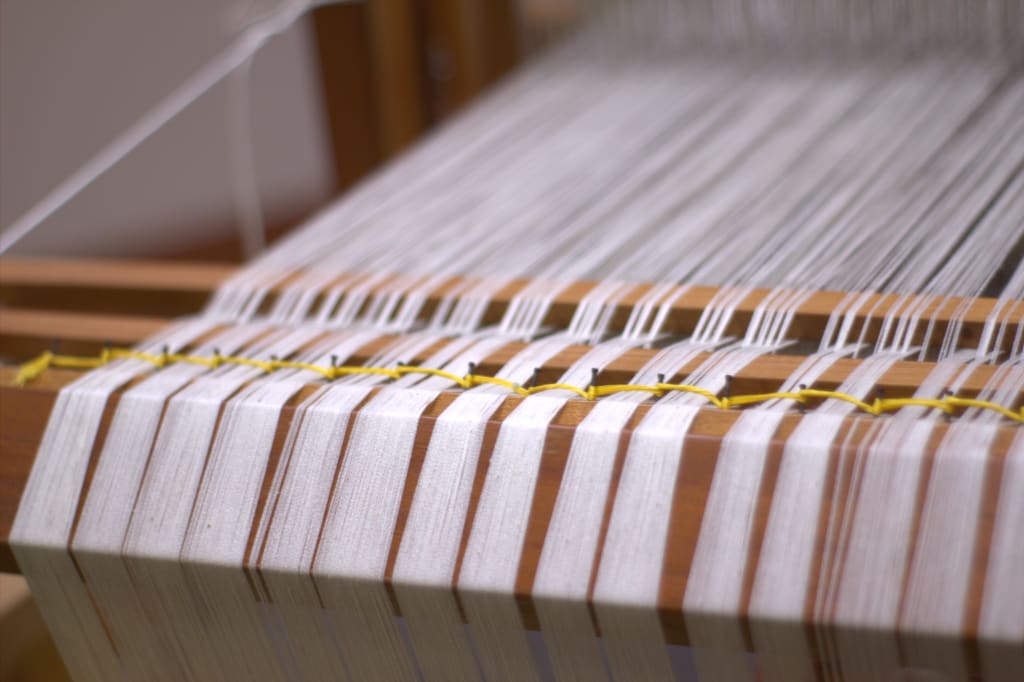
In the province of Aklan, Philippines, a century-old tradition perseveres through the rhythmic hum of the piña handloom and the skilled hands of artisans, known as Piña weaving. This delicate technique passed down through generations, is interwoven into the cultural fabric of the region, producing magnificent textiles that narrate tales of workmanship and legacy.
This history is ingrained in the hearts of nearly every Aklanon, reflecting their deep-rooted cultural identity. Despite the ever-changing trends and the emergence of the new age, their tradition stays strong. It doesn't disappear—it just finds ways to fit in with what's new.
''This kind of weaving was introduced to me by my grandmother and this is also my way of saying that I am a proud Aklanon,” Jeru Nabayra said.
Jeru is a 31-year-old local fashion designer from Kalibo, Aklan, and one of many young Aklanons who, through his craft, leverages his passion for fashion design. Not only to preserve their identity but also to disseminate the rich symbolism embedded within Aklan culture, while adapting to the new and modern generation.
At the age of 9, Jeru was already exposed to the tradition of Piña weaving through his grandmother. One of their sources of income was selling Piña fibers to suppliers and small shops. He would help by cleaning the pineapple leaf fiber using mud clams or cracked plates, after which they would dry it in the sun.
Piña weaving comprises a fascinating procedure that combines technology and tradition. The level of artistry shown in this process is remarkable, ranging from the deliberate selection of pineapple leaves to knotting one by one the fibers to create a filament yarn.
"Piña is from a leaf, the leaf must be cut first from the plant. Then, at that point, the fiber is pulled or parted away from the leaf. Each strand of the piña fiber is hand scratched and is tied individually to frame a nonstop fiber to be handwoven and afterward made into a piña material", he added.
From cleaning pineapple leaves, Jeru is now designing clothes made from pineapple fiber, reflecting his innovative approach to fashion with cultural identity. In 2020, he started fashion designing after winning a competition of designing clothes made of pure pineapples for dolls. His designs consistently reflect his love for their culture.
“Yung every collection na ginagawa ko sa mga designs ko is palaging nakadikit yung identity namin as an Aklanon.”
He exemplified his favorite design during the Miss Universe Philippines Aklan 2023 titled "The Carabao." This design draws inspiration from the beloved Aklanon tongue twister, "Ro anwang nagaeugaeog sa eugan-eugan," which translates to "The carabao is wallowing in the mudhole." Through this piece, Jeru pays homage to the simple yet profound aspects of Aklanon life, symbolizing the resilience and hard work intrinsic to Aklanon.
Jeru believes in the importance of cultural preservation for new and young designers for it provides them with a profound understanding of piña cloth if they intend to incorporate it into their collections. It also serves as a defining element of Aklanon identity, that whenever piña is mentioned, they will remember Aklan.
Furthermore, UNESCO has recognized the Ati-atihan Festival and piña weaving as Intangible Cultural Heritage of Humanity.
Beyond only a creative expression, Aklan's piña weaving serves as an intangible representation of a community's tenacity and the enduring elegance of customs. People's stories weave together like threads to form a garment that envelops the spirit in the coziness of their past and clothing the body. The mysteries of ancient times and the hope for a lasting future are spoken in every thread of Aklan's piña weaving.
About the Creator
Shara Joy Tobias
Shara Joy Tobias is a 4th-year Journalism student at PUP. She previously interned at Altermidya, a network of independent media outfits in the Philippines, and GMA Records, where she focused on photojournalism and productions.
Keep reading
More stories from Shara Joy Tobias and writers in Interview and other communities.
Center Stage with Paul Stewart
*** I'm keen to republish the interviews I did for my series with Vocal creators. It's been a few years and I thought it might be nice to revisit these wonderful conversations. I'll be releasing them one at a time for a few weeks/months.
By Heather Hubler6 days ago in Interview




Comments
There are no comments for this story
Be the first to respond and start the conversation.