
Dara Frazier's Not Every Woman Confronts the Weight Black Women Carry and the Freedom of Letting Go
Filmmaker Spotlight

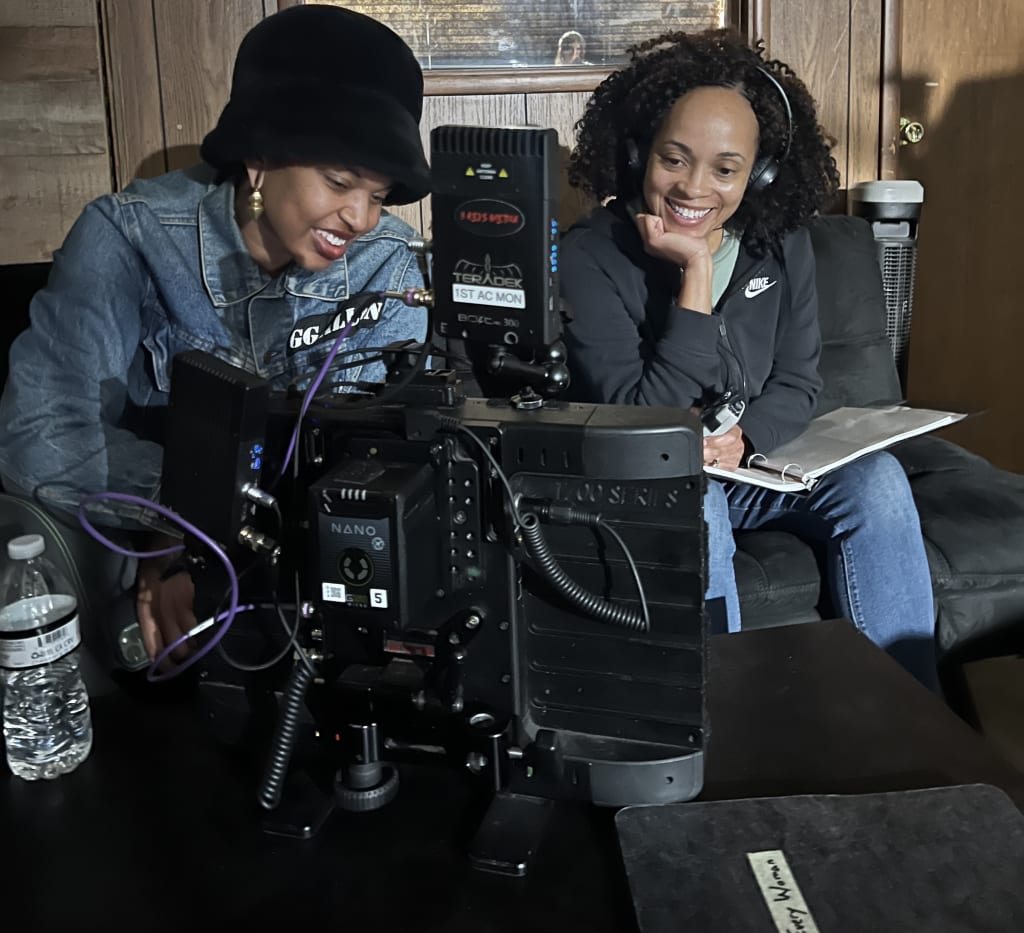
Dara Frazier's Not Every Woman arrives with the kind of honesty that doesn't ask permission. It steps directly into the emotional lives of Black women. The exhaustion, the humor, the expectations, and the quiet places where we finally admit what we're tired of carrying. The film captures the conversations that happen when the world isn't watching, the ones where we confess that the invisible cape is slipping and that being "strong" has never been the whole story.
Across wine glasses, hard truths, humor that lands in the gut, and moments that feel pulled straight from lived experience, Frazier reminds us that Black women are not every woman, and we were never meant to be everything to everyone. The film has cultural sharpness and emotional candor, it also has many of us feeling seen, heard, and held in ways that linger long after the credits roll.
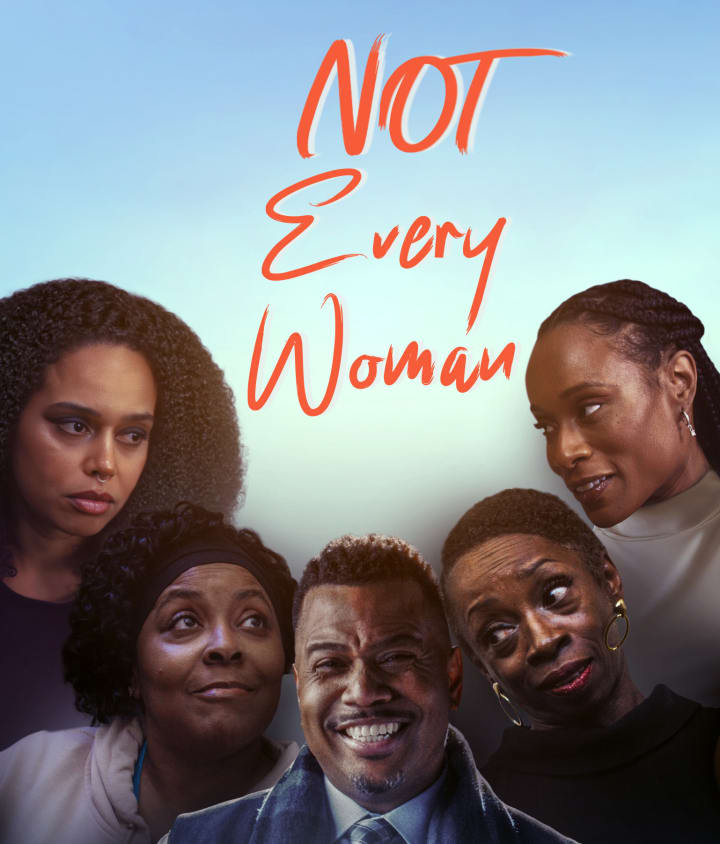
From the unofficial meeting of "The Association of Colored Girls All Out of F*cks to Give" to the final scene that ties it all together, Not Every Woman delivers a narrative that refuses to flatten us. Instead, it honors the complexity of our stories with grace and a refreshing freedom to simply be human.
Now streaming on Amazon Prime and Apple TV, Not Every Woman brings together an impressive ensemble - Omar Gooding, Lodric Collins, Erika Degraff, Georgina Elizabeth Okon, Shannon Echols, and Jean Cecile Nadine - to deliver a textured, character-driven story about womanhood in America.
Written, directed, and produced by Dara Frazier through 1642 Productions, the film showcases her raw talent for storytelling. Distributed worldwide through Filmhub, the project continues Frazier's growing legacy as a filmmaker who isn't afraid to say what needs to be said and say it beautifully.
Your film Not Every Woman dives deeply into the emotional and inner lives of Black women. What personal experiences or conversations first sparked the idea for this story?
Dara: On election night in 2024, I didn't stay up to watch the results because something inside of me already knew how it was going to turn out. But the reality of the next morning was still hard to process and I wasn't alone, especially when I found out that 92% of Black women supported Vice President Kamala Harris. I felt a profound disappointment and decided to channel my emotions into a script that didn't hold back. When I started writing, I realized that I needed to go beyond politics. So I crafted a slice of life story exploring four Black women from very different walks of life to come together to share their true feelings about the world around them. They drink good wine, share some laughs, and in the end, discover something unexpected about each other and themselves.
As both the writer and director, what emotional truths did you feel most compelled to bring to the screen?
Dara: I wanted to explore the uncomfortable spaces where honesty and humor meet. I love telling stories that don't follow a paint-by-numbers formula. That was my primary goal. So many times, I've watched movies and the next day I can't remember much about what happened and I set out to make "Not Every Woman" one that audiences will never forget.
The film balances humor, vulnerability, and social commentary. How did you find that balance during the writing and directing process?
Dara: The title "Not Every Woman" was my North Star. As much as I love Chaka Khan's song, "I'm Every Woman", I was intentional about making a film that challenged the notion that we have to be everything to everybody. So many women in my family carried mountains on their shoulders and never complained. I think it's time to stop that. I refuse to be every woman. I'm just me and the characters in the film reflect that journey.
You've worked with major companies like Disney and HBO. How did those experiences shape your approach to creating independent work?
Dara: At the big studios, there are countless decision makers and the process to get a TV series or film completed usually takes several years. I am grateful for those experiences on many levels and it also gives me next level credibility as a screenwriter. But the thing I love most about being an independent filmmaker is telling unfiltered and authentic stories. Obviously that comes with a lot of risks but I come from a family of entrepreneurs so it's my blood.
You cast a diverse group of accomplished actors. What qualities were you looking for when selecting the film's leads?
Dara: I used to be an actress when I lived in New York City. I never took it very seriously but much to my surprise, when I auditioned, I booked a lot of things, especially commercials. I used to joke with my friends that I was acting to support my dreams as a writer. But if I'm being honest, I wasn't that good. The casting directors just really liked my "look." I was even told by one that I got a part because I was "not too dark" but still "read as Black." When I thought about my friends who stayed in acting classes and built their resumes in theater, I promised myself that if I was ever in a position to cast projects, I would pick who was best for the part and not bend to the Hollywood group think. For "Not Every Woman", I picked four actresses who are beautiful and extraordinarily talented to carry this film. Lodric D. Collins, who stars on Tyler Perry's "The Oval" was a longtime friend who I had actually been an actor in one of my Off-Broadway plays and was someone I was very happy to reunite with on this film. And I was so very honored that Omar Gooding said yes to the role of Ed Jenkins. He is super talented and wonderful to work with.
Not Every Woman explores modern womanhood in America. What do you feel this film says about the emotional landscape many women are navigating today?
Dara: In every generation, women continue to discover who they are and where they belong. "Not Every Woman" speaks to all of the contrast of what it means to be a mother, what it means to be childish, what it means to have a career, what it means to be laid off, what it means to be in love and what it means to go it alone. A woman's worth has been defined by society for ions but I think it's more important than ever for every woman to carve that out for herself.

Tell us about 1642 Productions. What inspired you to launch your own production company, and what sets your studio apart from others?
Dara: I launched 1642 Productions in 2022 because I wanted to produce my own films. The holiday romantic comedy "Catfish Christmas" was our first film. To work with Victoria Rowell, Ella Joyce and the late, great Tony Todd was amazing! After years of just sending scripts out to producers hoping for a "yes", it was empowering to green light myself. I think what makes my studio stand out is that I make movies that color outside the lines and I have fun doing it.
Looking ahead, what are your creative and professional goals for 2026 at 1642 Productions? Any projects you're excited to hint at?
Dara: I want to produce two films a year and I will give a hint that there is a new project coming in 2026 that is going to shake things up. I'm always writing and thinking of new ideas. I love the process of ushering a film from start to finish, as a little girl growing up on Detroit's West Side, I always dreamed of this.
As an artist, what keeps you motivated - especially during the challenging or uncertain moments?
Dara: There are a lot of challenging moments especially since the landscape is changing so rapidly in Hollywood but my faith and my family help me to stay grounded. I believe in keeping an open mind and an open heart. There is no telling where the next opportunity is and when it might come but you have to stay present for that to happen.
Can you share a meaningful moment in your career that affirmed your purpose as a filmmaker?
Dara: When one of my plays was Off-Broadway, at the end of the show, the house lights came up and much to my surprise the Tony Award wining actress Mary Alice was in attendance. She came up to me and shook my hand and told me that I was a brilliant writer and I needed to keep at it. I almost cried right then. Here was this beautiful legend letting me know that I had what it takes. Rest in power, Mary Alice.
What's one fun or surprising fact about you that people would never guess?
Dara: I can hand sew and crochet. My great aunt Marie taught me to make blankets, but I decided to make little dolls with brown yarn instead. I still enjoy it.
What do you hope audiences feel or understand after watching Not Every Woman?
Dara: I hope that for anyone, especially Black women, who has felt disillusioned with this experiment called America that this film is therapeutic on some level. I hope that it is a cinematic embodiment of Dr. King's quote: "The arc of the moral universe is long, but it bends toward justice."

Get connected by visiting https://darawrites.com/
About the Creator
Tammy Reese
Tammy is best known for her legendary interviews with Sharon Stone, Angela Bassett, Sigourney Weaver, Geena Davis, Morris Chestnut, Jeffrey Dean Morgan, Sheryl Lee Ralph, Laurence Fishburne, Omar Epps, Joseph Sikora, and more.
Keep reading
More stories from Tammy Reese and writers in Interview and other communities.
Patience Murray: Singer, Author, and Storyteller Empowering Women Through Healing and Creativity
Patience Murray is a multifaceted artist and visionary, whose work spans music, poetry, storytelling, and motivational speaking. As the founder of Pages of Poetry, a multimedia publishing and production company, she creates space for her original music, writing, and the Healing Her Halo podcast, a safe haven for women trauma survivors seeking guidance, hope, and empowerment. With a commitment to mental health and personal growth, Pae blends creativity and healing, sharing actionable tools and inspiration for women on their own journeys. Recently returning to the public speaking stage at the SheIsMe conference, she continues to demonstrate how authenticity, resilience, and purpose can transform both life and art.
By Tammy Reese3 months ago in Interview
Part 2 Interview With Joe Patterson, Author Of Melanin Memoirs
This is my second interview with Joe Patterson. His 4th anniversary writing on Vocal will be in March 2026. He has one achievement on Vocal, The Other Foot. He has over 17,000 reads on Vocal since he started on Vocal in 2022. Joe Patterson is very creative poet and rapper. Joe is deep thinker and I feel it is reflected in his latest published book, Melanin Memoirs.
By Mariann Carroll15 days ago in Interview
The Quiet Discipline That Builds a Better You
Self-development is often portrayed as a dramatic transformation—a sudden breakthrough, a burst of motivation, or a life-changing decision made in a single moment. In reality, it rarely works that way. Real growth is quiet, often invisible, and built on small actions repeated over time.
By Lukáš Hrdlička2 days ago in Interview


Comments