
Amber Heard Speaks On Blake Lively's Case
Amber Heard Speaks On Blake Lively's allegations against Justin Baldoni
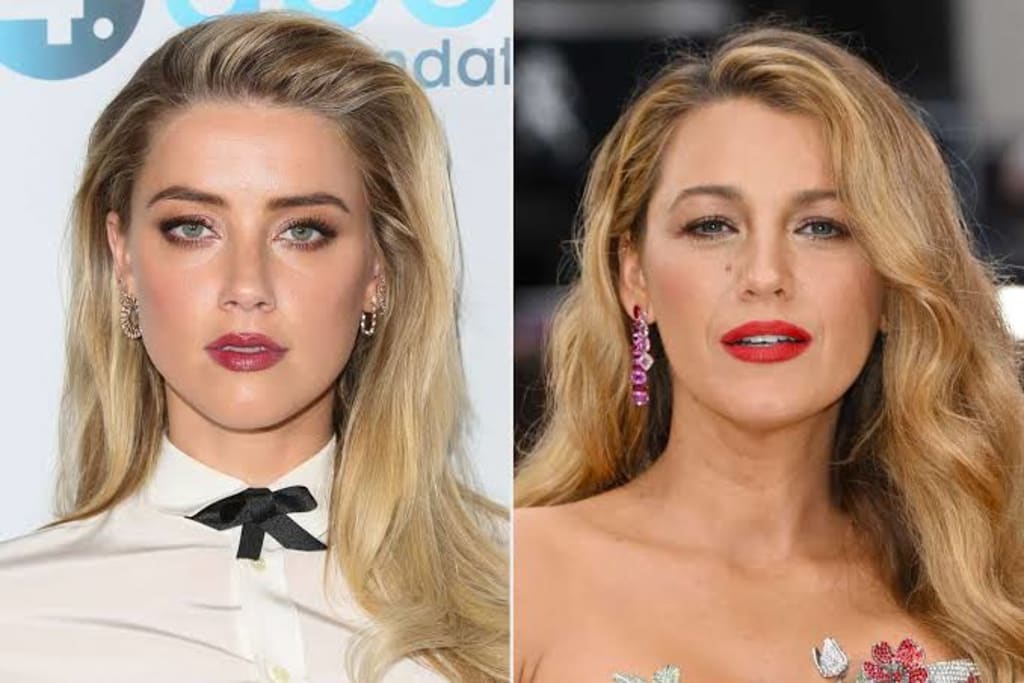
Amber Heard commented on the power of social media to turn lies into truth in response to Blake Lively's complaint against her "It Ends With Us" co-star, Justin Baldoni. Lively accused Baldoni of sexual harassment, creating a hostile work environment, and damaging her reputation through a targeted social media campaign. The complaint, filed with the California Civil Rights Department, mentioned that Baldoni hired PR crisis manager Melissa Nathan, who also worked for Johnny Depp during his defamation trial against Heard.
In an exclusive statement to NBC News, Heard, now residing in Spain, described social media as the embodiment of the saying, "A lie travels halfway around the world before truth can get its boots on," and shared her personal experience with its destructive nature. She emphasized how social media can amplify falsehoods and create a distorted reality that can be incredibly damaging to individuals' lives and reputations.
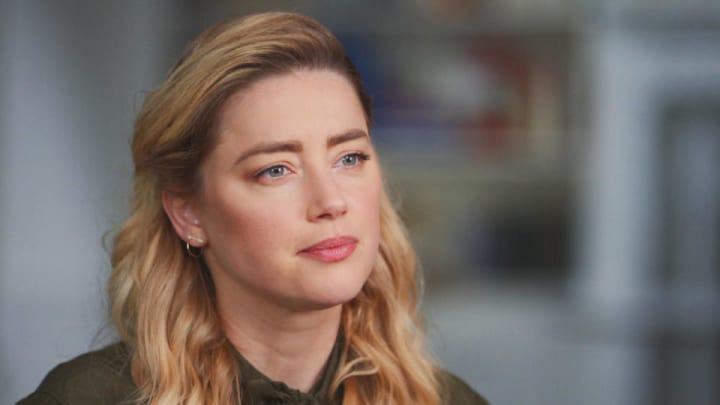
During Depp's trial, the jury found Heard had defamed him, awarding Depp $5 million in punitive damages and $10 million in compensatory damages, while Heard received $2 million in compensatory damages for her counterclaim. This high-profile case highlighted the intense scrutiny and public judgment that can arise from social media narratives, often overshadowing the actual legal proceedings and facts.
Lively's complaint also alleged that Baldoni's crisis communications team launched a retaliatory social media campaign to ruin her reputation during the film's promotion. This campaign included proactive fan posting and social manipulations to change the narrative in Baldoni's favor. The complaint detailed how these tactics were designed to undermine Lively's credibility and portray her in a negative light, leveraging the power of social media to sway public opinion.
The film's promotion drew significant attention as rumors circulated about the strained relationship between the stars. Observers noted that Baldoni was doing press separately from his co-stars, and some of the film's stars, including Lively and Jenny Slate, did not follow him on Instagram. This fueled speculation about behind-the-scenes tensions and added to the narrative of discord promoted on social media.
Bryan Freedman, representing Baldoni and Wayfarer Studios, denied the allegations, stating that the crisis team was hired due to Lively's threats to not participate in filming or promotion. He dismissed the claims as false and sensational, emphasizing that the public had witnessed all actions and formed their own opinions. Freedman argued that the crisis communications team's role was to manage legitimate concerns about the film's production and promotion, not to engage in a smear campaign against Lively.
Freedman further commented on the broader implications of social media in such disputes, noting that the public's perception is often shaped by incomplete or biased information. He pointed out that both Heard and Lively's situations illustrate how social media can be weaponized to influence public opinion and damage reputations, regardless of the underlying truth.
The controversy surrounding the film's promotion and the allegations against Baldoni highlight the complex interplay between social media, public perception, and legal disputes. As social media continues to play a significant role in shaping narratives, individuals and public figures must navigate this landscape carefully to protect their reputations and ensure that the truth is not overshadowed by misinformation.
As these situations unfold, they serve as a reminder of the need for critical thinking and discernment in consuming and sharing information online.
In conclusion, Heard's comments and Lively's complaint underscore the powerful and often destructive impact of social media on personal and professional lives. The ability of social media to amplify falsehoods and create lasting damage is a growing concern, particularly in high-profile cases where public opinion can be easily swayed. As these situations unfold, they serve as a reminder of the need for critical thinking and discernment in consuming and sharing information online.
About the Creator
Keep reading
More stories from Favour Nwokonta and writers in Interview and other communities.
Kashin Koji Saves Boruto From Code
The official teaser of the Boruto Two Blue Vortex chapter 13 has a picture of Boruto meeting Kashin Koji, and based on Boruto's appearance, it was sometime after Sasuke was defeated by code. Boruto was 13 years old at that time.
By Favour Nwokonta2 years ago in Geeks
Part 2 Interview With Joe Patterson, Author Of Melanin Memoirs
This is my second interview with Joe Patterson. His 4th anniversary writing on Vocal will be in March 2026. He has one achievement on Vocal, The Other Foot. He has over 17,000 reads on Vocal since he started on Vocal in 2022. Joe Patterson is very creative poet and rapper. Joe is deep thinker and I feel it is reflected in his latest published book, Melanin Memoirs.
By Mariann Carroll20 days ago in Interview
Finding His Voice: Steven McCoy on Storytelling, Silence, and the Power of Media
For Steven McCoy, journalism isn’t just a career, it’s a lifeline. As a child, bullying left him silenced, struggling with selective mutism, unable to fully share his thoughts with the world. But where words failed, pencils, pens, and paper spoke. He built entire worlds on paper, channeling his imagination and voice through stories, drawings, and poems. That early refuge became the foundation of his calling: telling stories that matter and giving voice to those who feel unheard.
By Tales From The Mediaa day ago in Interview


Comments
There are no comments for this story
Be the first to respond and start the conversation.