
When Pictures Make Us Laugh: The Untold Story of Why Funny Images Go Viral
The science and culture of why funny images go viral.

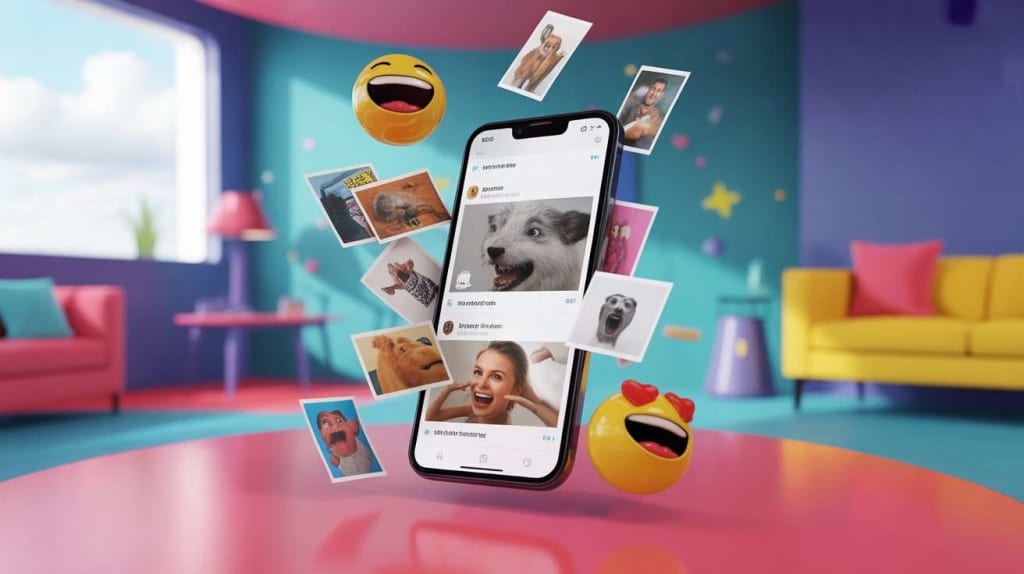
Picture this: you’re scrolling through your phone late at night, half-awake, when suddenly you stumble upon an image of a dog wearing sunglasses, leaning against a car like it’s auditioning for a rap video. You laugh. Not a polite chuckle, but a real, involuntary laugh that makes you replay the image in your mind. And almost instantly—you hit “share.”
We’ve all done it. Funny pictures are irresistible. They cross borders, leap over language barriers, and spread faster than breaking news. But have you ever wondered why? Why do some silly images—like a distracted boyfriend looking away from his girlfriend, or that famous grumpy cat—sweep across the internet like wildfire? Today, we’re going to unravel the science, psychology, and culture behind why funny images never fail to make us laugh and why they spread so quickly online.
The Psychology of a Laugh
Let’s start with the basics: laughter. Why do we even laugh at all? Psychologists say humor often comes from incongruity—when something unexpected collides with what we know to be normal. That’s why the “Distracted Boyfriend” meme exploded; the absurdity of a stock photo couple turned into a metaphor for modern temptations was just too perfectly offbeat.
But laughter isn’t just mental. When we laugh, our brains release dopamine—the same chemical tied to pleasure and reward. In other words, sharing a funny image doesn’t just entertain us, it literally feels good in the brain. That’s why you don’t just look at a funny picture—you pass it along. Sharing amplifies the reward.
Real-Life Examples of Viral Humor
Think back to Grumpy Cat. One photo of a permanently unimpressed feline sparked millions of captions, merchandise lines, and even celebrity appearances. Or the Crying Jordan meme—Michael Jordan’s tearful Hall of Fame photo turned into a global shorthand for defeat and disappointment.
Then there’s Cheems the Dog, with his awkwardly adorable face paired with broken “doge-speak.” The humor wasn’t just in the picture—it was in the community-built captions. These examples prove that viral funny pictures aren’t accidents. They’re cultural moments shaped by relatability, timing, and collective creativity.
And yes, entire sites curate and fuel this movement. Collections like Goofy Ahh Pictures show how humor hubs help images spread beyond friend groups into full-blown trends.
Why We Share: The Hidden Triggers
So why do we hit that “share” button? Psychologists have a few answers:
1. Relatability – If a funny picture nails something we’ve felt—like Monday morning dread—we share it because it validates our experience.
2. Social Bonding – Laughter builds connections. Sharing humor is like saying, “You get me.”
3. Identity Signaling – Posting memes lets us project a version of ourselves. Sharing intellectual humor? You’re witty. Sharing absurd memes? You’re laid-back and fun.
4. Fear of Missing Out – If everyone else is in on a viral meme, we don’t want to be the last to join the conversation.
This is why humor spreads so fast—it’s not just about laughter; it’s about belonging.
The Role of Social Media
Of course, none of this would be possible without platforms like Facebook, Instagram, TikTok, and Pinterest. Algorithms don’t just allow funny pictures to spread—they encourage it.
Why? Because humor drives engagement. A funny post doesn’t just get a like—it gets comments, tags, and shares. And the more interaction, the more the algorithm rewards it. That’s how a random stock photo morphs into a cultural icon overnight.
Communities also play a huge role. Think Reddit’s r/memes or Twitter threads that snowball into thousands of remix versions. The platforms provide the stage, but it’s the crowd that keeps the jokes alive and evolving.
In fact, meme-focused spaces like Goofy Ahh Memes thrive because they create ecosystems where humor isn’t just consumed—it’s co-created.
Humor in Visuals: A Historical Context
Funny pictures might feel like a modern internet phenomenon, but they’re not. Humans have been laughing at visual humor for centuries.
- In ancient Greece, comedic plays used exaggerated masks to spark laughter.
- Medieval manuscripts are filled with doodles—monks secretly sketching silly faces in the margins of serious texts.
- Political cartoons in newspapers have long turned satire into a visual language.
What’s changed is speed. Before, a cartoon might circulate slowly through print. Today, one meme can reach millions in a matter of hours. The mechanics are the same—humor as a mirror to society—but the amplification is unprecedented.
What Funny Pictures Say About Us
At their core, funny pictures reflect what we care about. When “Distracted Boyfriend” memes were at their peak, they weren’t just jokes—they were commentaries on distraction, priorities, and modern life.
Humor acts like a cultural time capsule. Years from now, people might look back at memes of 2020—empty shelves, Zoom mishaps, quarantine jokes—and instantly understand what life felt like in that moment.
And perhaps that’s why funny images matter so much. They’re not just entertainment; they’re artifacts of how we cope, laugh, and connect in a fast-moving world.
Conclusion: More Than Just a Laugh
So, why do funny pictures go viral? Because they hit us where it matters most: in our brains, in our hearts, and in our need to belong. They make us laugh, they bring us together, and they give us snapshots of culture in motion.
Next time you share a funny picture, remember—you’re not just passing along a joke. You’re participating in an ancient tradition of visual humor that’s been with us since the beginning of human storytelling. Only now, it’s turbocharged by the power of the internet.
And who knows? Maybe the next viral image is sitting in your camera roll right now—waiting to make the world laugh.
About the Creator
JEWEL SHEIKH
Hi, I’m Jewel! I love sharing stories and ideas that make you think and feel. My writing is simple, creative, and easy to enjoy. I believe words have the power to connect us, inspire us, and bring new perspectives to life.
Keep reading
More stories from JEWEL SHEIKH and writers in Humor and other communities.
Why Personal Branding Portraits Are Essential for Your Professional Success
Personal branding has become one of the most powerful tools in the modern business world. Whether you’re an entrepreneur, executive, freelancer, or creative professional, how you present yourself visually can have a lasting impact on how others perceive your credibility, expertise, and trustworthiness. This raises a key question:
By JEWEL SHEIKH4 months ago in Photography
Ludacris and Nelly draw backlash over bookings at MAGA-coded music festival
Ludacris and Nelly headlining a mostly right-wing event is good for them. It’s also great for the genre of hip hop. The two rap veterans have showcased their talents on other stages. Why can’t they perform for mostly MAGA folks and grab that bag?
By Skyler Saunders5 days ago in Beat



Comments
There are no comments for this story
Be the first to respond and start the conversation.