

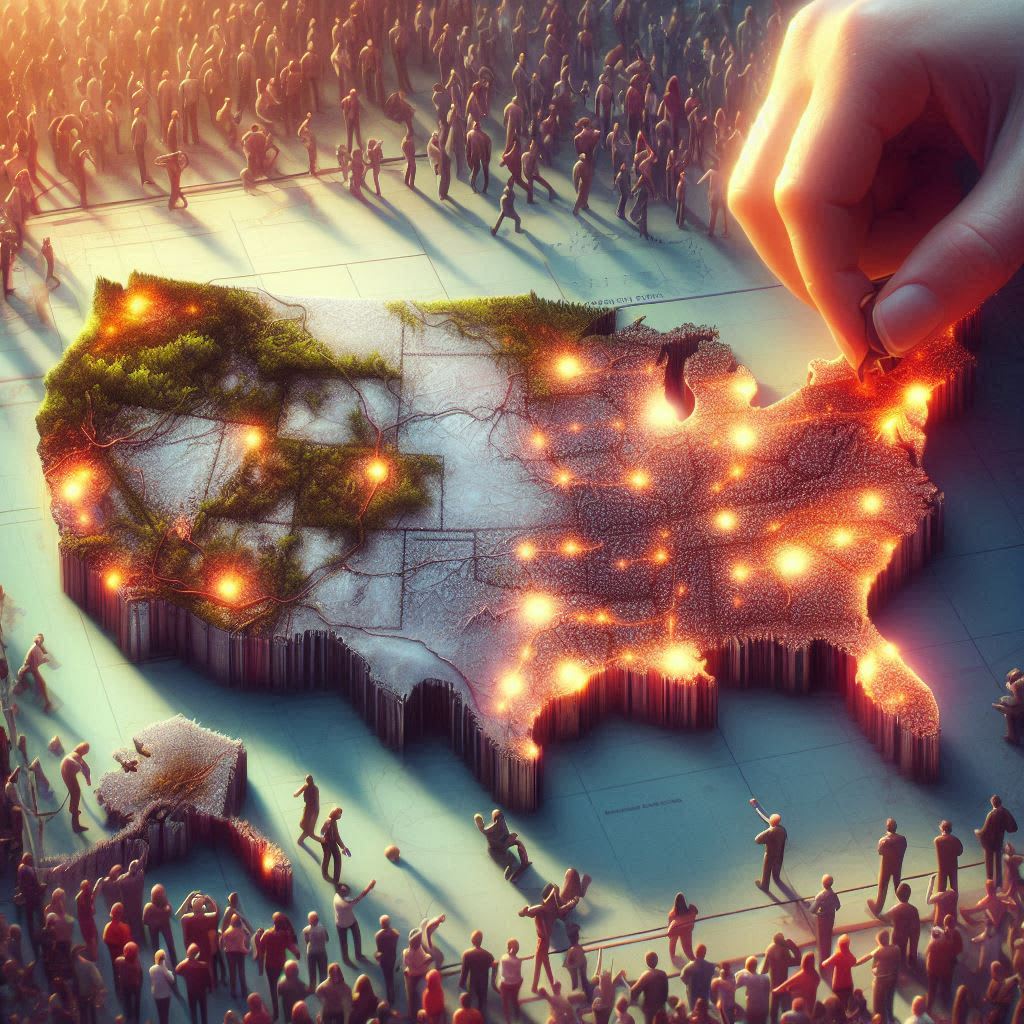
In the resplendent and enlightened age of Emperor Trumpendous, whose genius illuminated the land like a candle thrown into a gas explosion, the people of the Glorious Republic found themselves in an unparalleled era of prosperity—at least, this was the official decree.
To ensure the continued magnificence of his reign, Emperor Trumpendous employed a most ingenious economic strategy: he declared war on foreign goods. “Why should the Republic enjoy cheap food, affordable automobiles, and reasonably priced electronics when it could instead revel in the thrill of self-sufficiency at three times the cost?” he bellowed from his golden pulpit. The merchants, of course, were delighted, for they could now charge thrice for the same wares, and the common folk, being the simple creatures they were, had the distinct pleasure of participating in this grand economic experiment by choosing between starvation and bankruptcy.
Meanwhile, the land’s farmers, accustomed to the toil of their ancestors, found themselves in a peculiar predicament. The Emperor had expelled a great number of farmhands—men and women who had, up until that point, performed the rather inconvenient task of harvesting crops. “Labor shortages,” declared the Emperor, “are an illusion perpetrated by the weak!” The wheat fields, in response, staged a silent rebellion, refusing to leap into granaries unaided, and thus the breadbaskets of the nation overflowed only with air.
In his boundless wisdom, Emperor Trumpendous turned his gaze to the immigrants. “Let them remain outside our borders,” he proclaimed, “where they can enjoy the hospitality of nations that have not yet discovered the virtues of benevolent cruelty.” And so, at the gates of the Republic, weary travelers seeking refuge were met with walls, cages, and the everlasting warmth of official indifference. This, it was said, would fortify the economy, though precisely how was a mystery understood only by the Emperor himself.
His attentions soon turned to matters of nature. Recognizing the air was altogether too clean and the rivers excessively transparent, the Emperor took decisive action. “Enough of this senseless worship of the elements!” he declared, ordering the immediate liberation of corporations from the oppressive chains of environmental responsibility. Thus, the citizens were granted the rare opportunity to witness the sky turning ever more vibrant hues of brown and grey, and to cultivate their lungs with the exhilarating experience of industrial progress.
Yet it was not merely the present Emperor Trumpendous sought to perfect, but the very foundation of the Republic itself. What need had the government of cumbersome programs that aided the sick, the poor, or the unlucky? “Survival is a test of character,” he decreed, abolishing the various meddlesome institutions that had, until then, impeded the natural selection of the free market. The common folk, being ever so adaptable, adjusted swiftly—some by perishing, others by the gracious act of working three jobs at once.
The Emperor’s foreign affairs were no less masterful. With the finesse of a rhinoceros in a china shop, he navigated diplomacy with the delicate art of shouting, insulting, and reneging. “Our allies,” he announced, “shall love us more if we treat them with disdain.” And thus, in the grand halls of global governance, the Republic became a paragon of self-imposed exile, earning a reverence akin to that reserved for particularly loathsome dinner guests.
Of course, not all subjects were equally pleased with these sweeping improvements. Some, inexplicably ungrateful, took to the streets with their complaints, wailing about ‘human rights,’ ‘economic stability,’ and ‘not wanting to breathe liquid smog.’ The Emperor, a man of profound sensitivity, took pity on these misguided souls and, in his magnanimity, ensured they were met with the comforting embrace of the authorities’ batons and tear gas.
Thus did the Republic flourish, and thus did its people rejoice in the unquestionable wisdom of Emperor Trumpendous. The laborers, basking in their newfound scarcity, celebrated their wage increases as their industries collapsed. The merchants marveled at their wares, stacked high in warehouses, unsold but exorbitantly priced. The land itself, gasping beneath layers of soot and smoke, whispered praises to its sovereign.
And so, in this new gilded age, all was well—until, of course, reality rudely intruded, as it so often does, like an unwelcome houseguest arriving with lawsuits and statistics. But that, as Emperor Trumpendous would say, was fake news.
About the Creator
Ben Soto
I'm a Puerto Rican storyteller/filmmaker who uses lies to tell the truth; this is the essence of what I love about good stories. Scifi, fantasy, horror, and thriller are among my favorite!
Toliet Paper Roll
Sometimes in our live no matter where are it will happen. You reach for the toilet paper to wipe your personal areas. They are simply rules in replacing the rolls. Sometimes you are lucky to find the roll waiting for you to replace it. It easy to replace the darn role.
By Terri Rosalla day ago in Humor


Comments
There are no comments for this story
Be the first to respond and start the conversation.