
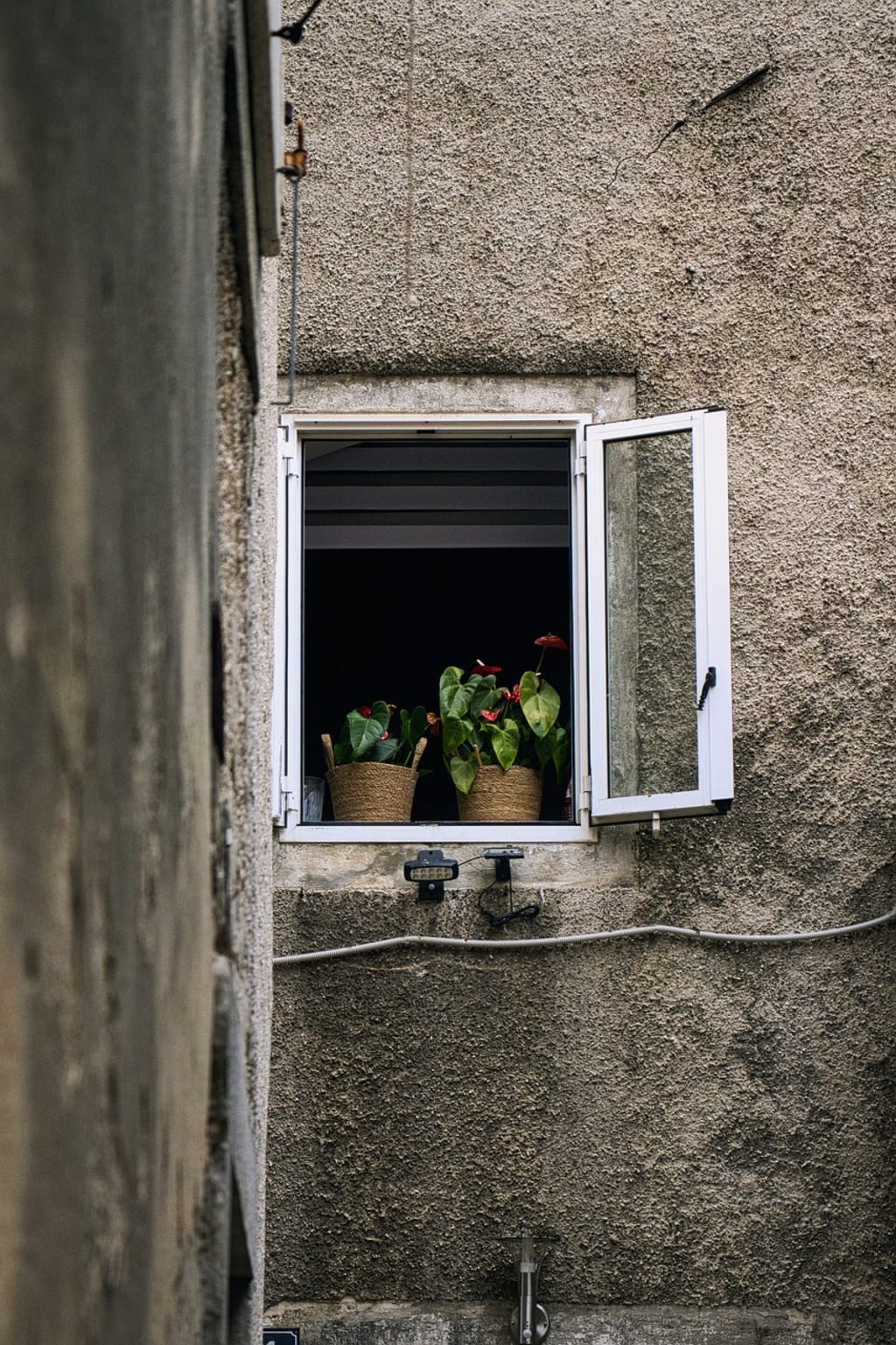
## **The Open Window: A Brilliant Tale of Deception and Irony**
*“The Open Window”* is a masterfully crafted short story by British writer **Saki** that brilliantly blends wit, irony, and subtle satire. First published in 1914, it remains one of the most frequently anthologized short stories in English literature. At just a few pages long, the story packs a punch with its sharp dialogue, well-drawn characters, and an unforgettable twist ending. It explores themes of appearance versus reality, social anxiety, the nature of storytelling, and the consequences of deception.
---
### **Plot Summary**
The story opens with a man named **Framton Nuttel**, who has come to the countryside for a “nerve cure.” He is visiting strangers in a rural town, following his sister’s advice to meet people and relax. One of the households he visits is that of **Mrs. Sappleton**, and while waiting for her, he is greeted by her precocious 15-year-old niece, **Vera**.
As they engage in small talk, Vera—composed and self-assured—tells Framton a tragic and eerie story. She explains that Mrs. Sappleton keeps the French window (a type of tall, open window) wide open every evening in hopes that her husband and two brothers will return from a hunting trip. According to Vera, they were lost in a “treacherous piece of bog” three years ago and never came back. Mrs. Sappleton, she says, believes they will return any moment, alive.
Framton, already a nervous and fragile man, is unsettled by this story. When Mrs. Sappleton finally enters, she talks casually about her husband and brothers returning soon through the open window. Framton becomes increasingly uncomfortable, convinced that the woman is mentally disturbed due to unresolved grief.
Suddenly, to his horror, he sees three figures walking across the lawn toward the window, just as Vera had described. Convinced he’s seeing ghosts, he grabs his hat and bolts from the house in a panic. Mrs. Sappleton is baffled by his sudden departure, while Vera calmly explains to the family that Framton probably ran because of a “fear of dogs,” citing a fabricated childhood trauma.
The story ends with the line: *“Romance at short notice was her specialty,”* revealing that Vera had made up both stories—the ghosts and the dog trauma—purely for her own amusement.
---
### **Characters and Characterization**
The beauty of *“The Open Window”* lies in its sharply drawn characters, especially in the limited space of a short story.
* **Vera** is a standout figure—a teenage girl who is clever, composed, and, above all, mischievous. Her ability to fabricate a convincing story on the spot shows a remarkable talent for storytelling and manipulation.
* **Framton Nuttel** is the perfect contrast—an anxious, socially awkward man who is already mentally fragile. His gullibility and nervous temperament make him an easy target for Vera’s imagination.
* **Mrs. Sappleton**, although only briefly present, is a humorous figure. She represents normalcy, talking cheerfully about mundane family matters, totally unaware of the horror unfolding in Framton’s mind.
Each character plays a key role in the unfolding of the plot, and Saki gives them just enough personality to make them memorable without wasting a single word.
---
### **Themes**
#### 1. **Appearance vs. Reality**
The most obvious theme is the tension between what seems to be happening and what is actually true. Vera’s story is entirely fabricated, but Framton’s belief in it shows how easily perception can be distorted by a convincing narrative.
#### 2. **Deception and Storytelling**
Vera is a storyteller, and her deception is both playful and powerful. Saki seems to admire her wit, even as her behavior borders on cruel. This theme also serves as meta-commentary on the nature of fiction itself—stories can be so convincing that they override reason.
#### 3. **Irony**
The story is rich in irony, especially dramatic irony. The reader is initially just as fooled as Framton, and the punchline—that Vera has tricked everyone—recontextualizes everything we’ve read. It's a classic example of a twist ending done right.
#### 4. **Social Anxiety**
Framton's fragile mental state and discomfort with strangers highlight the theme of social anxiety. He is so afraid of confrontation and so unsure of himself that he accepts the most outrageous story without question, simply because he lacks confidence and control.
---
### **Saki’s Style and Tone**
Saki is known for his dry wit, subtle satire, and economy of language. *“The Open Window”* exemplifies these traits perfectly. The tone is deceptively calm and polite, which makes the sudden twist and humor even more effective. His writing is elegant, yet accessible, and his mastery of the short story format is evident in how neatly all the elements come together.
There is also a light layer of social commentary. Saki often poked fun at Edwardian social conventions, such as the stilted rituals of visiting strangers and the upper class's obsession with manners. Framton’s formal visit and his discomfort are exaggerated to absurdity, making the story both humorous and critical.
---
**Why It Endures**
Over a century after it was written, *“The Open Window”* still captivates readers because of its sharp wit, surprise ending, and relatable human behavior. It’s a perfect example of how brevity, when paired with skillful storytelling, can be more powerful than long narratives.
Students and teachers often enjoy the story because it's entertaining, easy to read, and invites discussion about trust, storytelling, and human psychology. It also serves as an excellent introduction to irony and narrative framing in literature.
*“The Open Window”* is a compact literary gem—funny, unsettling, and smart. Saki’s clever use of character, timing, and misdirection makes the story a brilliant example of how storytelling can shape perception and emotion. Vera, with her calm demeanor and wild imagination, is unforgettable, and the twist ending leaves readers both amused and impressed. In just a few pages, Saki delivers a perfect storm of humor, tension, and insight that continues to charm and surprise readers today.
---
About the Creator
From ad men to mad men
It's after 2am in the morning when a local police patrol vehicle in Northern New Jersey spots a figure costumed as Quasimodo, The Hunchback of Notre Dame, proceeding southbound on the sidewalk along Lydecker Street. Though the hunchback’s costume stuffing offers added insulation, it's January, and friggin’ freezing. Carefully, the officers slow down, gently question the subject, and offer him a ride home.
By David W. Maury7 days ago in Humor
The Day My Cat Became a Genius
I always thought I was the clever one in my household. I had a steady job, a routine, and even a Spotify playlist that reflected my “refined” taste in music. Meanwhile, my cat, Mr. Whiskers, spent most of his day staring at walls, chasing imaginary monsters, and sleeping in awkward positions that made me question evolution.
By Waleed khan7 days ago in Humor


Comments
There are no comments for this story
Be the first to respond and start the conversation.