
"Tall Tales and Tickles: Folklore with a Twist"
"Humor from the Heart of Tradition"

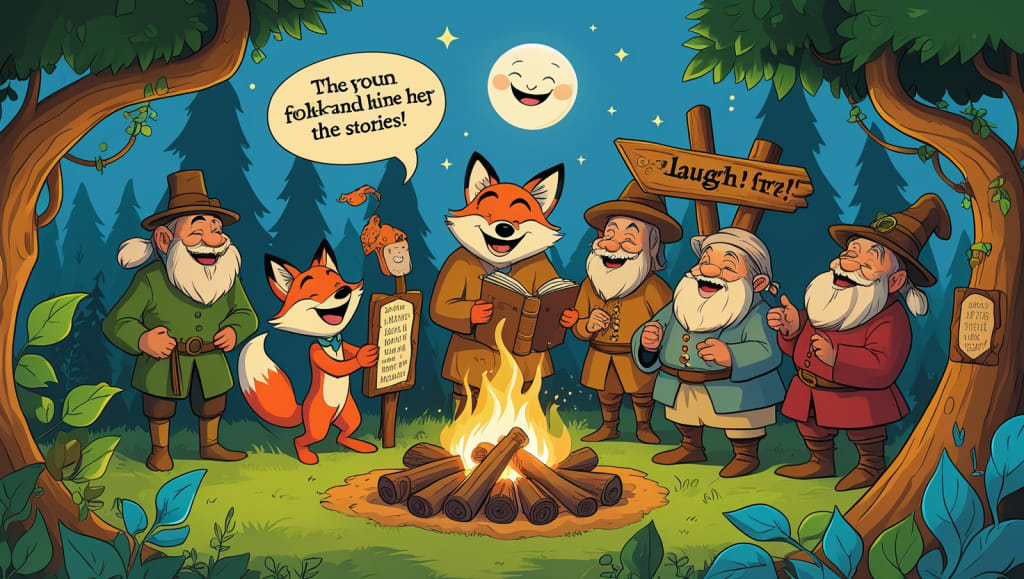
Folk-Tales Joke: The Trickster’s Tale
Chapter One: The Village of Grins
In the cozy little village of Grins, laughter was as essential as bread. Every evening, villagers would gather around the central square, where the grand storyteller, Old Marcus, would regale them with folktales that had been passed down for generations. Whether it was the tale of the Wily Weaver or the story of the Lazy Lark, each story carried a lesson, often wrapped in humor.
One day, Marcus announced a storytelling contest. “Whoever tells the funniest folk-tale will be crowned the Village Jester and receive the Golden Joke Staff!” he proclaimed. The villagers buzzed with excitement, but none more so than Harold the Trickster. Known for his quick wit and mischievous spirit, Harold couldn’t resist a good challenge—especially if it meant being crowned the funniest in town.
But Harold had a problem. While he was great at pranks and puns, he didn’t know any real folk-tales. Determined to win, he decided to spin a new one—something unique that would outshine even Marcus’s best stories.
Chapter Two: A Tale of Deception
Harold spent the next few days devising his story. He sat by the river, watching the fish leap from the water, and an idea struck him—a tale about a fish who tricked everyone into believing he was a magical creature.
On the night of the contest, villagers crowded the square. The air was thick with the smell of baked bread and roasted vegetables as the sun set behind the hills. One by one, storytellers took their turns. Agnes the Baker told the tale of the Bread Golem—a doughy creature that attacked anyone who didn’t eat their crusts. Silas the Blacksmith spun the story of the Iron Giant who sneezed so hard, he blew his own shoes off.
When Harold’s turn came, he swaggered to the front, holding a makeshift staff carved from a fallen branch. Clearing his throat dramatically, he began:
“Once, in the distant village of Gullible, there was a fish named Finn. Now, Finn wasn’t just any fish—he was an extraordinary fish. He claimed to possess the power to grant wishes, but only if you could make him laugh.”
The crowd leaned in, intrigued.
“One day, the village idiot—uh, I mean, the village genius—named Clyde, caught Finn while trying to scoop pebbles from the river. Finn gasped dramatically, flopping about and saying, ‘Oh mighty human! Free me, and I shall grant you one wish!’ Clyde, being clever—or completely gullible—immediately believed the talking fish and promised to release him if his wish came true.”
The villagers chuckled. They could already sense a punchline brewing.
Chapter Three: The Fishy Trick
Harold continued, “Finn, ever the trickster, whispered, ‘But first, you must make me laugh!’ Clyde pondered, scratched his head, and told the worst joke imaginable: ‘Why did the carrot break up with the tomato? Because it didn’t want to ketchup!’”
The crowd groaned and laughed, knowing how bad the joke was.
“To Finn’s surprise, he couldn’t help but snicker—partly because Clyde’s goofy face while telling the joke was so absurd. Finn tried to hide his laughter, but Clyde caught on and cried, ‘Aha! You laughed! Now grant my wish!’”
Harold paused, enjoying the villagers’ anticipation. “Now, Finn, being a fish with no real magic, panicked. Thinking fast, he said, ‘Ah, well... the wish only works if you also make the river laugh.’ Determined, Clyde sat by the riverbank, telling joke after joke to the water—‘Why did the mushroom get invited to the party? Because he was a fungi!’ The river, of course, stayed silent.”
By now, the villagers were howling with laughter, picturing poor Clyde shouting jokes at the river.
“After three days and nights of relentless puns and rhymes, Clyde finally gave up. Finn, meanwhile, had long since swum away, telling every fish downstream about the human who tried to make the river laugh. They dubbed Clyde ‘The Joke Whisperer’ and agreed never to surface when he was near.”
Chapter Four: The Unexpected Twist
As Harold finished, Marcus gave an approving nod, but before he could declare the winner, a booming voice interrupted. “Hold it right there!” It was Clyde himself, red-faced and indignant.
“That’s not how it went!” Clyde shouted. “I did make the river laugh! It wasn’t my joke—it was that duck that kept quacking behind me! I turned around, and the river was rippling from the sound. I thought it was laughing! I even saw the fish giggling!”
The villagers roared at this unexpected addition, but Clyde wasn’t done. “And another thing—Finn didn’t grant my wish, but the very next day, I found a shiny stone by the riverbank. Told you he was magical!”
Harold, seizing the moment, grinned. “So, Clyde, what did you wish for?”
Clyde crossed his arms proudly. “I wished for a joke so funny that even the river would laugh. And guess what? It worked!”
The crowd erupted, realizing that Clyde, in his own way, had actually become the joke—and the hero of the story.
Chapter Five: The Village Jester
Marcus couldn’t hold back his laughter. “It seems we have not one, but two winners! Harold, for spinning the funniest tale, and Clyde, for unwittingly becoming the star of it!”
He handed the Golden Joke Staff to Harold, who immediately handed it to Clyde. “You deserve it, Clyde. You turned my story into something even funnier.”
From that day on, Clyde became known as the Village Jester, always welcomed at gatherings for his unintentional wit. Harold, meanwhile, was praised for his creativity and knack for storytelling. The village of Grins never lacked laughter again, for both Harold and Clyde kept the tales flowing, each funnier than the last.
One night, as they sat by the river sharing stories, Harold whispered, “You know, Clyde, I made most of that up.”
Clyde just shrugged. “Maybe so. But you can’t deny—sometimes the biggest joke is the one that’s accidentally true.”
Epilogue: Legends Live On
Years passed, but the story of Finn the Laughing Fish and Clyde the Joke Whisperer remained a favorite. Children retold it with their own twists, and each version grew more exaggerated and whimsical. As for Harold and Clyde, they continued crafting tales that blended truth and humor, proving that in the village of Grins, laughter was indeed the best legacy.
And every time someone heard a splash in the river, they swore it was Finn, laughing at the memory of Clyde’s relentless, terrible jokes.
About the Creator
Keep reading
More stories from Muhammad Azeemullah and writers in Humor and other communities.
"Tickle Your Funny Bone: Jokes That Never Fail"
Very Funny Jokes: A Laugh-Filled Journey Chapter One: The Breakfast Banter It was a typical Saturday morning at the Mitchell household. Dad, as usual, was making pancakes, and the aroma filled the kitchen. Little Tommy walked in, rubbing his eyes.
By Muhammad Azeemullah10 months ago in Humor
From ad men to mad men
It's after 2am in the morning when a local police patrol vehicle in Northern New Jersey spots a figure costumed as Quasimodo, The Hunchback of Notre Dame, proceeding southbound on the sidewalk along Lydecker Street. Though the hunchback’s costume stuffing offers added insulation, it's January, and friggin’ freezing. Carefully, the officers slow down, gently question the subject, and offer him a ride home.
By David W. Maury7 days ago in Humor
The Day My Cat Became a Genius
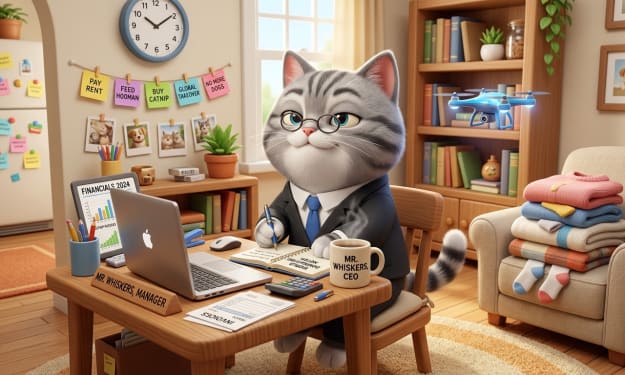
I always thought I was the clever one in my household. I had a steady job, a routine, and even a Spotify playlist that reflected my “refined” taste in music. Meanwhile, my cat, Mr. Whiskers, spent most of his day staring at walls, chasing imaginary monsters, and sleeping in awkward positions that made me question evolution.
By Waleed khan7 days ago in Humor
The Politics of Playing Dress-Up
Well, to start off I'd like to say a happy world book day to all who celebrate. I know I haven't really posted anything on my socials about it but I'm not a jubilant kind of person. I lay low most of the time. Let's start off with a popular anecdote from the vaults...
By Annie Kapur7 days ago in Geeks


Comments
There are no comments for this story
Be the first to respond and start the conversation.