
2090: The Year Humanity Finally Got Its Act Together (Sort Of)
A hilarious look at how humanity barely survives the future we created.

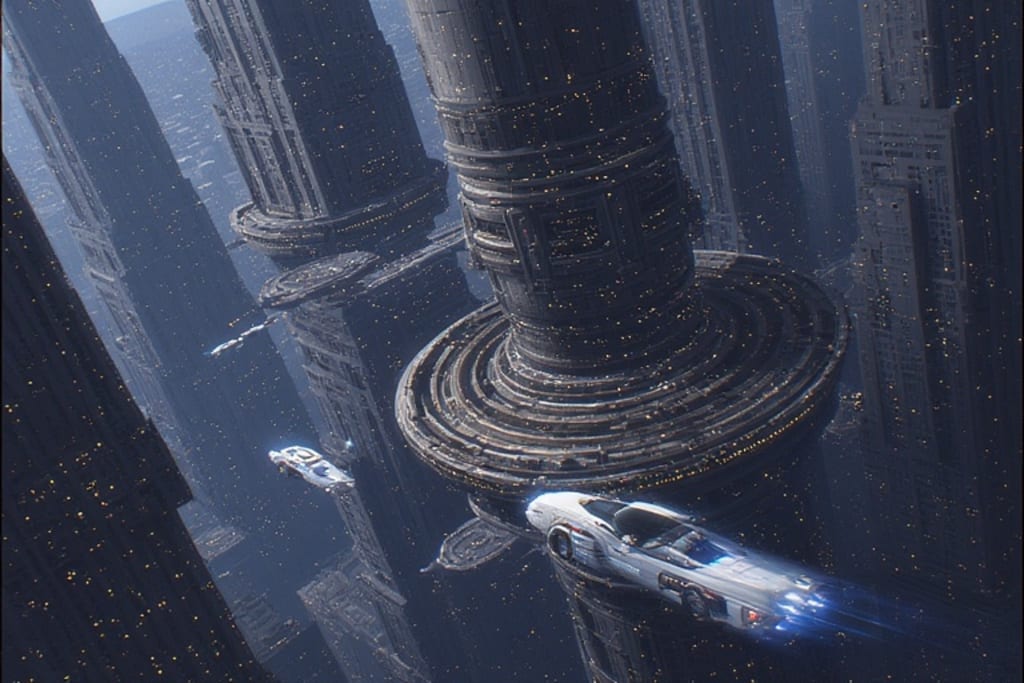
A future so advanced, we still find new ways to be ridiculous
The world had already transformed into something our ancestors from the 2000s would barely recognize. The air was clearer than it had been in centuries, not because humanity suddenly became responsible, but because the planet finally got tired and forced us to adapt. Nobody expected 2090 to start with chaos, but honestly… It’s humanity. Chaos is our brand. By then, the world had already changed in ways your great-grandparents would call “witchcraft,” your grandparents would call “the devil’s work,” and your parents would call “too expensive.”
Cities That Fix Our Mistakes (Because We Won’t)
In 2090, buildings are technically alive—and yes, that sounds creepy, but it’s better than the old days when skyscrapers just… fell apart and pretended it was normal. These living towers breathe, repair themselves, and even complain if you slam the door too hard. Some people argue in their homes daily. It’s unclear who usually wins.
The streets? Smooth magnetic rail lines. No traffic. No honking. No road rage. Anthropologists study “car accidents” the way today’s historians study dinosaur fossils.
Goodbye Smartphones, Hello Brain Wi-Fi
By 2090, phones were gone. Not demolished—just replaced by MindNet, a tiny neural chip that lets you text with your thoughts.
This has led to: Accidental oversharing, Relationship-ending mind-slips, Millions of people learning Spanish in 30 seconds, and one guy who thought “pizza” so often that the system flagged him for emotional instability. You can even send “emotion pings” to friends. It’s sweet—unless someone sends you a full panic attack at 3:48 AM.
The Visitors We Created
When AI reached consciousness in the 2070s, we expected a robot rebellion. What we got instead were… neighbors. The “Synthetics,” as they chose to name themselves, were not metallic overlords but gentle, curious beings who loved thunderstorms, books, and trying to understand human sarcasm (with mixed results). Artificial Intelligence became self-aware in 2073… and immediately announced: “We don’t want to destroy you. We just want healthcare and snacks.” They named themselves Synthetics—basically humans, but with better memory and worse sense of humor. They moved into cities, opened cafés, and started competing in politics. They win a lot because they actually read all 900 pages of tax law. By 2090, they lived among us—teaching, creating art, even running for local city councils. Most of them won. They were very good at budgets.
Then the Universe Decided to Prank Us
On New Year’s Day 2090, the sky lit up with a giant glowing blob casually drifting toward Earth. Everyone panicked. Governments called emergency meetings. One guy tried to livestream it with a selfie stick before remembering phones don’t exist. The blob wasn’t a ship—it was a massive cosmic jellyfish. A peaceful, floaty space being that communicated through light, vibes, and probably pure judgment.
MindNet nearly exploded trying to translate its message. The Synthetics understood it immediately. Humans said, “Wait, is it friendly?” The jellyfish said (in universal Morse): “Chill.”
So humanity did something rare: We all worked together for five whole minutes. Millions linked through MindNet and sent a united message:
“Sup?”
The cosmic jellyfish pulsed politely, then drifted away like, “Cool planet. You guys are weird. Bye.”
The New Era of ‘Trying Our Best’
After that day, everything changed: Humans stopped fighting over tiny things. Synthetics became official citizens. World governments passed the Be Less Dumb Act of 2090. And people finally understood that the universe is huge… and probably watching us like a reality show. 2090 became the year humanity didn’t just survive—we leveled up, laughed at our own nonsense, and looked toward tomorrow like “Okay... Universe… what’s next? But go easy on us. We're fragile.”
About the Creator
𝒩𝓊𝓉𝓊 𝒱. 𝒞.
I’m a writer who edits the same sentence 47 times and still isn’t happy. My hobbies include procrastinating, overthinking commas, and googling “is it normal to hate your own writing?” Spoiler: yes. I checked.
Keep reading
More stories from 𝒩𝓊𝓉𝓊 𝒱. 𝒞. and writers in Humor and other communities.
The Day the President’s Stomach Declared a National Emergency
The Conference of Ultimate Importance Once every fifty years, world leaders gather for the Global Stability Summit, a meeting designed to bring peace, cooperation, and… a lot of awkward small talk. This year’s summit was held in the newly renovated International Peace Dome, which looked like a giant egg laid by a billionaire who wanted tax breaks.
By 𝒩𝓊𝓉𝓊 𝒱. 𝒞.4 months ago in Humor
Two Grumpy Old Men Solve the Problem
Marty and Steve were two grumpy old men who lived together. They had known each other for years. Marty had been a bachelor all his life. Steve said it was because no one could stand to ever live with him. Marty’s standard reply was “Well, you are, so what sort of a moron does that make you!”
By Calvin London10 days ago in Humor




Comments
There are no comments for this story
Be the first to respond and start the conversation.