
Your Phone Is Reshaping Your Personality
How the device in your pocket is quietly influencing how you think, feel, and become
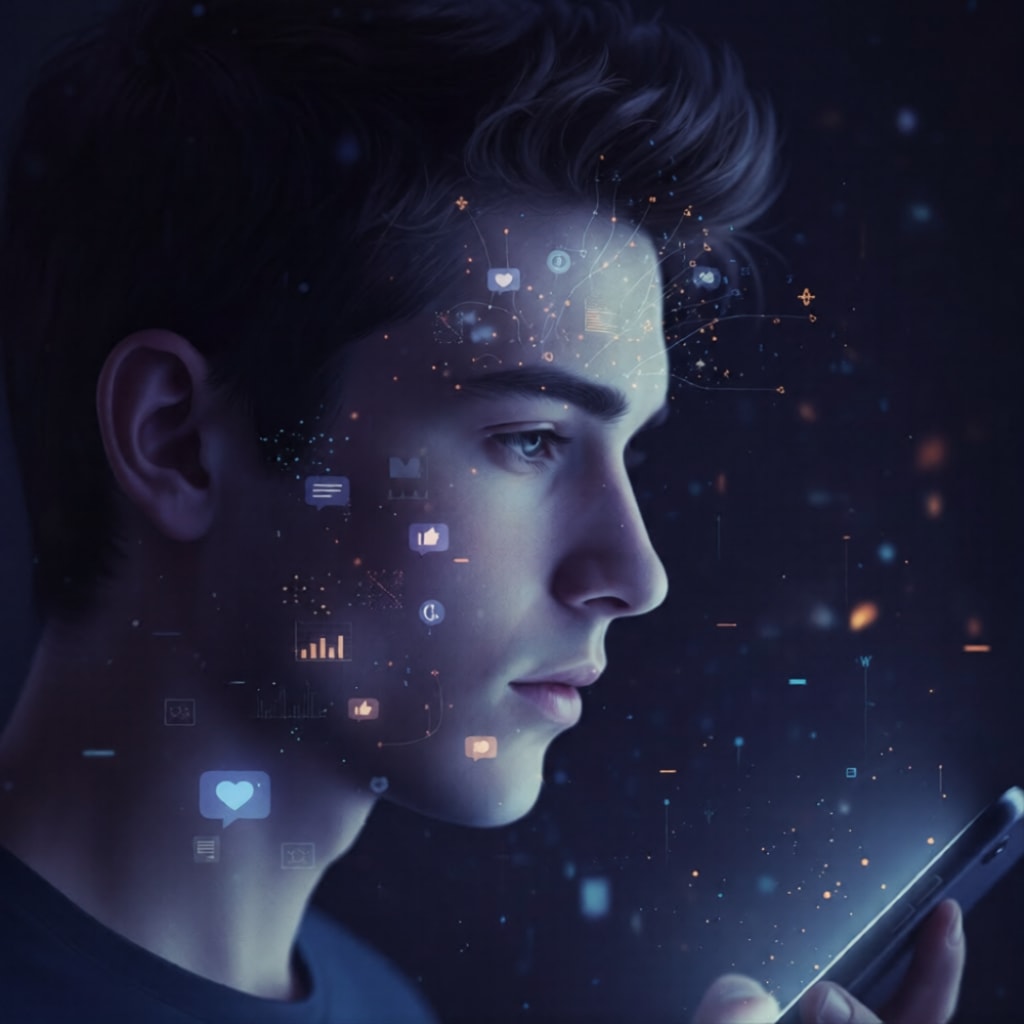
Your phone wakes you up.
It tells you the news.
It shows you what to care about.
It decides what you see—and what you don’t.
You might think of it as just a tool. A piece of technology designed to make life easier. But the truth is more unsettling: your phone isn’t just responding to you anymore. It’s shaping you.
Not in obvious ways. Not dramatically.
But slowly. Subtly. Repeatedly.
And over time, those small influences begin to look a lot like personality change.
________________________________________
Technology Doesn’t Just Serve—It Conditions
Every time you unlock your phone, you enter an environment designed to guide your behavior.
Notifications pull your attention.
Algorithms reward certain actions.
Interfaces nudge you toward speed, reaction, and consumption.
This isn’t accidental. Smartphones are powered by systems built to optimize engagement. The more time you spend scrolling, tapping, and reacting, the more data is collected—and the better the system becomes at predicting you.
In this environment, you are not just the user.
You are part of the feedback loop.
And the brain adapts to whatever it repeatedly experiences.
________________________________________
Attention Is Being Rewritten
One of the first things your phone reshapes is attention.
Human attention evolved for a world of slow information and long pauses. But phones compress reality into fragments—headlines, notifications, short videos, endless updates.
As a result:
• Focus becomes shorter
• Distraction feels normal
• Silence feels uncomfortable
Over time, your brain learns to expect constant stimulation. Deep focus feels harder. Boredom feels unbearable. And anything that doesn’t immediately engage you feels unworthy of attention.
This doesn’t just affect productivity.
It affects patience, curiosity, and emotional regulation—core elements of personality.
________________________________________
The Algorithmic Mirror
Your phone doesn’t just show you the world.
It shows you a version of the world filtered through your past behavior.
What you like, pause on, share, or ignore trains the algorithm. The algorithm then feeds you more of the same.
This creates a mirror that slowly narrows your perspective.
You begin to see:
• More content that confirms your beliefs
• Fewer ideas that challenge you
• More extremes, fewer nuances
Over time, this reinforcement shapes how you think, what you value, and how you react to others. Personality becomes less exploratory and more predictable—not because you chose it, but because it was optimized for engagement.
________________________________________
Emotional Conditioning in the Digital Age
Phones don’t just influence thought.
They influence emotion.
Likes, comments, and messages act as small rewards. Each notification triggers a burst of dopamine—a chemical linked to motivation and pleasure.
The brain learns quickly:
• Validation feels good
• Silence feels like rejection
• Comparison feels unavoidable
As a result, many people become:
• More approval-seeking
• More anxious about response time
• More sensitive to social feedback
This emotional conditioning can reshape confidence, self-worth, and social behavior—quietly altering who you are over time.
________________________________________
Identity in the Age of the Screen
Before smartphones, identity was shaped primarily by lived experience—relationships, environments, reflection.
Now, identity is increasingly shaped by curated digital presence.
You don’t just live life.
You document it.
Edit it.
Present it.
This creates a subtle split between:
• Who you are
• Who you appear to be
When that gap grows, authenticity suffers. People begin thinking in terms of how moments will look, rather than how they feel. Personality becomes performative—optimized for visibility instead of meaning.
________________________________________
The Speed of Thought Is Changing
Phones encourage rapid consumption and immediate reaction.
Scroll.
React.
Move on.
This trains the brain for speed rather than depth. Opinions form faster. Judgments come quicker. Reflection becomes optional.
But personality is shaped by reflection. Without pauses to think, question, and feel deeply, inner life becomes shallow—not because humans lack depth, but because the environment doesn’t reward it.
________________________________________
Are We Becoming More Alike?
Ironically, while phones promise personalization, they often produce uniform behavior.
Trends spread instantly. Language patterns repeat. Opinions cluster. Aesthetic preferences converge.
When millions of people consume content from similar platforms driven by similar algorithms, individuality begins to blur.
Personality doesn’t disappear—but it becomes influenced by invisible systems deciding what is worth attention.
________________________________________
This Isn’t About Blame
None of this means phones are evil.
Or that technology must be rejected.
Phones connect us, inform us, empower us. They are remarkable tools.
The danger lies in unconscious use.
When we stop noticing how technology affects us, we stop choosing who we become.
________________________________________
Reclaiming Agency in a Digital World
You don’t need to abandon your phone to protect your personality. You need awareness.
Small shifts matter:
• Creating space without screens
• Allowing boredom to exist
• Choosing depth over constant updates
• Questioning what algorithms serve you
Personality isn’t fixed.
It’s shaped by environment.
And the most influential environment many people live in today fits inside their pocket.
________________________________________
The Question That Matters Most
Your phone will continue to evolve.
It will become smarter, faster, and more immersive.
The real question isn’t what phones will become.
It’s who you will become while using them.
Because in the quiet moments between notifications and scrolls, your personality is still being written.
And you still have a say in the story.
About the Creator
Mind Meets Machine
Mind Meets Machine explores the evolving relationship between human intelligence and artificial intelligence. I write thoughtful, accessible articles on AI, technology, ethics, and the future of work—breaking down complex ideas into Reality
Keep reading
More stories from Mind Meets Machine and writers in Humans and other communities.
Whiskey At Dusk
Guess the whiskey was more important to you in the end, wasn’t it? It was more than the well-being of your friends; more vital than showing up to the places you promised you would and could come to; more critical of a matter than fulfilling your damn responsibilities and getting the press off your back.
By Snarky Lisa4 days ago in Humans



Comments
There are no comments for this story
Be the first to respond and start the conversation.