
World Health Assembly Convenes Amid Global Health Challenges
Shaping Global Health Policy in an Era of Crisis and Collaboration

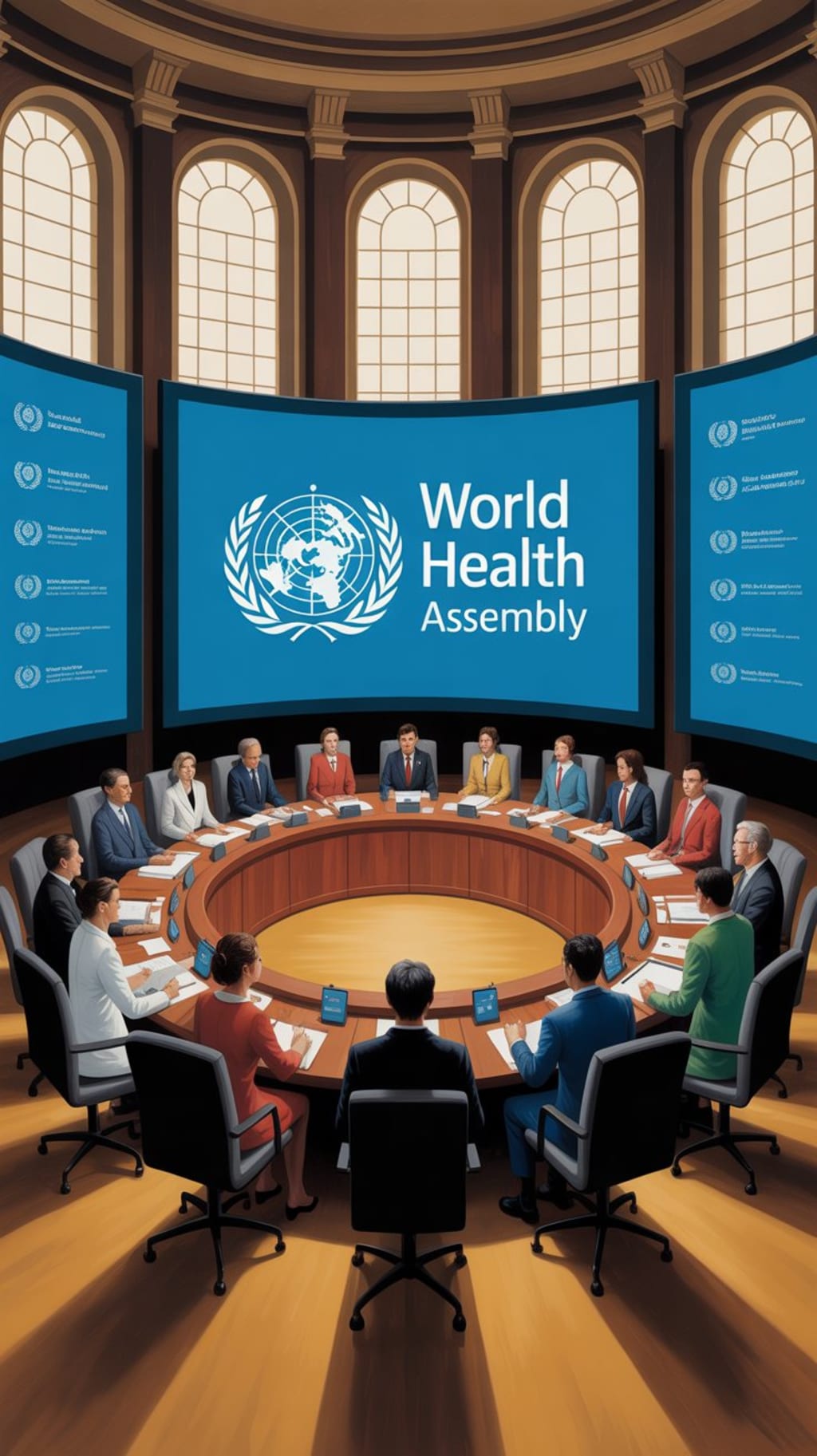
In a world reshaped by pandemics, climate emergencies, and widening health inequities, global cooperation is no longer optional—it is essential. This urgency frames the backdrop for the 78th World Health Assembly (WHA), convening from May 19 to May 27, 2025, in Geneva, Switzerland. Organized by the World Health Organization (WHO), the Assembly brings together health ministers, global experts, and delegates from all 194 WHO member states.
This year’s theme—“One World for Health”—encapsulates the collective realization that health threats do not recognize borders, and that solutions must be as interconnected as the world itself.
The WHA: A Global Health Parliament
The World Health Assembly functions as the decision-making body of the WHO. Once a year, delegates gather to set the organization’s priorities, allocate funding, evaluate progress, and shape the global health agenda. In many ways, the WHA serves as the parliament of global public health, influencing how billions of people receive care and protection.
The 2025 Assembly arrives at a critical moment. The global community is still navigating the aftermath of COVID-19, while new health challenges—ranging from antimicrobial resistance to climate-induced disease outbreaks—demand urgent and united responses.
Key Challenges on the Agenda
1. Pandemic Preparedness and Response
Perhaps the most prominent topic of the 2025 WHA is the progress toward a new international pandemic accord. Negotiations for a legally binding treaty have intensified in the wake of the COVID-19 crisis, which exposed critical weaknesses in global coordination, transparency, and supply chain equity.
The goal of the treaty is to:
Improve early detection and sharing of outbreak data
Ensure equitable distribution of vaccines and treatments
Strengthen national health systems’ preparedness
Prevent the “vaccine nationalism” seen during COVID-19
Delegates are also expected to review and possibly adopt amendments to the International Health Regulations (IHR), the legal framework that guides how countries respond to cross-border health threats.
2. Health Equity and Access
Health inequity remains a persistent issue, especially in low- and middle-income countries (LMICs). Delegates will review progress on universal health coverage (UHC) and assess strategies to close the gap in:
Access to essential medicines and care
Healthcare workforce distribution
Digital health infrastructure
Particular focus will be placed on women’s and children’s health, especially in fragile settings affected by conflict or displacement.
3. Climate Change and Health
Climate-related health emergencies—from heatwaves to vector-borne diseases like malaria and dengue—are escalating rapidly. For the first time, the WHA will dedicate a full day to climate-health policy integration, with discussions around:
Greening health systems (e.g., reducing hospital carbon footprints)
Strengthening early warning systems for climate-linked health risks
Financing climate-resilient infrastructure in vulnerable nations
The Assembly will also hear from scientists and frontline healthcare workers affected by climate crises, grounding high-level policy in lived experience.
4. Mental Health and Wellbeing
The Assembly recognizes that mental health is no longer a peripheral issue—it is central to the global health agenda. Rising rates of anxiety, depression, suicide, and substance abuse—especially among youth—have become public health crises in their own right.
WHO is expected to present its updated Global Mental Health Action Plan, which includes calls for:
Integrating mental health into primary care
Increasing mental health funding in national budgets
Reducing stigma through community-based programs
Voices at the Table: A Multilateral Gathering
The WHA is not only about policy papers and technical reports—it is a dynamic forum where diplomacy, science, and lived experience intersect.
This year’s opening session includes addresses by:
Dr. Tedros Adhanom Ghebreyesus, WHO Director-General
Heads of state from selected member nations
Youth climate and health advocates
Representatives from frontline medical organizations such as Doctors Without Borders and the International Federation of Red Cross and Red Crescent Societies
The Assembly also welcomes contributions from civil society organizations, ensuring that the perspectives of communities, NGOs, and health professionals influence global decisions.
Tensions and Consensus: Politics in Health Policy
While the Assembly promotes unity, it is not free from geopolitical tensions. Disagreements over funding, intellectual property rights, and health data sovereignty often complicate negotiations.
For example:
High-income nations have been criticized for dominating vaccine access during COVID-19.
Some countries remain hesitant about binding international health regulations, fearing loss of national sovereignty.
Ongoing conflicts (such as in Gaza, Sudan, and Ukraine) challenge the implementation of health policy in crisis zones.
Despite these challenges, the WHA remains a rare forum where consensus often triumphs over division, driven by the shared understanding that health is a global common good.
What the World Is Watching For
By the end of the Assembly, the world expects tangible progress on several fronts:
The adoption or advancement of the pandemic treaty
Greater commitments to health financing in low-resource settings
Clear action plans on climate resilience and mental health
Stronger monitoring mechanisms to ensure nations follow through
Public health experts and international organizations alike will be watching to see whether the commitments made in Geneva translate into real-world change.
Why This Assembly Matters More Than Ever
If the last five years have taught us anything, it is that global health is fragile, but repairable—if we act together.
The COVID-19 pandemic was a wake-up call. But the current moment is a chance to respond—not only with fear, but with foresight. The 78th World Health Assembly represents more than just diplomacy—it is a call to imagination, collaboration, and resilience.
The decisions made here will ripple across continents, shaping how the world responds to the next health emergency, how we treat our most vulnerable, and how we define our collective future.
Let us hope that amid the speeches, votes, and debates, one truth remains clear:
Health is not a luxury. It is a human right. And it belongs to all of us.
About the Creator
Keep reading
More stories from Habibullah khan and writers in Humans and other communities.
Ten Quiet Wonders Within
In a world that constantly urges us to be more—more successful, more productive, more attractive—it’s easy to lose sight of the quiet truths that already make us whole. The noise around us often drowns out our own voice, convincing us that we must earn worthiness through achievements, appearances, or approval. But what if, instead of striving outward, we turned inward and began noticing the simple, sincere things that make us who we are?
By Habibullah khan 8 months ago in Humans
The One Daily Habit You Ignore That Controls Your Energy All Day.
We all crave more energy. We yearn for that feeling of boundless vitality, the ability to power through our to-do lists, engage fully with our loved ones, and still have something left in the tank at the end of the day. We chase quick fixes: caffeine jolts, sugary snacks, the occasional "miracle" supplement. But what if I told you the secret to sustained, all-day energy wasn’t a product you could buy, but a simple, often-overlooked daily habit?
By Wilson Igbasiabout 18 hours ago in Humans


Comments
There are no comments for this story
Be the first to respond and start the conversation.