
Will AI Replace Humans?
will AI takeover humen

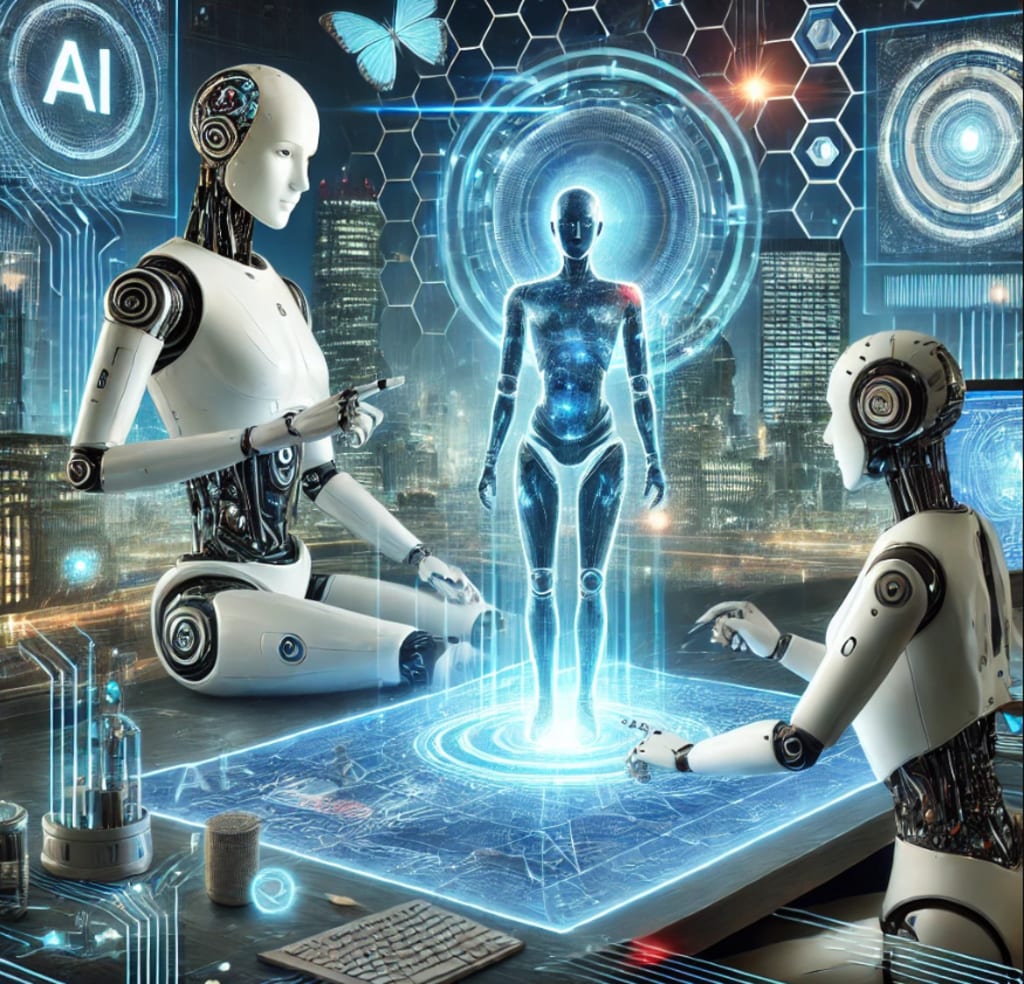
The rise of artificial intelligence (AI) has sparked intense debates across various industries. Some view AI as a revolutionary tool that enhances human capabilities, while others fear it might lead to widespread job losses and ultimately replace human workers. The reality, however, is far more complex. While AI is becoming increasingly sophisticated, it is unlikely to fully replace humans, at least in the foreseeable future. Instead, it is more likely to complement human efforts, transforming the way we work and live.
The Capabilities of AI
AI has made remarkable strides in recent years. From chatbots that can answer customer queries to sophisticated algorithms that analyze massive amounts of data, AI has already proven its usefulness. Industries such as healthcare, finance, and entertainment have embraced AI to improve efficiency and accuracy. AI-powered tools can now diagnose diseases, predict stock market trends, and even compose music or write articles. The rapid evolution of machine learning and neural networks has made AI more powerful than ever.
However, despite these advancements, AI lacks true creativity, emotional intelligence, and critical thinking skills. While it can process vast amounts of information and identify patterns, it does not possess the human ability to think outside the box or understand complex emotions. This is a crucial limitation that prevents AI from completely replacing humans in many fields.
Jobs That AI Might Replace
AI has the potential to replace certain jobs that are repetitive and rule-based. Industries such as manufacturing, customer service, and data entry are already experiencing automation. Self-checkout machines in supermarkets, automated customer support chatbots, and robotic assembly lines in factories are clear examples of AI taking over routine tasks.
Even creative fields are not immune. AI-generated art and content creation tools have raised concerns among artists, writers, and designers. AI can generate realistic paintings, compose symphonies, and even write articles with impressive coherence. Yet, while AI can mimic styles and structures, it still lacks originality and the human touch that makes art and writing truly meaningful.
The Human Advantage
Despite AI’s rapid advancements, human intelligence remains irreplaceable in several key areas:
Creativity and Innovation – AI can assist in the creative process but cannot come up with original ideas like humans can. Writers, artists, and inventors bring unique perspectives that AI cannot replicate.
Emotional Intelligence – Understanding human emotions, empathizing with others, and navigating complex social interactions are strengths that AI has yet to master. Professions such as therapy, counseling, and human resource management rely heavily on these skills.
Complex Problem-Solving – AI is excellent at analyzing data, but it struggles with solving ambiguous problems that require human intuition. Fields such as law, medicine, and engineering often require judgment calls that AI cannot make.
Ethical and Moral Decision-Making – Many decisions in life and business require ethical considerations. AI lacks moral reasoning and cannot make decisions based on values, ethics, or human experiences.
The Future: Collaboration, Not Replacement
Rather than fearing AI as a replacement, society should focus on leveraging it as a tool for enhancement. AI can handle tedious and repetitive tasks, freeing up humans to focus on more meaningful work. In healthcare, for instance, AI can assist doctors in diagnosing diseases, but the final decision and patient interaction still require a human touch. In journalism, AI can help with research, but the storytelling and emotional depth will always be the domain of human writers.
The key to a balanced future lies in adapting and upskilling. As AI continues to evolve, workers must develop skills that AI cannot replicate—critical thinking, creativity, emotional intelligence, and problem-solving. By embracing AI as a collaborator rather than a competitor, we can harness its power while ensuring that human intelligence remains at the heart of progress.
Conclusion
AI is undoubtedly transforming industries and changing the way we work. While it will replace certain tasks and even some jobs, it is unlikely to fully replace humans. The human mind’s ability to think creatively, emotionally connect, and make ethical decisions sets it apart from AI. Instead of resisting change, we should focus on adapting to an AI-driven world, ensuring that technology serves humanity rather than replaces it. The future belongs not to AI alone but to a world where humans and AI work together to achieve greater innovation and efficiency.
About the Creator
Kuldeep Singh Shekhawat
I'm Kuldeep, a passionate writer sharing fresh insights on trending topics, tech, and personal growth, psychology, entertainment and hot issues. Join me on Vocal Media for engaging stories and valuable content.
Keep reading
More stories from Kuldeep Singh Shekhawat and writers in Humans and other communities.
My Depressive Night
My Depressive Night Some nights are longer than others. Not in hours, but in the weight they carry. Last night was one such night. A night where silence was not peaceful but deafening, where darkness did not bring rest but suffocation. A night where sleep was an unfulfilled wish, and the only companion I had was my own overthinking mind.
By Kuldeep Singh Shekhawat12 months ago in Humans
Whiskey At Dusk
Guess the whiskey was more important to you in the end, wasn’t it? It was more than the well-being of your friends; more vital than showing up to the places you promised you would and could come to; more critical of a matter than fulfilling your damn responsibilities and getting the press off your back.
By Snarky Lisaabout 13 hours ago in Humans




Comments (1)
AI + human = higher efficiency