
WHY WE SAY OK?
The evolution of the most used term in the world from a silly joke from the 1830s.

We constantly hear this two-letter phrase. OK !
The word "OK" may be the most well-known on the planet. Even with technology, it is crucial to how we connect with one another. Even if you are unaware of it, you probably utilize it every day. But what exactly does OK mean? And from where did it originate?
OK actually stems from an 1830s craze of purposefully misspelling acronyms. Those "in the know" in Boston were pleased by the botched coded messages KC, or "knuff ced," KY, "know yuse," and OW, or "oll wright," which were used by young "intellectual" types. Haha. However, one acronym stood out from the rest because to a few fortunate events: OK, or "oll korrect." "All correct" was a typical statement used to affirm that everything was in order in the early 1800s. When OK was originally printed in the Boston Morning Post on March 23, 1839, its shortened cousin began becoming widely used.
As soon as other publications caught on to the joke, it quickly went across the nation and became widely known as OK, not only among a select group of Boston insiders. And because of OK's recent surge in popularity, a struggling US president from Kinderhook, New York, decided to use it as his campaign nickname in 1840. Supporters of Van Buren established OK Clubs across the nation, and their message was unmistakable: Old Kinderhook was "oll korrect." The campaign received a lot of media attention and developed a bad reputation. In the end, his opponents used the acronym against him, claiming it stood for "Orful Konspiracy" or "Orful Katastrophe." Hah. Even a smart moniker ultimately failed to save Van Buren's presidency. But OK won, so that's good. That 1840 presidential campaign cemented OK's place in American slang. And because to one invention—the telegraph—OK made the transition from slang to genuine, practical application while similar abbreviations went out of style. The current flows to the sounder if we lower the bridge. The armature is drawn to the other end of the circuit where the current powers an electromagnet. The armature taps out a message by clicking against a screw. Just five years after OK, the telegraph made its first appearance. It sent out brief messages using electric pulses that were made up of dots and dashes to represent the letters of the alphabet.
The time had come for OK to shine. The pair of letters were simple to type and highly unlikely to be mistaken for anything else. It was immediately embraced as the norm for acknowledging a transmission as received, particularly by railroad workers on the expanding US system. Even further, this 1865 telegraphic manual goes on to state that "no message is ever regarded as transmitted until the office receiving it gives O K." It was now a serious matter. The fact that the two letters are simple to transmit is one factor, but there is another important one. It's related to how OK seems. or more particularly, the appearance and sound of the letter K. Starting a word in English with the letter K is quite rare; in fact, it's ranked about 22nd in terms of rarity. This rarity sparked a "Kraze for K" in advertising and print at the turn of the century, where businesses swapped hard Cs for Ks to catch your attention. It was believed that changing a word to something more noticeable, such as Klearflax Linen Rugs or this Kook-Rite Stove, would increase its visibility. And it's still a visual strategy: Brands like Krispy-Kreme and Kool-Aid have K in their logos. The K is what makes it so distinctive. By the 1890s, newspapers started debating Oklahoma's past, having mostly forgotten its Bostonian roots while frequently promoting misconceptions that some people still hold onto today.
The assertion that it derives from the Choctaw word "okeh," which means "so it is," is an example. The origins of OK were no longer clear, but that didn't really matter because the word had already entered our lexicon. We now employ it as the pinnacle of the "neutral affirmative.
The canonical history of OK was written by Allan Metcalf, who argues that the term "affirms without evaluating," or doesn't express any feelings, but just acknowledges and accepts information. Simply put, if you "got home OK," you were uninjured. In the event that your "food was OK," it was acceptable. And "OK" validates a shift in course. We no longer even keep track of how frequently we use it; it has become more or less a reflex at this point. This may be the reason OK was supposedly the first word said when people set foot on the moon. Not very terrible for an old, cheesy joke. Okay, guys, cut it out.
About the Creator
Keep reading
More stories from DONA MARIA TOMY and writers in Humans and other communities.
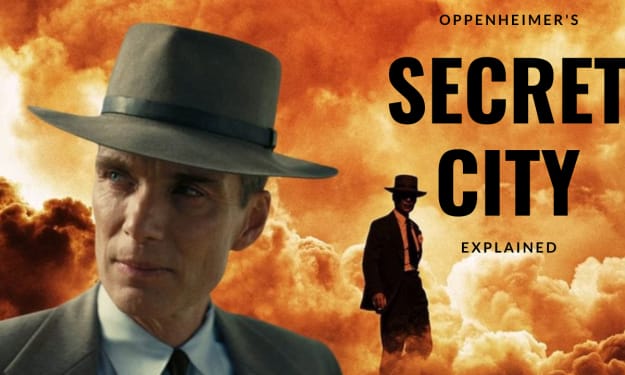
Oppenheimer’s secret city, explained
In 1943, P.O. Box 1663 was listed as a Santa Fe, New Mexico address, and over the next few years, about 300 babies had it listed as their place of birth on their birth certificate. The real location was a secret, and everything sent to that P.O. box ended up at a site also known as P.O. Box 180, Project Y, and Los Alamos, New Mexico.
By DONA MARIA TOMY2 years ago in Humans
Friendship vs. Soul Tribe: Navigating the Landscape of Connection
Human beings are social creatures, inherently wired for connection. We seek companionship, understanding, and a sense of belonging. This drive manifests in various forms of relationships, ranging from casual acquaintances to deep, lifelong friendships. But beyond the bonds of conventional friendship lies a realm of connection that feels fundamentally different, often described as a "soul tribe." While both friendships and soul tribe relationships offer value and support, understanding the distinctions between them can illuminate the unique roles they play in our lives and empower us to cultivate more fulfilling connections.
By Wilson Igbasi3 days ago in Humans



Comments
There are no comments for this story
Be the first to respond and start the conversation.