
Why Some People Struggle to Tell Left from Right
you couldn't believe how many adults mix up left and right; it's like a secret club of silliness that scientists are just beginning to understand. Picture a brain surgeon by the patient's bedside after surgery , the bad news about to be delivered is entirely their fault because they operated on the wrong side of the spinal column. Talk about a major whoopsie moment! It turns out that confusing left and right is a significant blunder in the medical world. There have been cases where doctors injected the wrong eye or performed a biopsy on the wrong breast.
For most folks, distinguishing left from right is as easy as telling up from down. However, for about one in six people, according to a recent study, it's a real head-scratcher. Even those who think they've got it all figured out can get tripped up by distractions like loud noises or unrelated questions. Believe it or not, figuring out left from right is a complex process. It requires memory, language skills, visual and spatial processing, and some mental acrobatics. Scientists are still trying to unravel what exactly happens in our brains when we attempt it – why it's a breeze for some and a brain buster for others remains a mystery.
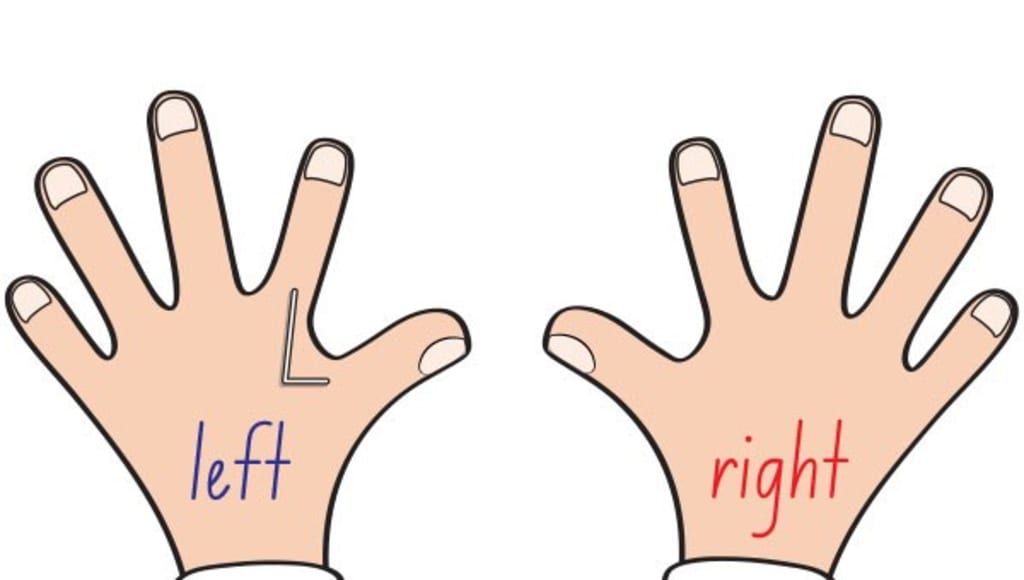
To cope with this issue, people have come up with all sorts of creative tricks, like making an 'L' shape with their thumb and finger, thinking about which hand they use for certain tasks, or even getting a tattoo or piercing as a reminder. Whatever works, right?
Now, let's say you have to figure out someone else's left from right – that's when things get even trickier. You have to mentally rotate yourself to face the same direction as the other person. It's like a dance move, but in your head. People think, 'If I'm facing you, my left hand will be opposite your right hand.' Wrap your mind around that one.
Interestingly, research shows that people find it easier to judge left or right by imagining their own hand or body rotating – it's like we're our own compasses. We still don't have all the answers, but researchers have made some exciting discoveries. They say that people who already rely on hand-related strategies in their daily lives show the biggest improvements in distinguishing left from right. Some suggest that it could also be something we learn as kids, just like other spatial skills. Younger ones who navigate and make decisions on their own tend to become better left-right pros. So maybe we should let these small navigators lead the way once in a while, and we'll have a new generation of expert navigators.
Alice Gomez and her team of researchers found another interesting tidbit – figuring out left and right can be taught to kids with the right program. They designed a two-week intervention to boost children's body awareness and motor skills, which reduced the number of left-right mistakes by nearly 50 percent.
We all know that left-right mix-ups can have consequences, But not just in medicine it is also in other areas of life. Rumor has it that the Titanic's helmsman made a wrong turn, contributing to that tragic sinking. Since many things are designed for right-handed people, left-handed individuals have to adjust to their surroundings – not very pleasant. But at least this has been recognized, and people have started designing stuff for lefties too. And by the way, surgeons now draw on their patient's skin with a marker to indicate the correct operating region, along with 'don't cut here' signs on other parts – simple but effective.
About the Creator
Whiskey At Dusk
Guess the whiskey was more important to you in the end, wasn’t it? It was more than the well-being of your friends; more vital than showing up to the places you promised you would and could come to; more critical of a matter than fulfilling your damn responsibilities and getting the press off your back.
By Snarky Lisa6 days ago in Humans
Carolyn Jarvis: Husband, Salary, Biography, Net Worth & More
Carolyn Jarvis is a Canadian television journalist known for her work as the Chief Investigative Correspondent for Global News. With a strong background in broadcast journalism and a reputation for in-depth reporting, Jarvis has become a prominent figure in Canadian media.
By Enoch Sagini3 days ago in Humans
Living in a hemp house
Hemp, a multi-purpose crop that delivers fibres, shivs, seeds, and pharmaceuticals is currently used in insulation materials and bio-composites for a more sustainable construction industry. Russ Martin and his wife Karon Korp tell their story as owners of the first hemp house in the U.S.
By Susan Fourtané 4 days ago in Interview




Comments
There are no comments for this story
Be the first to respond and start the conversation.