
Why Gen Z Is Embracing Loneliness
Alone but Not Lonely — How a New Generation Is Redefining Solitude in a Hyper connected World
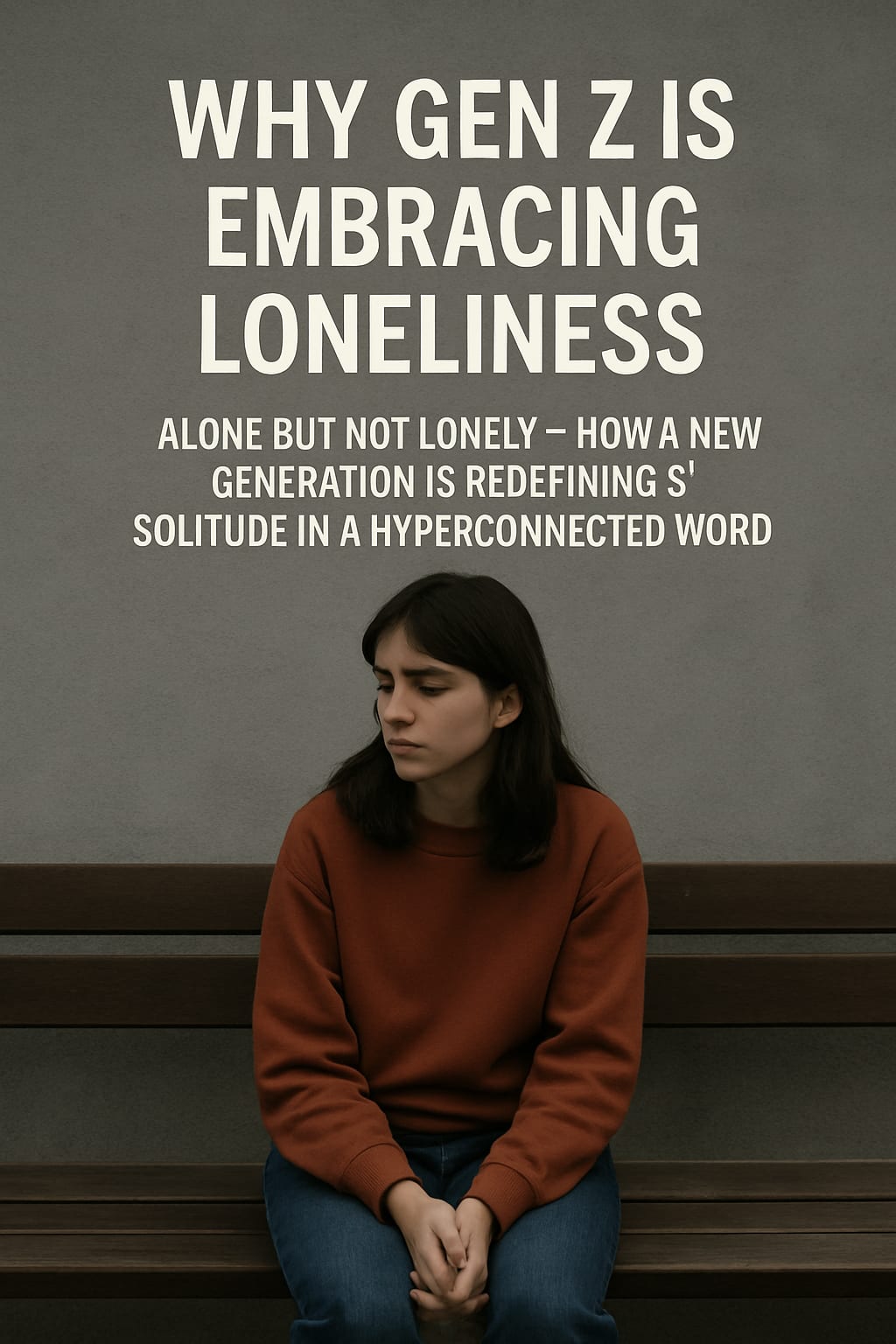
In a world where we're more connected than ever, you'd think loneliness would be on its way out. But for many members of Gen Z — people born roughly between 1997 and 2012 — solitude isn’t something to fear. In fact, it's something they're starting to embrace.
Loneliness has always been seen as a bad thing. In past generations, being alone was often linked to sadness, social failure, or rejection. But today, Gen Z is flipping that idea on its head. They're discovering that being alone doesn’t have to mean being lonely. Instead, it can be peaceful, empowering, and even healing.
So, why is this happening now? Let’s take a closer look.
1. Constant Connection Creates Burnout
Gen Z grew up online. From a young age, they've had access to smartphones, social media, and 24/7 digital communication. While this means they’re more connected than any generation before, it also comes with a price: digital exhaustion.
Notifications, endless scrolling, and pressure to always be “on” can leave people feeling mentally drained. Many Gen Zers have realized that stepping away from the noise — even just for a little while — helps them feel more at peace. Being alone gives them time to recharge, breathe, and focus on what really matters.
2. Mental Health Matters More Than Ever
Mental health has become a top priority for Gen Z. They openly talk about anxiety, depression, and emotional well-being — subjects older generations often avoided. With that awareness comes a better understanding of personal needs.
Sometimes, mental wellness means taking a break from socializing. Instead of forcing themselves into social situations that drain them, many Gen Zers choose solitude. For them, being alone is not a weakness — it's an act of self-care.
3. Social Media FOMO Is Fading
Fear of Missing Out (FOMO) was once a major side effect of social media. Seeing friends hanging out without you or influencers living “perfect” lives made people feel like they weren’t doing enough. But Gen Z is beginning to see through the illusion.
They know that social media often shows only the highlights. More and more people are choosing to log off and focus on real life — even if that means spending time alone. They’re finding joy in quiet activities like journaling, reading, walking, or creating art.
In doing so, they’re discovering that solitude can feel just as fulfilling as being in a crowd.
4. Alone Time Builds Identity
Being alone gives people space to think, reflect, and learn more about themselves — something Gen Z values deeply. Unlike previous generations, who may have been more focused on fitting in, many Gen Zers are interested in individuality and authenticity.
Alone time helps them figure out what they believe in, what they enjoy, and who they want to be — without outside pressure. It’s in these quiet moments that confidence grows. For some, that might mean spending a weekend solo or traveling alone. For others, it’s simply turning off their phone and sitting with their thoughts.
5. They're Redefining What Relationships Mean
Gen Z isn’t anti-social — they just have different views on friendship and connection. Many prefer deep, meaningful relationships over a large circle of acquaintances. They’re okay with spending time alone because they don’t feel the need to always be around others to feel valued.
Instead of fearing loneliness, they’re learning to enjoy their own company. And when they do connect with others, it’s often more intentional and supportive. Quality matters more than quantity.
6. The Pandemic Changed Everything
COVID-19 had a huge impact on how people think about alone time. During lockdowns, everyone was forced to spend more time by themselves. It wasn’t easy, but it taught a lot of people — especially Gen Z — how to be alone without feeling lonely.
Some even found new hobbies, started side projects, or simply got more comfortable being in their own space. The experience showed them that solitude isn’t something to run from — it can actually be a chance to grow.
7. Alone ≠ Lonely
It’s important to remember that not everyone enjoys being alone all the time. Loneliness can still be painful and harmful when it comes from isolation or lack of support. But what Gen Z is doing differently is choosing solitude, not being forced into it.
They’re showing the world that it’s okay to sit quietly with yourself, that healing can happen in silence, and that happiness doesn’t always need an audience.
Final Thoughts
Gen Z is embracing loneliness — but maybe it’s not really loneliness at all. Maybe it’s solitude with purpose. In a fast-moving, noisy world, choosing to slow down and be alone can be a brave and powerful act.
By redefining what it means to be alone, Gen Z is teaching the rest of us something important: being by yourself doesn’t mean you’re broken. It can mean you’re healing, growing, or simply enjoying your own company.
And that’s not something to be afraid of — it’s something to celebrate.
About the Creator
Idea hive
Article writer and enthusiast sharing insight and knowledge on nature, human behavior, technology, health and wellness, business, culture and society and personal development.
Lost and Alone in the French Alps
Looking back, I can trace some of my life’s biggest adventures to a simple action from my sister. She’d introduced me to Tommy (a very long time ago), a colleague of hers, who had overshared his penchant for Italian-looking women, and I ticked that box.
By Chantal Christie Weiss20 days ago in Humans
Overkill
Love, love, love. We love everything. We love our dogs, our cats, our homes. We love our cars, our new snowboard, this new book. Love. The word used to mean something. One did not use that word for mundane things. It was revered and used in beautify longing poetic verse. Some of the most prolific writers, wrote sonnets, lyrics, odes, to the emotion of love, once saved and cherished for a one and only. Now it’s used like the word like, but a little stronger.
By Alexandra Grant6 days ago in Humans



Comments
There are no comments for this story
Be the first to respond and start the conversation.