
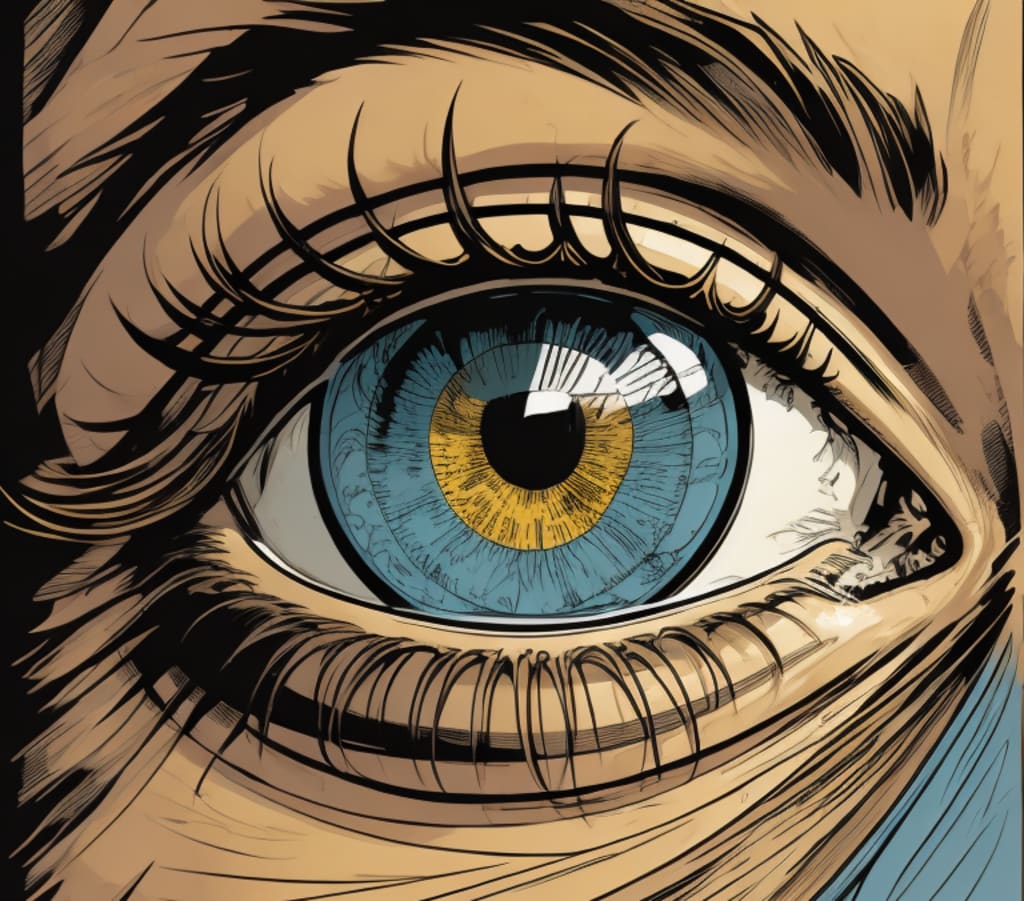
Our narrative unfolds with the introduction of Iris, a girl whose emotions flow as freely as her tears. Iris is characterised by her extreme sensitivity, a quality that manifests in a constant state of weeping. Whether she's experiencing joy, sorrow, or a profound emotional impact, Iris's lacrimal glands work overtime to produce an astounding ten ounces of tears daily, accumulating to an impressive thirty gallons annually.
Delving into the intricate physiology of Iris's tears reveals a fascinating mechanism at play. She possesses specialised lacrimal puncta, intricate tubes designed to drain old tears away, ensuring a continuous renewal of this vital bodily fluid. The constant stream of basal tears, produced without conscious effort, serves a dual purpose. Not only do these tears keep Iris perpetually moist, but they also form a protective tri-layer coating.
Close inspection reveals the first layer to be a mucus barrier, adhering the tears to Iris's surface. Above it lies the aqueous layer, ensuring hydration, repelling bacteria, and shielding Iris's cornea from potential harm. The final layer, a lipid film, acts as an oily shield, preventing the evaporation of the underlying layers and maintaining a smooth surface for clear vision.
Despite the perpetual nature of Iris's tear production, she generally goes about her daily life without dwelling on the intricate workings of her lacrimal system. It's a silent guardian, warding off potential threats without drawing undue attention. However, a chance encounter with a girl named Onion alters the trajectory of Iris's tearful existence.
Entranced by Onion's beauty and captivated by her delightful fragrance, Iris invites her newfound acquaintance for dinner. Yet, when Onion removes her jacket, an unexpected chemical reaction occurs. The sulfoxides responsible for Onion's alluring scent transform into sulfenic acid, releasing a gas that prompts Iris's lacrimal system into overdrive. The ensuing reflex tears, designed to cleanse harmful substances, overwhelm Iris, and she finds herself weeping uncontrollably.
This revelation becomes a poignant turning point in Iris and Onion's budding relationship. Recognizing the impossibility of sustaining a connection amidst such tearful turmoil, the two decide to part ways. As Onion exits Iris's life, the torrent of reflex tears subsides, only to be replaced by another type—emotional tears.
Now, Iris experiences an outpouring of tears driven by her emotional state. Whether overwhelmed by sadness or joy, these tears serve a distinct purpose. They act as a mechanism to stabilise Iris's mood swiftly, accompanied by physiological responses such as an increased heart rate and slower breathing. Although the exact benefits of emotional tears remain a subject of scientific inquiry, they are believed to contain higher levels of stress hormones, including ACTH and enkephalin—an endorphin with natural pain-killing properties.
In Iris's case, the emotional tears not only signal her emotional state to others but also contribute to her overall well-being. The act of crying, it seems, is a complex interplay of physical and emotional processes, offering both a release and a potential source of comfort. Although Iris faces the disappointment of a failed relationship with Onion, the multifaceted nature of her tears provides a silver lining.
In conclusion, Iris's tearful journey unveils the intricacies of the human emotional and physiological landscape. From the essential basal tears that silently protect her eyes to the reflex tears triggered by an unforeseen chemical reaction, and finally, the emotional tears that offer solace in times of extreme emotions—each tear serves a purpose in maintaining Irises balance and health. As she navigates the challenges of heartbreak, Iris finds assurance in the knowledge that her tears, in all their diversity, are essential components of her resilience and well-being.Thank you for reading and please share your thoughts and feedback.
About the Creator
Joel Barr
Exploring life's distinctive perspectives and unraveling the mysteries of the future through a blend of factual insights and engaging narratives.
How Romance Between Couples Evolves Into Lifelong Emotional Partnership
Romance usually starts with excitement, passion, and the excitement of discovery by two individuals. The early relationships are full of emotions and attraction which gives a strong first bond. These emotions are crucial in attracting couples, creating interest, and creating the need to know more about one another. Romance at this level is the basis that is laid down on which the emotional relations are developed further.
By Mark Hipster8 days ago in Humans




Comments
There are no comments for this story
Be the first to respond and start the conversation.