
Why Babies Feel Easy and Kids Don’t
A Nervous System Truth

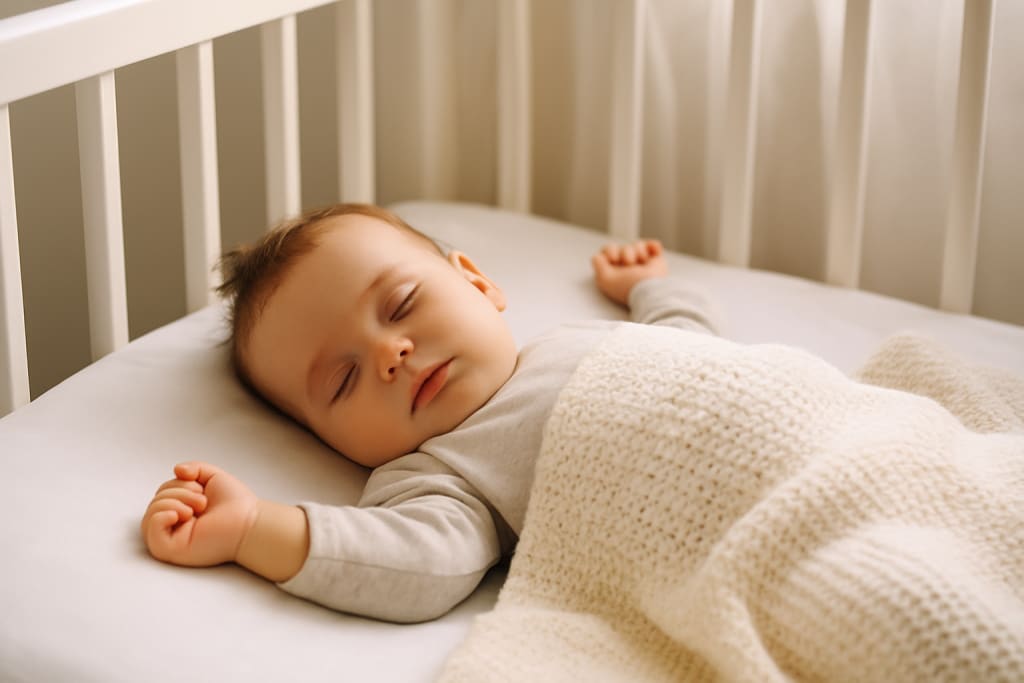
Some adults adore babies. They can hold an infant for hours, breathe in that warm, quiet weight, and feel their entire nervous system settle. This is me.
But the same adults often want nothing to do with toddlers or older children. They avoid the noise, the unpredictability, the emotional chaos, the shrieks, the crashes, the boundary testing, and the energy spikes that land without warning. This is also me.
People rarely talk about this because they fear being judged as cold, selfish, or anti-child. The truth is far more grounded in biology than personality. Loving babies but avoiding kids is a nervous system pattern, not a moral failing.
Babies communicate in a limited range. They cry, they feed, they sleep, they shift, they look, and they curl into whatever body is holding them. A baby’s world is simple: hunger, comfort, discomfort, warmth, and regulation. Their emotional landscape is straightforward, and their presence is tactile rather than chaotic. A regulated adult can mirror that simplicity. The infant becomes a calm anchor. For many trauma survivors, this is the safest form of human connection. It is predictable, quiet, and free of contradiction.
Toddlers are the opposite. They explode into the world with noise, boundary testing, emotional swings, demands, resistance, sudden collapses, and sensory storms that can fill an entire room. Their behavior is normal for their stage of development, but it mimics the unpredictability of unsafe environments.
- A toddler’s shriek can hit the nervous system the same way a past threat once did.
- A boundary push can feel like confrontation.
- A meltdown can read as danger.
The adult brain knows the child is not a threat, but the adult body does not always agree.
People who grew up around volatility often classify unpredictable behavior as risk. Toddlers are walking unpredictability. They climb on furniture, they hurl toys, they bolt into traffic, they scream when frustrated, and they ignore direction.
To an adult with a trauma history, this behavior can register as too much to absorb. Not because the adult dislikes children, but because their nervous system cannot regulate quickly enough to stay present in that environment. Avoidance becomes self-protection, not rejection.
There is also a sensory factor. Babies create soft, rhythmic stimuli: breathing, tiny movements, warm weight, subtle cues. Toddlers bombard the senses. Loud vocalizations, abrupt motor patterns, bright toys, crashing objects, constant motion, and emotional shifts land on an already burdened nervous system like a series of alarms. Someone who feels grounded with a sleeping infant may feel hunted by the sensory impact of a toddler’s world. It is not the child. It is the adult’s bandwidth.
People who were parentified as children often experience a double reaction. They instinctively care for babies because that role feels familiar and structured. But when confronted with older children who require emotional coaching, boundary setting, and active attention, the adult recoils. Their childhood taught them that the demands of older children equaled stress, conflict, and responsibility beyond their capacity.
- The infant relationship is soothing.
- The older-child relationship is reminiscent of old burdens.
Many adults who say they “don’t like kids” actually mean something different.
- They do not like environments that trigger dysregulation.
- They do not like unpredictability.
- They do not like emotional intensity they cannot control.
- They do not like boundary violations.
- They do not like noise that hits their body like a warning.
Babies do none of these things. Toddlers do all of them without intending harm. The adult’s reaction is a conditioned physiological response to past overwhelm.
People mistake this for personality preference, but the pattern is rooted in trauma physiology, sensory thresholds, and emotional capacity. Someone can genuinely love human beings, care deeply about others, and still avoid situations that push their nervous system past its limit. The distinction matters. It keeps the conversation out of the shame category and in the reality category. Humans are shaped by their past, even when they are emotionally healthy and high-functioning.
- Adults who prefer infants are not dangerous, detached, or defective. They are people whose nervous systems recognize safety in simplicity and strain in unpredictability.
- An adult who avoids older children may be protecting the child as much as themselves. They know their tolerance is low, their sensory saturation is high, and their ability to regulate during chaos is limited.
Stepping away prevents resentment. It prevents impatience. It prevents misattunement.
It is not a rejection of children. It is a choice to stay regulated.
This pattern becomes pathologized only when people misunderstand it. The nervous system does not negotiate. It reacts. It tracks patterns that once signaled risk and continues to flag them decades later. People gravitate toward whatever their body can absorb without tipping into overload.
Understanding this distinction allows adults to stop judging themselves. There is no rule that requires someone to enjoy children at every stage of development. There is no moral failing in loving the calm of infancy and avoiding the storm of toddlerhood.
- Humans seek what their nervous system can manage.
- They avoid what their history taught them to fear.
The preference says nothing about their character. It says everything about what kept them safe long before they knew how to name it.
Sources That Don’t Suck:
National Institute of Mental Health
American Psychological Association
Child Development Research Group
Trauma and Attachment Studies from reputable universities
Journal of Sensory Processing and Regulation
About the Creator
Dr. Mozelle Martin
Behavioral analyst and investigative writer examining how people, institutions, and narratives behave under pressure—and what remains when systems fail.
Keep reading
More stories from Dr. Mozelle Martin and writers in Humans and other communities.
The Workload You Build Yourself
Most adults describe overwhelm as something that arrives from outside. They talk about it as if it settles onto the body without warning. Overwhelm is most often self-induced. It grows out of choices that protect comfort instead of finishing the work. It forms from distractions that feel harmless but produce weight later. People often see the feeling as pressure from the job when it is really pressure from tasks left undone.
By Dr. Mozelle Martin11 days ago in Humans
The Angry Man in Your House
"If you grow up with an angry man in your house, there will always be an angry man in your house" This statement has caused plenty of controversy online, people say its a statement that blames victims while also undermining those who break traumatic cycles to form health relationships... but if I'm honest now that I'm in my 30s it makes more sense to me than ever, and I'd argue that its not just about fathers and uncles.
By S. A. Crawford2 days ago in Humans
The Echo of Unspoken Promises
London’s rain didn’t just fall—it seemed to hum softly. For Mairy, that hum always sounded like a sad melody. She sat in the corner of an old café called The Rusty Anchor, where the scent of burnt coffee and aging books wrapped around her like comfort.
By Abu Obaida4 days ago in Humans




Comments