
Who is Imran Khan
A very Balanced Review of the Personality Known Imran Khan
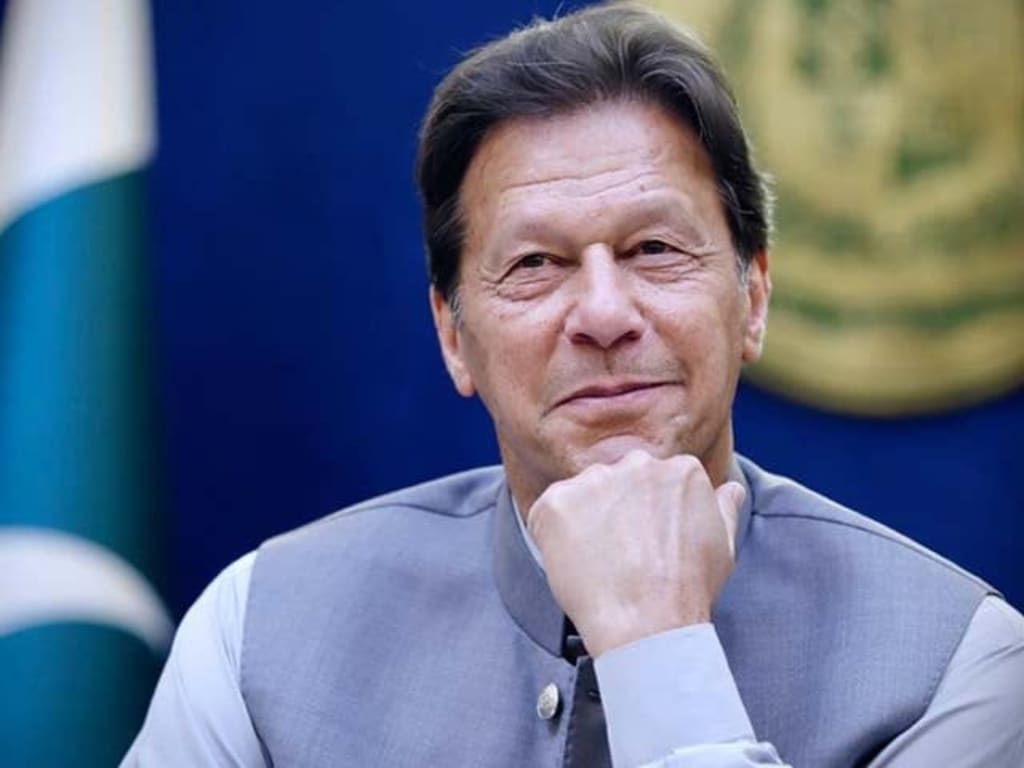
Imran Khan is a former cricket star who became the prime minister of Pakistan in 2018, but was ousted in 2022 after losing the support of the military. His political career has been marked by highs and lows, as well as controversies and conflicts.
Khan was born in 1952 in Lahore, the capital of Punjab province. He belonged to a wealthy and influential family, and received a privileged education in Pakistan and England. He excelled in cricket, and became one of the most successful and popular players in the world. He captained the Pakistan national team to its first and only World Cup victory in 1992, and retired from the sport soon after.
Khan then turned his attention to philanthropy, and founded a cancer hospital in Lahore in memory of his mother, who died of the disease. He also established a university and a network of schools for underprivileged children. He gained respect and admiration for his humanitarian work, and showed a different side of his personality.
In 1996, Khan entered politics by launching his own party, Pakistan Tehreek-e-Insaf (PTI), meaning Movement for Justice. He positioned himself as an anti-corruption crusader, and challenged the dominance of the two main parties, led by the Bhutto and Sharif families. He initially struggled to make an impact, and faced ridicule and rejection from the political establishment.
However, Khan’s fortunes changed in 2011, when he attracted massive crowds at rallies in Lahore and Karachi, the two largest cities in Pakistan. He tapped into the frustration and discontent of the people, especially the youth, and promised to bring a new era of change and reform. He also appealed to the religious and nationalist sentiments of the masses, and criticized the US-led war on terror and drone strikes in Pakistan.
Khan’s popularity soared, and he became the main challenger to Nawaz Sharif, the leader of the Pakistan Muslim League-Nawaz (PML-N), in the 2013 general election. However, he fell short of winning a majority, and alleged that the election was rigged. He refused to accept the results, and staged a prolonged sit-in protest in Islamabad, the capital, in 2014. He demanded Sharif’s resignation, and accused him of corruption and treason.
Khan’s protest failed to achieve its objective, but it kept him in the limelight, and eroded Sharif’s legitimacy. In 2017, Sharif was disqualified and removed from office by the Supreme Court, after an investigation into his offshore assets revealed by the Panama Papers. Khan claimed credit for exposing Sharif’s corruption, and emerged as the frontrunner for the next election.
Khan also benefited from the support of the powerful military establishment, which had a strained relationship with Sharif over issues such as security, foreign policy, and civil-military balance. The military was seen as backing Khan’s campaign, and influencing the media and the judiciary in his favor. Khan denied any collusion, and maintained that he was fighting for the rule of law and democracy.
In the 2018 election, Khan’s PTI won the most seats in the National Assembly, but fell short of a majority. He formed a coalition government with the help of smaller parties and independent candidates. He became the 22nd prime minister of Pakistan, and vowed to fulfill his vision of a “new Pakistan”.
However, Khan’s tenure as prime minister was marred by difficulties and disappointments. He inherited a weak economy, burdened by debt, inflation, and unemployment. He sought financial assistance from friendly countries, such as China, Saudi Arabia, and the UAE, and also negotiated a bailout package from the IMF. He faced criticism for his economic policies, which were seen as ineffective and inconsistent.
Khan also faced a hostile opposition, led by Sharif’s PML-N and the Pakistan Peoples Party (PPP), headed by Bilawal Bhutto Zardari, the son of former prime minister Benazir Bhutto. The opposition accused Khan of being a puppet of the military, and of victimizing them through selective accountability and repression. Khan continued his anti-corruption drive, and pursued legal cases against Sharif, Zardari, and other prominent politicians. He also used harsh and provocative language against his rivals, and refused to engage in dialogue or compromise.
Khan’s relationship with the military also deteriorated over time, as differences emerged over various matters, such as the handling of the economy, the extension of the term of the chief of the Inter-Services Intelligence (ISI), and the approach to India and Afghanistan. The military was reportedly unhappy with Khan’s performance, and withdrew its backing. In 2022, Khan faced a vote of no confidence in Parliament, and lost. He was replaced by Shahbaz Sharif, the brother of Nawaz Sharif, and the leader of the PML-N.
Khan did not accept his defeat, and claimed that he was the victim of a conspiracy by the opposition and the military. He alleged that the vote of no confidence was rigged, and that the Army chief was involved. He faced over a hundred legal cases, ranging from corruption to terrorism, and claimed that they were politically motivated. He was briefly arrested in May 2023, which sparked violent protests by his supporters across the country. The government cracked down on Khan’s party, and arrested thousands of its members.
Khan remains a key player in Pakistani politics, even after his removal from power. He still commands a loyal and passionate following, especially among the youth and the urban middle class. He still portrays himself as a champion of justice and reform, and a challenger of the status quo. He still hopes to make a comeback, and to participate in the next election.
Khan’s story is a remarkable one, of a man who rose from cricketing glory to political power, and then fell from grace. His story reflects the complex and turbulent reality of Pakistan, a country that is struggling with economic, social, and security challenges, and is divided by political and ideological differences. His story is not over yet, and the future of Pakistan may depend on how it unfolds.
About the Creator
Syed Dawood Shah
Writing to inform people about Pakistani Stars
Keep reading
More stories from Syed Dawood Shah and writers in Humans and other communities.
Creed Aventus! Buy or not to?
The realm of fragrance is a fascinating one, with niche houses often occupying a space less known than their popular designer counterparts. However, amidst this landscape, there are exceptions that stand out, and one such gem is Creed Aventus. Born in 2010, Aventus has not only transcended its niche classification but has also become a globally renowned and hyped fragrance, showcasing the exceptional craftsmanship of the esteemed French brand Creed.
By Syed Dawood Shah2 years ago in Art
Autonomy Is The Real Privilege
Good morning, freedom-seekers! Today we’re gonna be looking at autonomy. A strange word, I know; one many would probably look at blankly and run away from on sight. We’re gonna figure out what it actually means, consider how it’s achieved, and decipher just how deeply most of us are tangled up in dependence without realising it.
By That ‘Freedom’ Guyabout 13 hours ago in Humans
Why Being Observant Matters More Than Being Loud
Why Being Observant Matters More Than Being Loud Loudness demands attention. It’s the first thing we notice. The booming voice. The person who interrupts every conversation. The social media post that screams for likes. The ones who dominate the room not because of what they know, but because of how forcefully they announce it.
By Nolan Wright about 17 hours ago in Humans




Comments
There are no comments for this story
Be the first to respond and start the conversation.