
When the myths fall - Faith, democracy and the cost of belief
Perhaps the myth has to crumble for something real to grow!
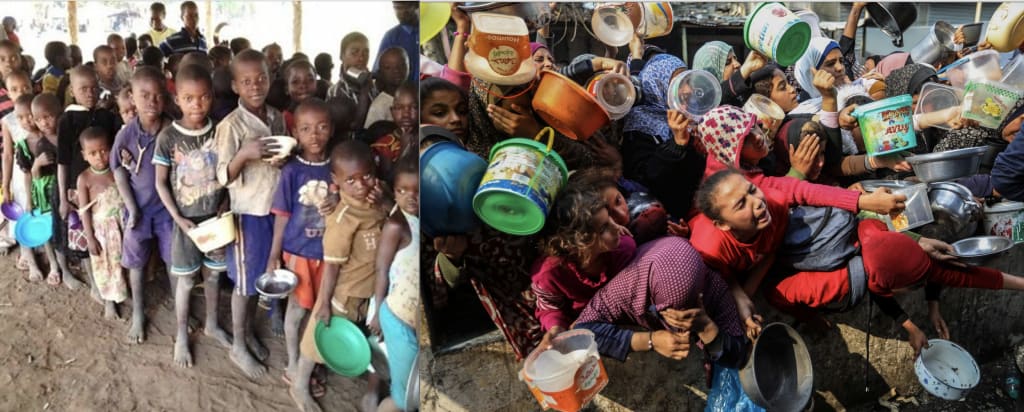
“There’s a deep kind of grief that comes when the stories we grew up believing — about freedom, democracy, and moral leadership — collapse under the weight of truth”.
How many of us grew up calling ourselves Christian, or part of a faith that believes in a kind and merciful deity?
How many of us were raised to believe that we live in democratic societies, that democracy was a good word, a promise that people at heart would do what is right? I believed that too.
What I see now is that maybe it was always a mask, one that hid self-interest behind the language of morality and power behind the language of freedom.
We have been taught to believe that some countries are the defenders of democracy, freedom and humanity and that belief runs very deep, in schools, in churches, in the news we read.
It has absolutely shaped how many of us see the world and how we understand what is “good” and what is “evil.” However, watching what is happening in Gaza and Sudan and more, it becomes harder and harder to keep believing this story.
If democracy really stood for humanity, how could those same governments that preach freedom and compassion in their own countries, stay silent while children are starved, bombed and ‘invisible’? How can they keep sending weapons, funding and political cover to regimes that destroy lives? We are told it is ‘complicated’, but it isn’t.
The suffering of innocent people is never complicated. It is wrong.
The myth we have lived under says that Western countries, in particular, act out of moral conviction, that their leaders represent justice and fairness, but the truth is, most decisions are shaped by power, profit and self-interest.
Human rights are defended loudly when it suits and ignored when it doesn’t. The media plays its part too, amplifying one tragedy while turning away from another.
Gaza was called a “conflict,” Sudan a “civil war,” as if those words can disguise what they really are - human catastrophes, pre-meditated killing!
Many of these countries also call themselves Christian. They speak of values like compassion, forgiveness and the sanctity of life.
Where though, are those voices now? Where is the outrage from churches and faith leaders who claim to follow the teachings of Jesus, the man who stood beside the poor, the wounded and the forgotten. His message was never about neutrality or silence. It was about love in action - but the silence of so many church institutions today feels deafening.
Some church/faith groups have spoken up, often quietly and without the backing of those in power, but for the most part, the Christian voice that once led calls for peace, justice and equality seems to have faded. It has been replaced by cautious statements or polite prayers that do little to challenge governments or defend the people who need defending most.
The cross, once a symbol of courage and sacrifice, now too often sits behind stained glass while the world suffers outside.
So where did this myth of Western moral leadership come from? After the Second World War, many Western countries built a story about themselves, that they were the protectors of freedom, democracy and human rights. It was a way to draw a line between “the free world” and “the rest.” However, the reality was far messier. Colonialism didn’t end; it just changed shape. Wars/genocides continued, often justified as spreading democracy or restoring peace. The church, which could have been a moral guide, became intertwined with political power and nationalism.
Now, as we see Gaza and Sudan collapsing into famine and displacement, the illusion has broken. The world is watching the “defenders of humanity” choose politics over people and many are asking the same questions - what does democracy mean if it doesn’t include empathy? What does Christianity mean if it cannot speak for the oppressed?
Maybe this moment, as painful and distressing as it is, can also be a turning point? Perhaps the myth has to crumble for something real to grow in its place – isn’t that the cycle for transformation?
Real democracy would mean listening to every voice, not just the powerful.
Real Christianity would mean living the words we claim to believe and standing with peoples' suffering, no matter who they are.
We don’t need myths anymore. We need honesty, courage and we desperately need humanity that does not come with any conditions.
About the Creator
Keep reading
More stories from writers in Humans and other communities.
Time to change your life.
Is it even possible for you to change your life? A lot of people, more than there should be, are unhappy with their lives. But what are they doing about it? Usually nothing. People talk about how shitty their lives are and want change, but are they not taking the actions to change?
By Jen Phillips2 days ago in Humans
Why Machines Make Decisions Faster—But Humans Still Matter
Machines are fast. They process millions of data points in seconds, recognize patterns invisible to the human eye, and deliver decisions with astonishing efficiency. From recommending what we watch to approving loans and diagnosing diseases, machines are increasingly trusted to decide for us.
By Mind Meets Machine4 days ago in Humans


Comments
There are no comments for this story
Be the first to respond and start the conversation.