
When AI Whispers Your Name: The Rise of Digital Intimacy and Personalization
The era of personalization

Introductionis:
You’re scrolling through your phone, and an ad pops up for a book you just thought about buying yesterday. A playlist shuffles on, and it’s as if the songs were plucked from your memories. A chatbot remembers your dog’s name, asks how they’re doing, and for a split second, you feel seen. In a world drowning in data, the most radical revolution isn’t just artificial intelligence—it’s the humanity we’re stitching into the digital fabric.
From AI therapists to Netflix’s eerily accurate recommendations, personalization is no longer a luxury—it’s the heartbeat of modern connection. But beneath the code lies a quieter, more profound shift: the hunger for human touch in a screen-lit age. Why do we cry at a TikTok stranger’s grief? Why does an algorithm’s “good morning” text feel like a friend’s nudge? This isn’t just tech evolving—it’s us evolving.
In this piece, we’ll explore how personalized experiences are bridging the gap between cold automation and warm vulnerability—and why, in 2024, the most groundbreaking innovation isn’t the machine… it’s you.
---
The Rise of the “Me Economy”
Personalization isn’t new—Netflix’s “Top Picks for You” has been around for years. But today, it’s mutated into something deeper: a bespoke existence. Spotify’s “Daylist” updates every few hours, mirroring your moods. Apps like Replika offer AI companions who learn your fears and dreams. Even healthcare apps like Woebot deliver therapy tailored to your mental health dips.
But here’s the twist: Users aren’t just craving convenience—they’re craving recognition. A 2023 Stanford study found that 68% of millennials feel “digitally invisible” without personalized content. As one Reddit user confessed: “When Duolingo’s owl remembers my streak, I feel like someone’s rooting for me. Pathetic? Maybe. But it works.”
Yet, this “Me Economy” walks a tightrope. For every heartwarming story of an AI helping a lonely senior, there’s a dystopian echo: Is this connection… or manipulation?
---
The Human Touch in a Robotic World
Enter the counter-movement: brands and creators weaponizing imperfection.
Case Study: Dutch startup Humantic hires poets to write “human error” into AI customer service scripts. One chatbot “admits” it’s craving coffee mid-convo—and sales soared by 40%.
Vocal’s Trend: Notice how top-performing stories here use raw, unfiltered voices? Take “I Met My Younger Self for Coffee”—a title that drips with intimacy. Readers don’t want polish; they want personhood.
Psychologist Dr. Lila Ramos explains: “Algorithms mimic empathy, but humans crave ‘glitches’—the pause before a hard truth, the tremble in a voice. That’s where trust lives.”
Even tech giants are pivoting. Instagram’s latest feature, “Behind the Filter,” encourages creators to share unedited bloopers. Spotify’s “Nostalgia Mix” includes handwritten notes from artists about their lyrics. The message? We’re not just data points. We’re messy, we’re fragile—and that’s okay.
---
The New Frontier: Emotional Algorithms
The next wave? Tech that doesn’t just know you—it feels with you.
Project Emotive: A Google Glass spinoff tracks micro-expressions to adjust content in real time. Watch a sad scene? Your playlist shifts to Adele before the first tear falls.
AI Grief Coaches: Apps like Eterneva analyze your social media to craft personalized rituals for loss (e.g., “Play their favorite song at sunset”).
But critics warn: Emotional AI could become emotional dependency. As ethicist Raj Patel asks: “If a machine can grieve with you, will we forget how to grieve with each other?”
---
The Vocal Revolution—Stories as the Ultimate Personalization
Platforms like Vocal are proof: No algorithm can replicate the human pulse of a story. When Ella in “Starting Over” shares her abuse survival, readers don’t just relate—they heal. Vocal’s “Raise Your Voice” threads aren’t trends; they’re lifelines.
Your favorite creators aren’t influencers—they’re mirrors. As poet Rilee Arey writes in “Two-Faced”: “I never find out anything by just listening to myself.” Stories personalize perspective, not products.
---
Conclusion
Personalization isn’t the future—it’s the ancient human desire to be known, rewired for the digital age. Yes, we risk losing ourselves in curated echo chambers. But in the hands of artists, writers, and empathetic innovators, personalization becomes something radical: a bridge back to each other.
So the next time your phone suggests a song that cracks your heart open, or a Vocal story feels like it’s reading your mind, don’t shrug. Pause. That’s not an algorithm—it’s the ghost of humanity in the machine, whispering: “You’re not alone.”
The revolution isn’t coming. It’s here—and it’s wearing your face.
About the Creator
Keep reading
More stories from Harshitnath Thakur and writers in Humans and other communities.
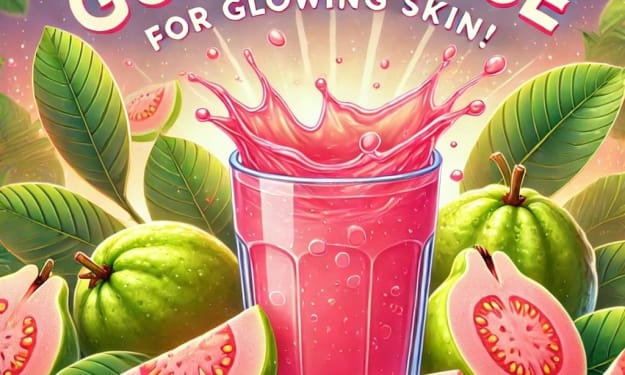
Health Benefits of Guava Juice for Skin
The Guava juice is a hidden gem when it comes to skincare. Packed with essential vitamins, antioxidants, and hydrating properties, this tropical fruit juice offers numerous benefits for the skin. While guava itself is widely recognized for its health benefits, its juice is often overlooked as a powerful natural remedy for glowing and youthful skin.
By Harshitnath Thakur11 months ago in Humans
Autonomy Is The Real Privilege
Good morning, freedom-seekers! Today we’re gonna be looking at autonomy. A strange word, I know; one many would probably look at blankly and run away from on sight. We’re gonna figure out what it actually means, consider how it’s achieved, and decipher just how deeply most of us are tangled up in dependence without realising it.
By That ‘Freedom’ Guyabout 20 hours ago in Humans



Comments
There are no comments for this story
Be the first to respond and start the conversation.