
What is the purpose of art?
An opinion piece on the prevalence of humanities even in a world so heavily focused on STEM.


During one fine day in the warm month of May, a teenage girl had written a poem called "What is the purpose of art?"
It compares what 8-year-old her and what present-day her believed the purpose of art was. In this case, the word art embodies the whole category of visual arts, music, theatre, literature, history, philosophy, and really: the humanities.
For the young child, it was to have fun - to get the creative juices flowing, to let loose and let your ideas wander - for the pure purpose of enjoyment. For the older, teenage girl it was to provide meaning in her life, allowing her to see the radiant, hormone-filled emotions she experienced so plainly expressed in a medium.
This article is not here to challenge the teen's poem in the slightest. Her sentiment reigns true but just in another light.
The humanities work to highlight and solve social problems
The humanities analyze and break down the experiences and situations of the most elite groups of people to the most disadvantaged. It considers all social systems that exist today, existed in history or could exist. It compares these systems and relates them to the problems in our present-day world: racism, prejudice, marginalization, microaggression, stereotypes, etc. Such problems are incredibly layered and complex with each applying to different aspects of people's lives - including the field of STEM.
According to an article from Scientific American headline Reckoning with Our Mistakes, Daniel G. Brinton, the president of the American Association for the Advancement of Science (AAAS), contributed to the eugenics scene of the 19th and even 20th centuries. In 1895, Brinton claimed that the purpose of anthropology was to determine the "peculiarities" of "races, nations, and tribes" which is "the only sure foundation for legislation; not a priori notions of the rights of man." Here, Brinton is not only supporting the idea of Social Darwinism but believes it should dictate the laws of our country, rather than hypotheses regarding human rights. The problem of only relying on science, especially in the case of legislation, can lead to the perpetuation of social and environmental problems.
Scientific American publicized and supported this point of view in 1895 and in 2020 released Reckoning with Our Mistakes to apologize for their past errors of only valuing scientific discovery and achievements made by white, straight, and elite men of society. Had the paper recognized the importance of using diverse perspectives in scientific research and had scientists like Daniel G. Brinton valued key skills in the modern humanities field - open discussion and listening to opposing points of view - perhaps the consequential segregation of the 1960s would have been somewhat mitigated.
The importance of referencing this case is to shed light on the fact that science is not the most reliable field in the world. Yes, science is facts, figures, data, observations, and proven hypotheses that evolve into principles of the universe. However, the very people who created the scientific method and the standards to which exceptional research is held are created by human beings. Human beings who each have their own perspective which influences the way STEM is performed.
This is not to say that all of the admirable work that has been achieved by decades of hard-working scientists is unreputable or fake - scientific research should absolutely influence our understanding of the world. It's just that the multi-faceted and well-supported research that we deem credible is partly thanks to social scientists who have dedicated their lives to the humanities.
If it weren't for the activists who protested equal rights or the social scientists who questioned biased survey results and single-sided research, grievous ideas like Social Darwinism would be a lot more prevalent today. Connecting this to our modern-day world, if there were no social researchers and surveyors who took notice of problems like gender discrimination in the engineering field - we would not have organizations and authoritative figures working on creating inclusive engineering opportunities.
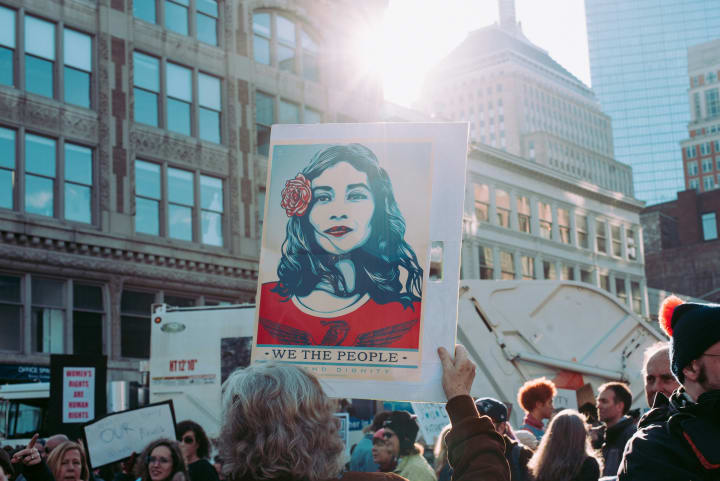
Art serves as a vessel for unique experiences of mental illnesses
Mental health and psychology is undeniably a scientific area of study. However, art allows people to authentically express their experiences and feelings through a medium: paintings, dance, songs, books, poems, and more. These mediums can also provide comfort and a way of healing for the artist.
A strong example is The Bell Jar by the well-known American classic novelist and poet, Sylvia Plath. In the foreword written by Frances McCullough, she describes The Bell Jar's ability to capture an intense and horrifyingly dark experience of depression and what some researchers believe to be schizophrenia. McCullough mentions Janet Malcolm and Molly O'Neill, two young women who were shocked by the severity of Plath's experience: "madness descending like a tornado into a typical bright young woman's life out of nowhere" according to McCullough.
Further on, McCullough calls attention to the idea that in the 21st century, discussions regarding mental health and suicide are less taboo due to revolutionary works like The Bell Jar. Plath's bravery in learning about her own sexuality, exploring her identity, and sharing the dark experiences of her summer imprisoned in the bell jar has helped trailblaze a new self-aware, and innovative generation.
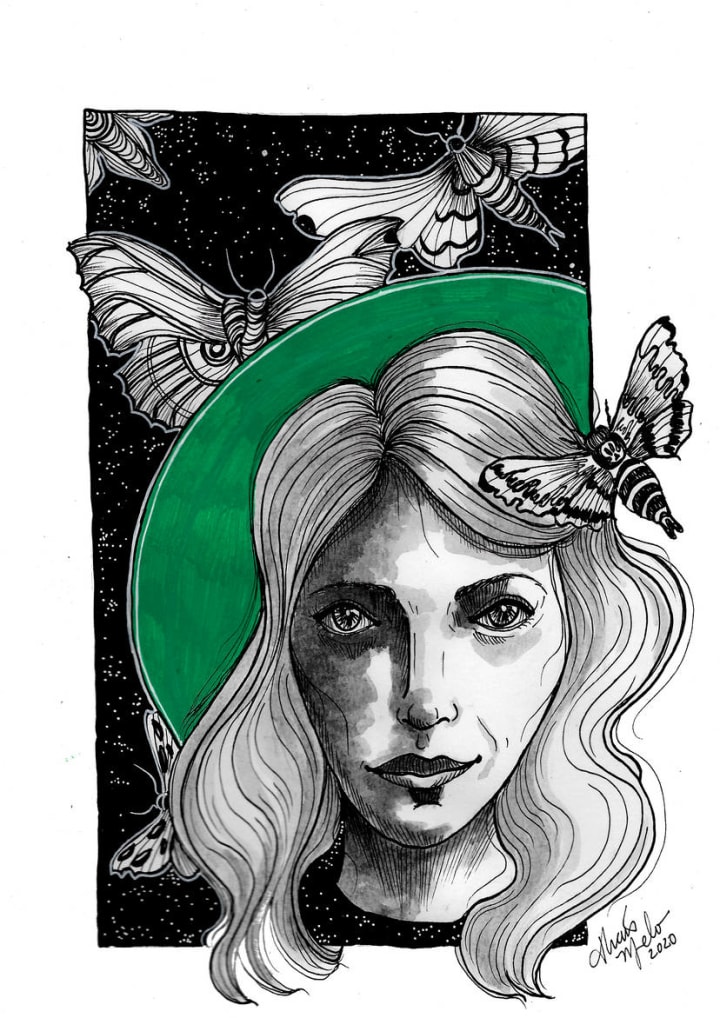
I saw my life branching out before me like the green fig tree in the story.
From the tip of every branch, like a fat purple fig, a wonderful future beckoned and winked. One fig was a husband and a happy home and children, and another fig was a famous poet and another fig was a brilliant professor, and another fig was Ee Gee, the amazing editor, and another fig was Europe and Africa and South America, and another fig was Constantin and Socrates and Attila and a pack of other lovers with queer names and offbeat professions, and another fig was an Olympic lady crew champion, and beyond and above these figs were many more figs I couldn't quite make out.
I saw myself sitting in the crotch of this fig tree, starving to death, just because I couldn't make up my mind which of the figs I would choose. I wanted each and every one of them, but choosing one meant losing all the rest, and, as I sat there, unable to decide, the figs began to wrinkle and go black, and, one by one, they plopped to the ground at my feet.
- Sylvia Plath, The Bell Jar
In essence, the arts and humanities express individual perspectives
It showcases the complexities, the layers, the details, and the relationship between these components that paint a person's perspective.
All books whether fiction or non-fiction; biography or fairytale; academic essay or YA book; demonstrate a person's unique perspective. Paintings whether abstract or realistic; surreal or romantic are a true depiction of an image in someone's brain. The same applies to music - Tchaikovsky's works can be seen as a record of a queer person's experience in 19th century Russia; You're Losing Me is Taylor Swift's account of having conflicting life plans with a partner.
Just take a moment to conceptualize this fact: There is no real way to exactly experience someone else's experience.
This is often a topic in philosophy, perhaps the solipsism theory, which states that you are the only thing you know truly exists. Essentially, it's the idea that it's impossible to 100% know that the people around you are experiencing the same type of consciousness and perception of reality you are experiencing. Of course, this is just a limitation of having separate human bodies, but recognizing this idea illuminates the value of having the arts and humanities in our lives.

Thank you for reading! If you would like to support my writing by leaving a like, tipping, or subscribing, I would be eternally grateful :)
About the Creator
Freya Javier
Academic and creative writer whose interests include literature, philosophy, poetry, music, nature, and more!
Keep reading
More stories from Freya Javier and writers in Humans and other communities.
Silver Sway
I saw Felicity Young's body blur into a haze of black and silver with every sway her hips gave towards the music, high upon the scarlet stage. The way her eyelids were softly closed, eyelashes beaded with sweat, somehow her heavy-black mascara holding up—traveled to me like a familiar scene from a 1920s city film. The ocean-thumps of a double bass laid out as a blanket beneath Felicity's warm melodic rays. I felt her voice make patterns across my soul.
By Freya Javier2 years ago in Writers
First Date Strategies Help Singles Build Rapport Trust And Connection
The first date should be prepared. The advantage of pre-reflection on the expectation, interests, and boundaries is beneficial to singles. Being aware of own goals in the date assists in steering the dialogue and actions as well as alleviating anxiety. Mental preparedness also enables people to come out themselves in the real sense and have the confidence to do so.
By Mark Hipster3 days ago in Humans
A More Human Vocal
When we launched Vocal nearly a decade ago, the world was a very different place. LLMs did not exist, and stories were created one at a time by people sitting down to write, revise, and share something personal. Many of our assumptions about publishing, trust, and participation were built for a world where effort and output were inseparable.
By Justin @ Vocal7 days ago in Resources




Comments (2)
So so amazing .i love your content and subscribed. Kindly reciprocate by subscribing to me also . thank you and keep it up
Nice article